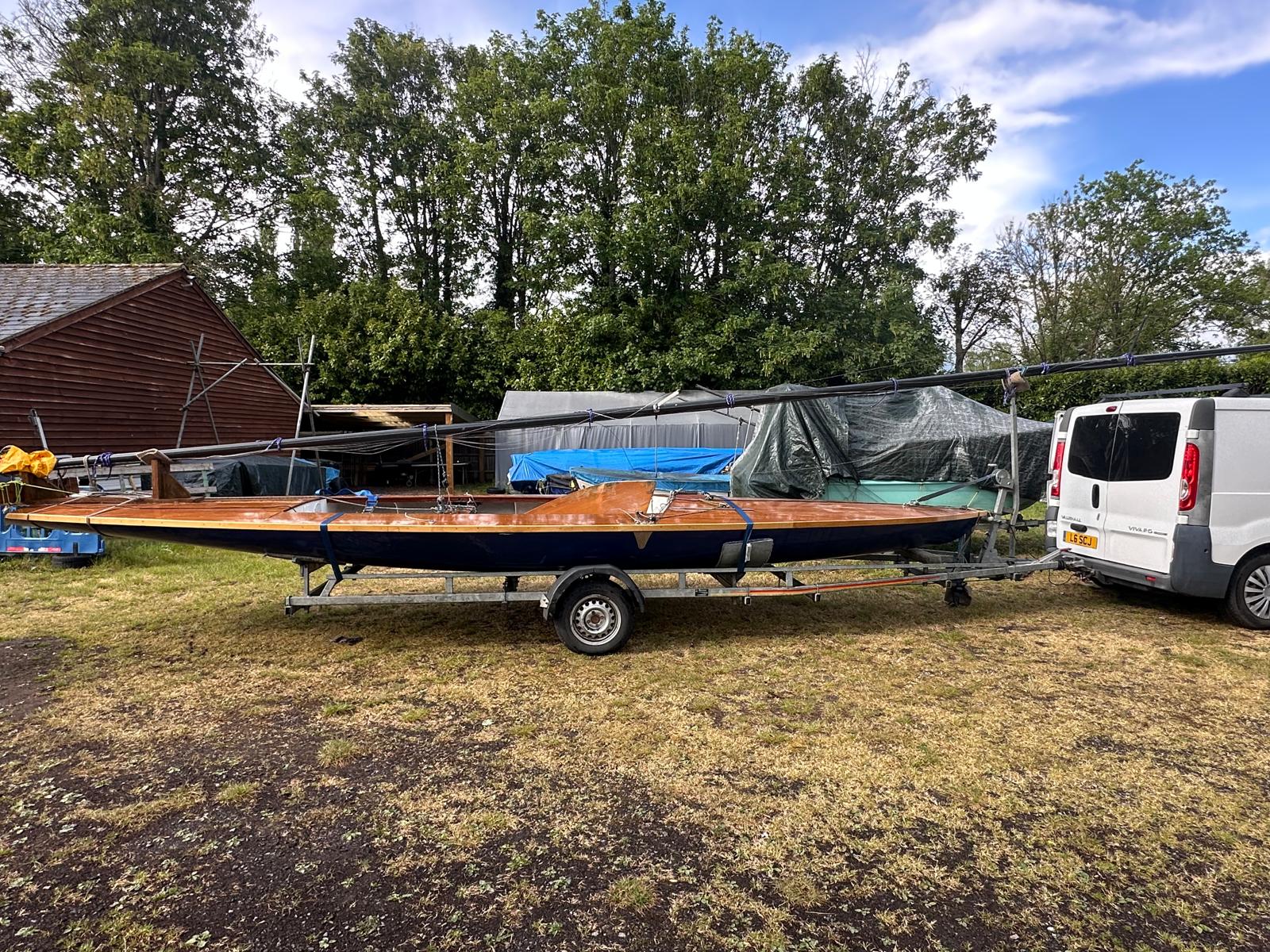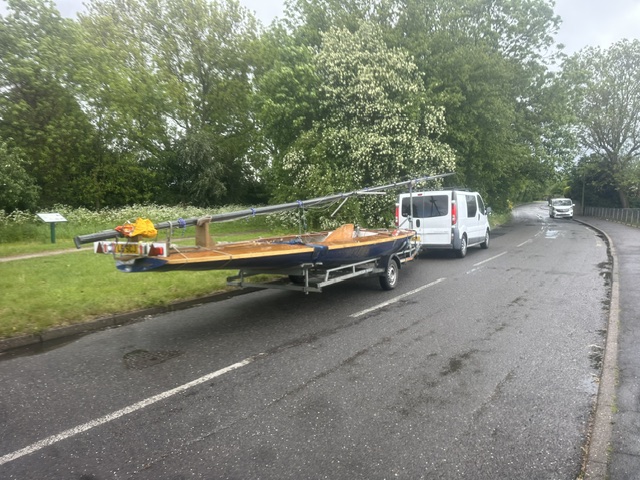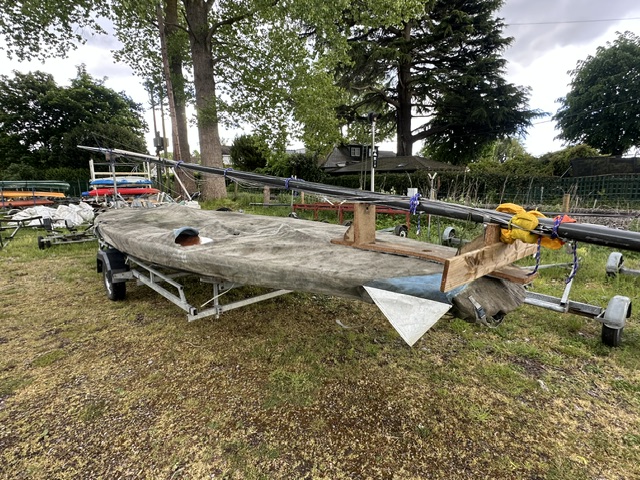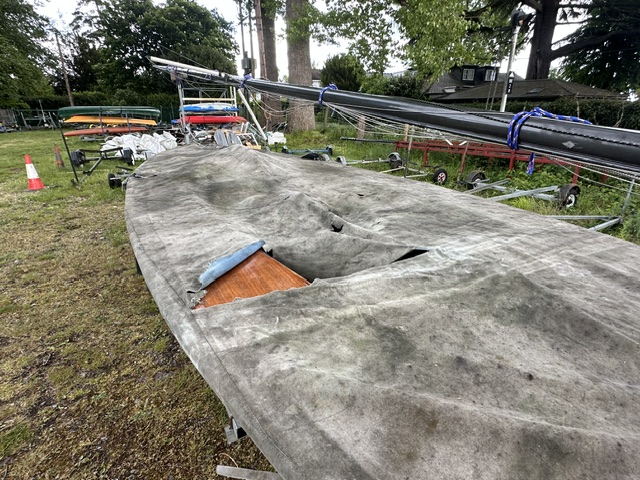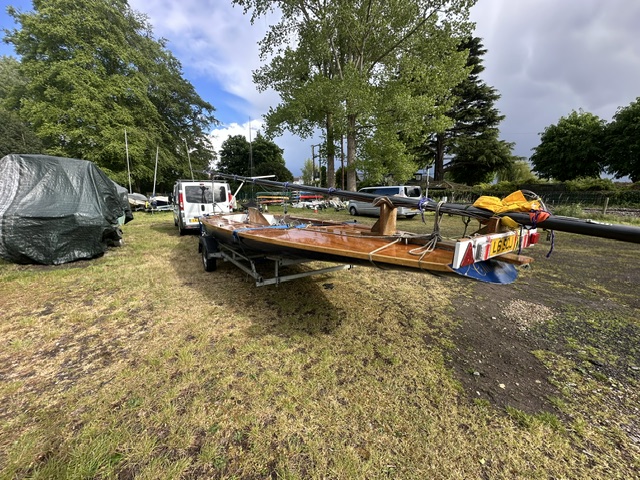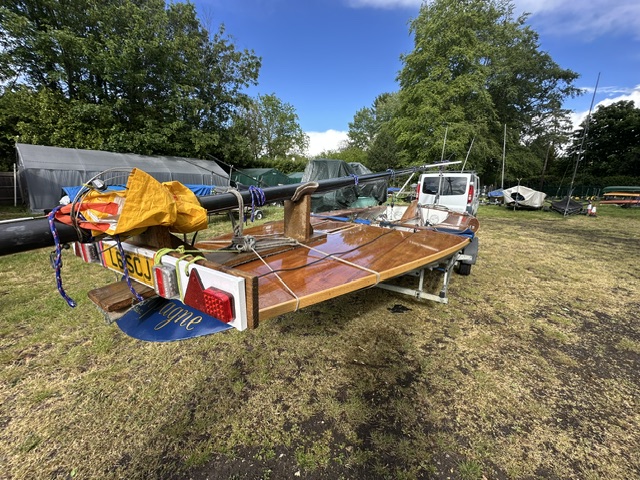
Nothing is as simple as it looks.
I arranged that a good friend of mine and fellow A-Rater syndicate
owner and Chairman of the Merlin Rocket Association would collect the boat from
Nottingham and tow it to UTSC in Bourne End.
The trailer brakes worked well and all was going well until
Stuart had a rest at a service station. Then he noticed that one of the D rings
holding the cradle onto the trailer had rusted way and broken.
Stuart said it is amazing what you can buy in a service
station. So he managed to purchase a webbing strap to secure the boat and then
safely tow the boat to its new home.
On arrival he wanted to know where to where to put the boat.
We had previously had some of the lean to cleared for Champagne. But there was another Rater in the way. The only
problem left was what to do with a 43 ft mast.
Some boats arrive with quiet dignity. Others prefer to make an entrance.
Champagne, it seems, belongs firmly in the second category.
The plan sounded perfectly straightforward. A good friend of mine—fellow Thames A-Rater syndicate owner and Chairman of the Merlin Rocket Association—kindly agreed to collect Champagne from Nottingham and tow her down to her new home at Upper Thames Sailing Club in Bourne End.
Simple.
What could possibly go wrong?
Apparently, quite a lot.
At first, everything was going remarkably smoothly. The trailer behaved itself, the brakes worked well, and Champagne was making steady progress at 50mph southwards towards the Thames.
Then came the routine service station stop.
Then came the routine service station stop.
Now, service stations are normally places for overpriced coffee, suspicious sandwiches, and emergency packets of mints—not marine engineering solutions.
But while stretching his legs, Stuart happened to glance at the trailer and noticed something rather alarming.
One of the D-rings securing the cradle to the trailer had rusted away completely and snapped.
Not exactly the sort of discovery you want halfway through transporting a classic racing yacht.
Fortunately, Stuart is exactly the sort of person you want in that situation: practical, calm, and apparently well-versed in the strange retail offerings of motorway service stations.
“It’s amazing what you can buy in a service station,” he later remarked.
And indeed, it is.
Somehow, a suitably robust webbing strap was sourced, the boat was re-secured, and Champagne continued her journey safely to Bourne End.
Crisis averted.
Mostly.
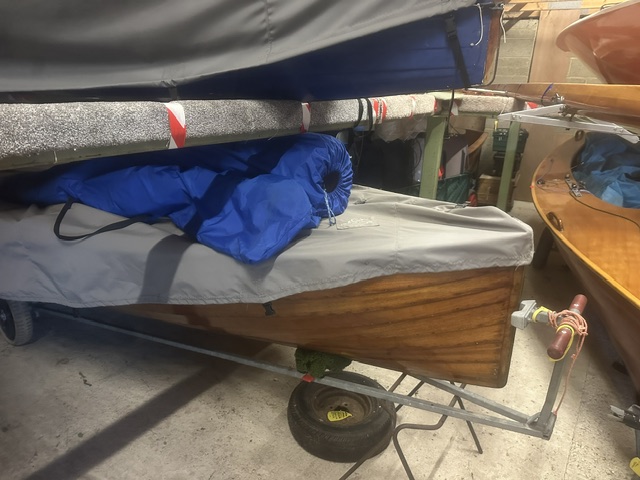
Back at Upper Thames Sailing Club, we had carefully cleared space in the lean-to, ready for Champagne’s grand arrival.
Naturally, another boat had beaten her to it.
Because of course it had. And blocked the entrance
So Champagne’s first welcome to the club involved a slight logistical reshuffle and the timeless boating question:
“Where exactly are we putting this, then?”
Still, she is here.
And that is the important bit.
Standing beside her, the reality of the project begins to sink in.
She definitely needs a new cover.
In fact, before anything else, I suspect the first proper job will be to raise the mast and create some sort of temporary tent arrangement to keep the weather out while work begins. Owning a classic sailing boat appears to involve as much improvised architecture as actual sailing.
Cleaning.
Inspecting.
Repairing.
Learning what I’ve accidentally bought.
Possibly discovering alarming things hidden under fittings.And all while trying to maintain the optimistic belief that this is entirely sensible.
Of course, every project needs a ridiculous target.
Ours?
Getting Champagne ready for Bourne End Week.
For those unfamiliar, this is when the Thames A-Raters gather to compete for the Queen’s Cup—one of the highlights of the racing calendar.
Is this realistic?
Almost certainly not.
Is that going to stop us dreaming?
Absolutely not.
After all, if you’re restoring a boat called Champagne, optimism rather comes with the name.
The adventure begins.