admin Date , Wednesday April 22 , 2026
There are some mornings on a sailing course when you wake gently to the sound of water lapping against the hull, the soft movement of the boat, and the promise of another peaceful day in Croatia.
This was not quite one of those mornings.
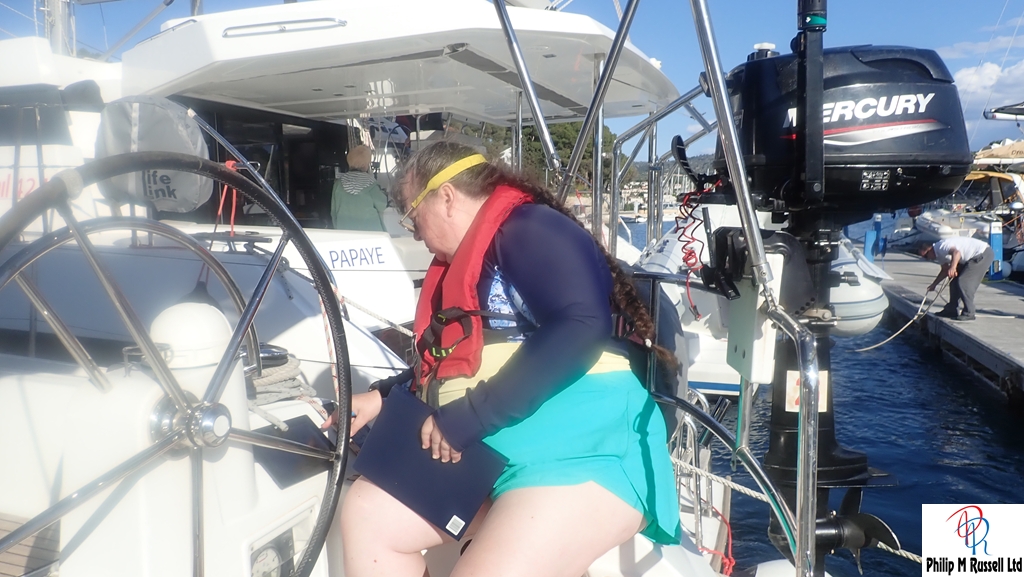
During the night, the wind had turned. Not just a polite little adjustment, but enough of a change to set the anchor alarm off on Papaye, the Sailing Fair Isle catamaran. Steve, Judy, Jane and Barry had found themselves rather closer to the shore than anyone would sensibly choose, especially in the dark, and so they made the very wise decision to move at sunrise.
It was a useful reminder that anchoring is not simply a matter of dropping a heavy lump of metal over the front and hoping for the best. Boats swing. Wind changes. Shorelines creep closer. Alarms go off. And people who were hoping for a quiet night suddenly find themselves navigating before breakfast.
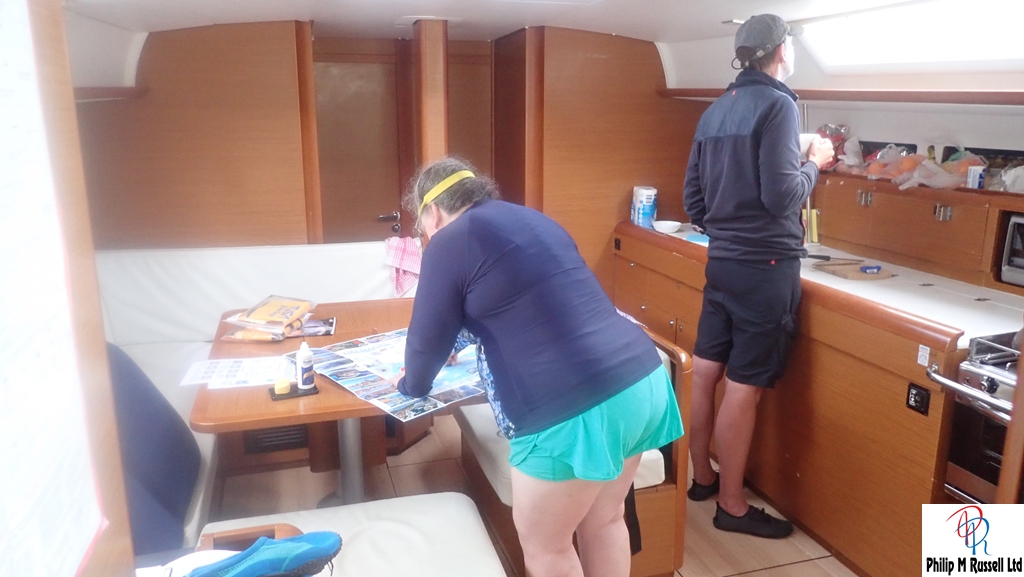
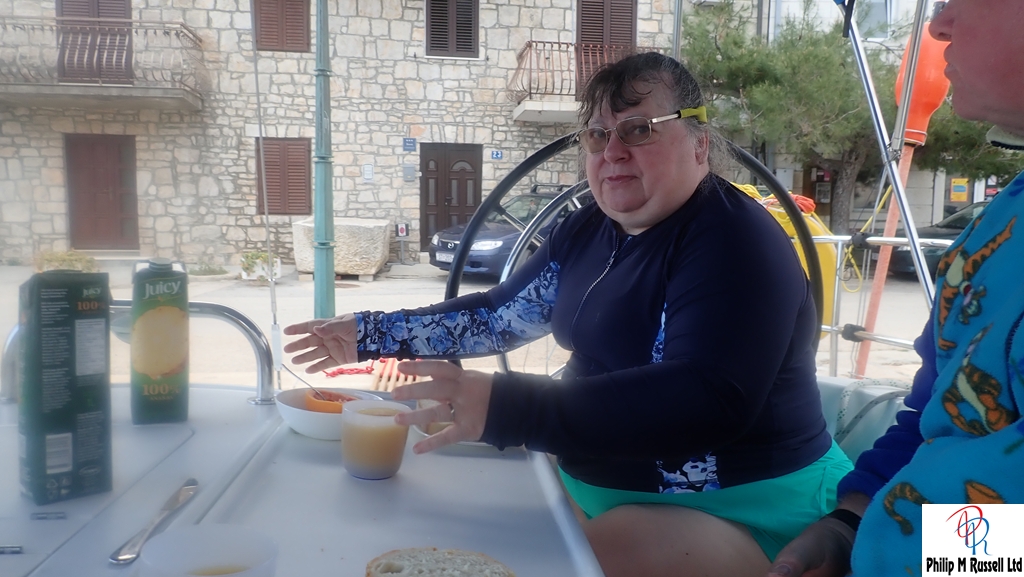
Our own morning began rather more calmly, with breakfast on board.
This time the menu included pink grapefruit, strawberry sandwiches and orange juice. I am not sure whether strawberry sandwiches are official RYA-approved sailing food, but they certainly have the advantage of being quick, cheerful and unlikely to require complex cooking in a galley where every movement involves negotiating with someone else’s elbow.
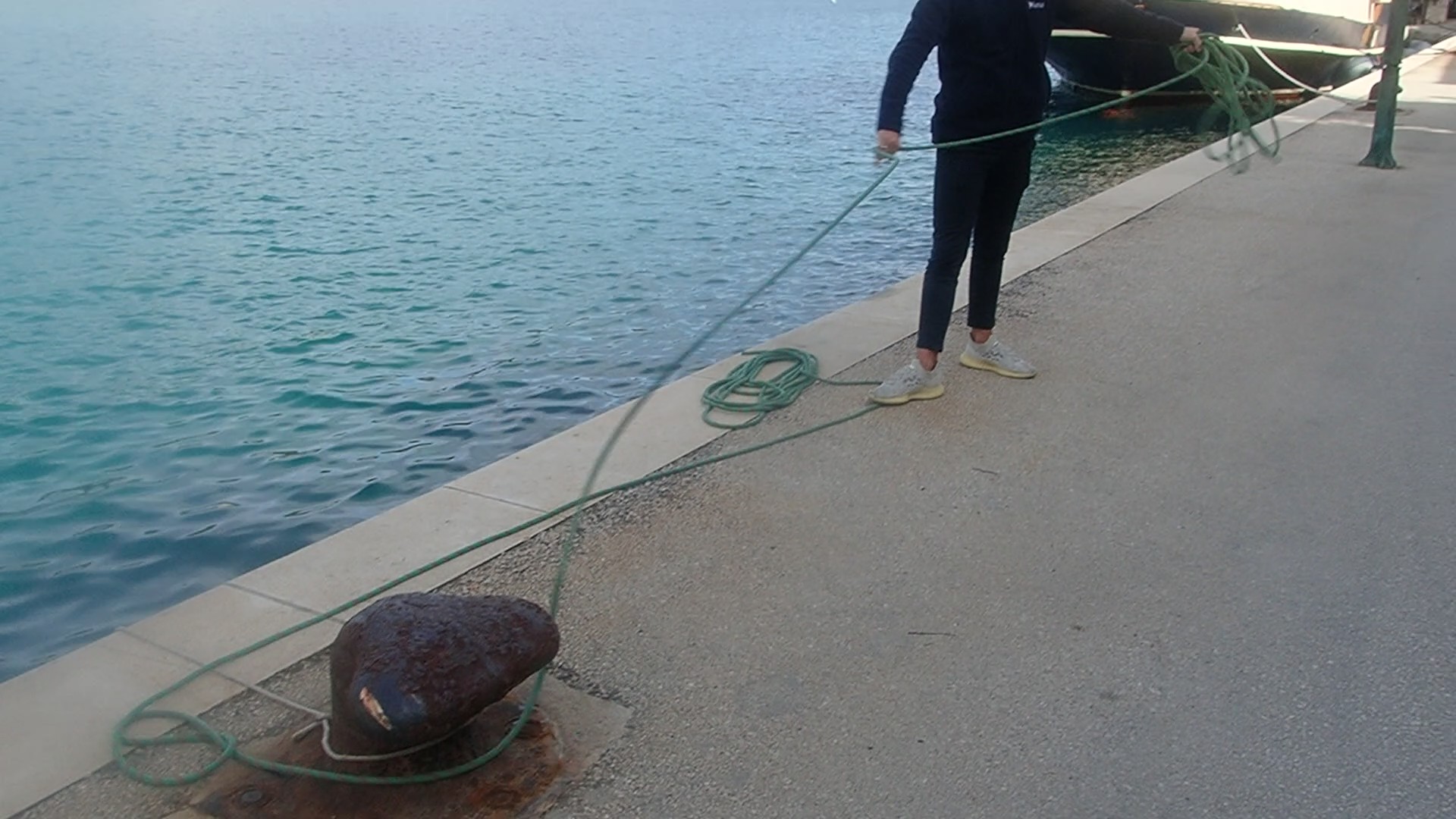
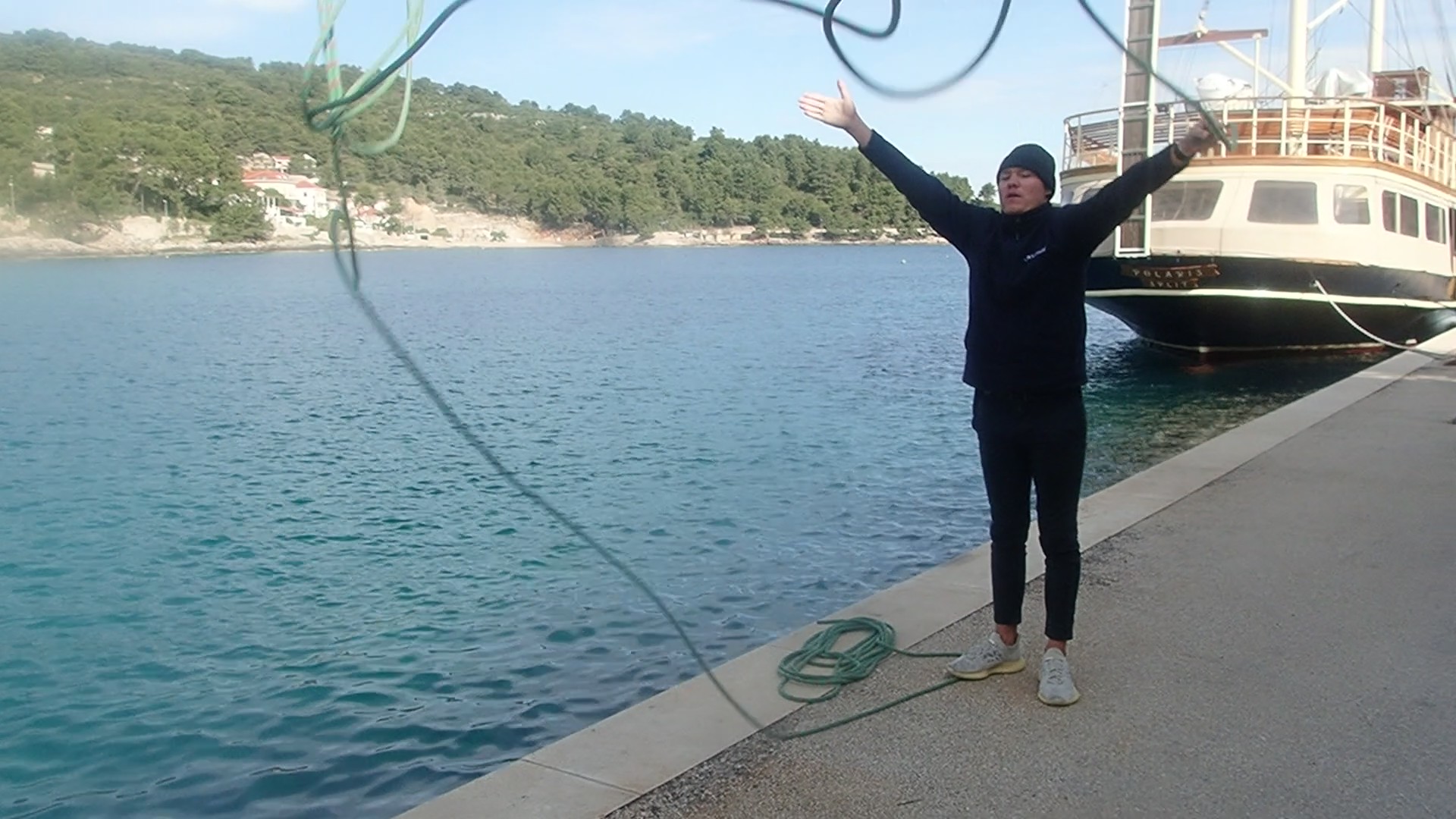
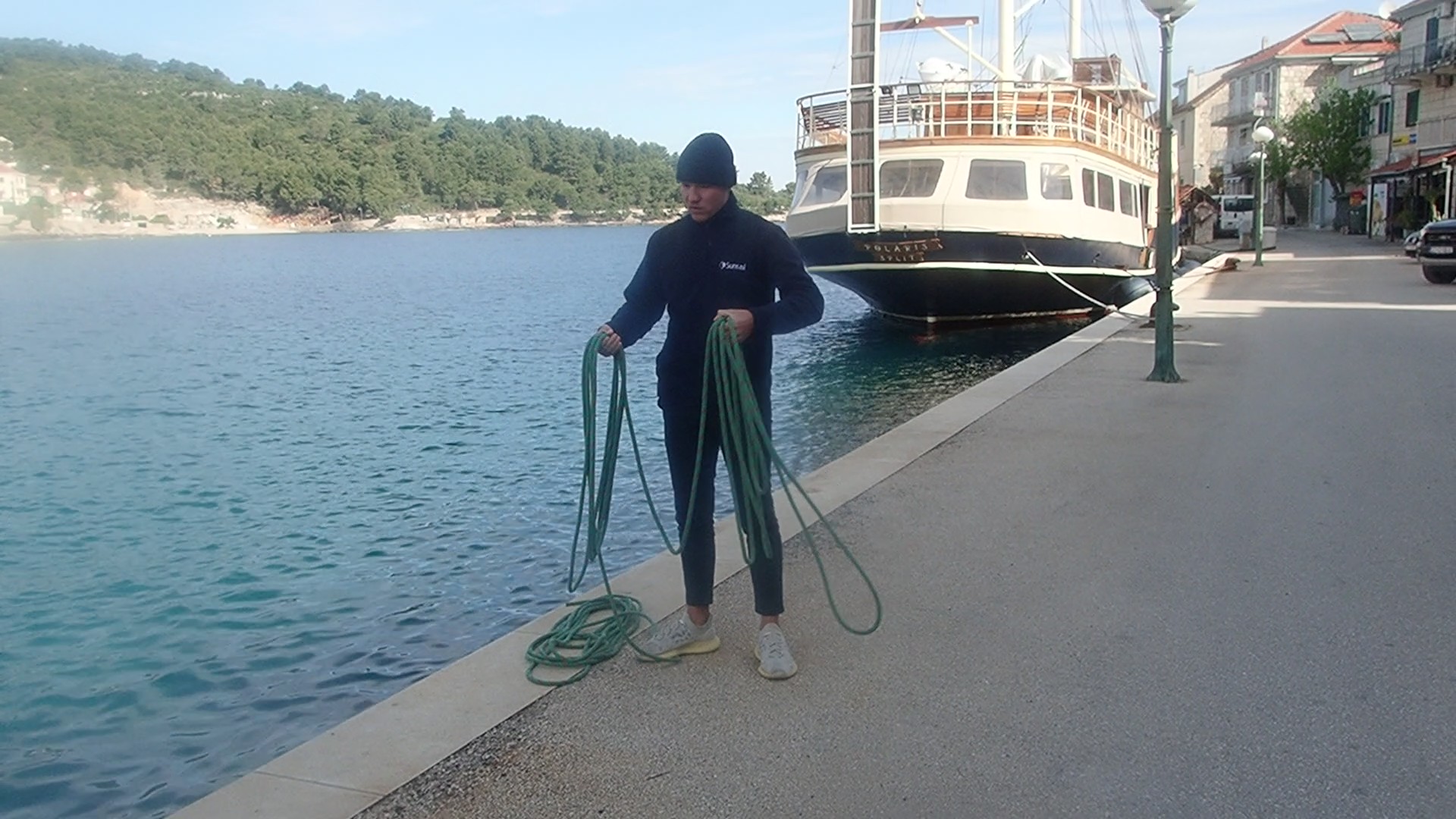
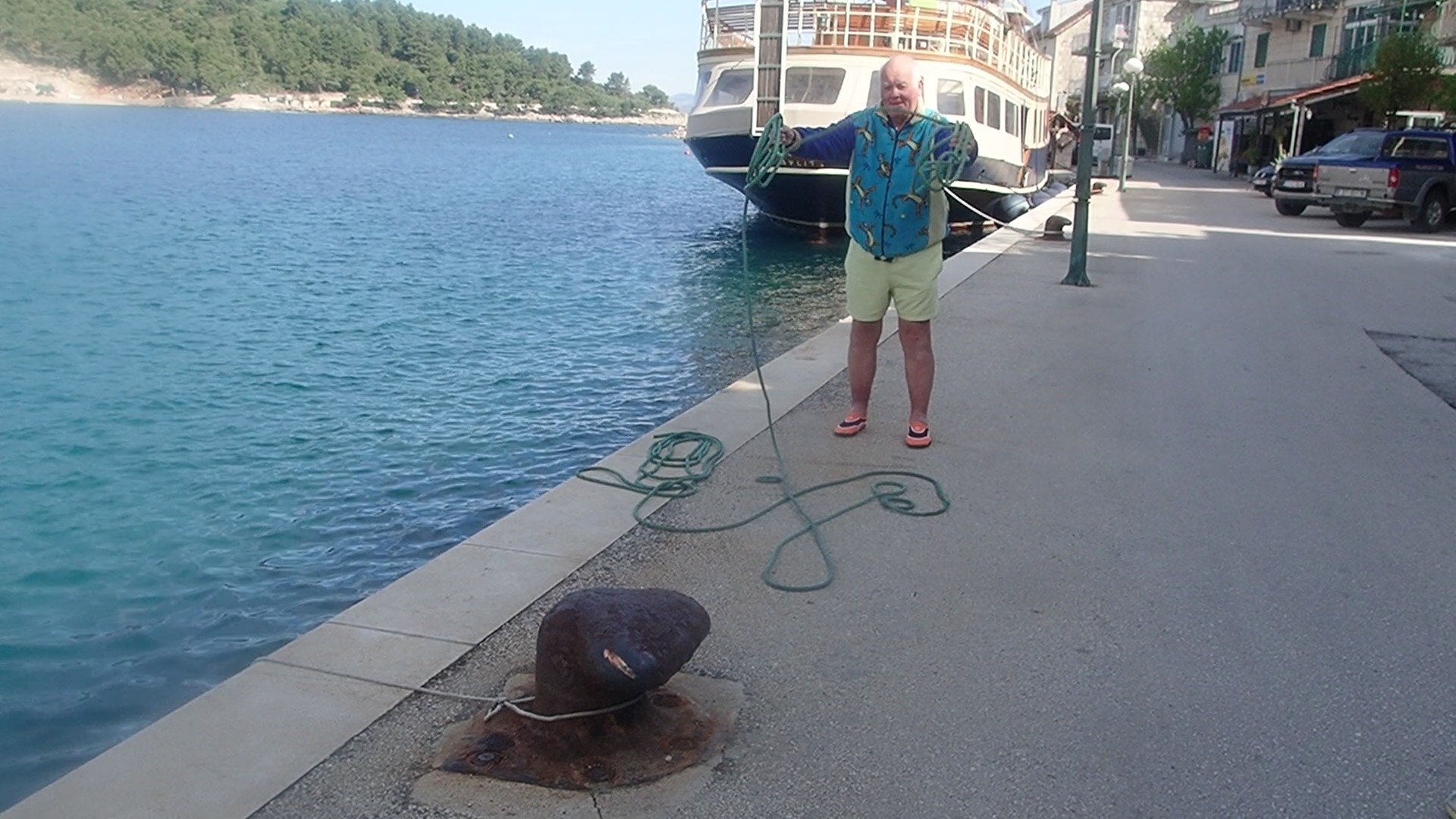
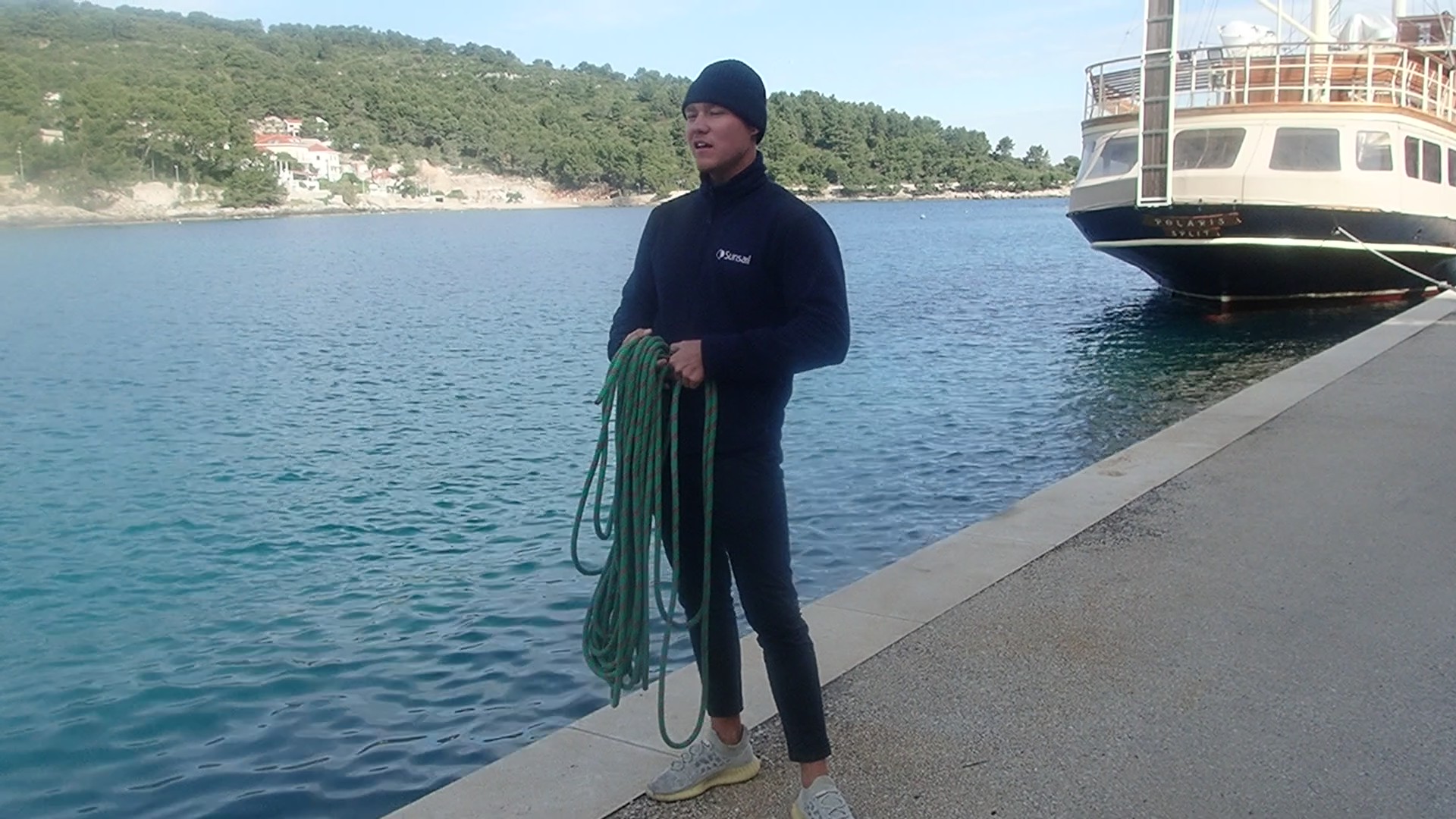
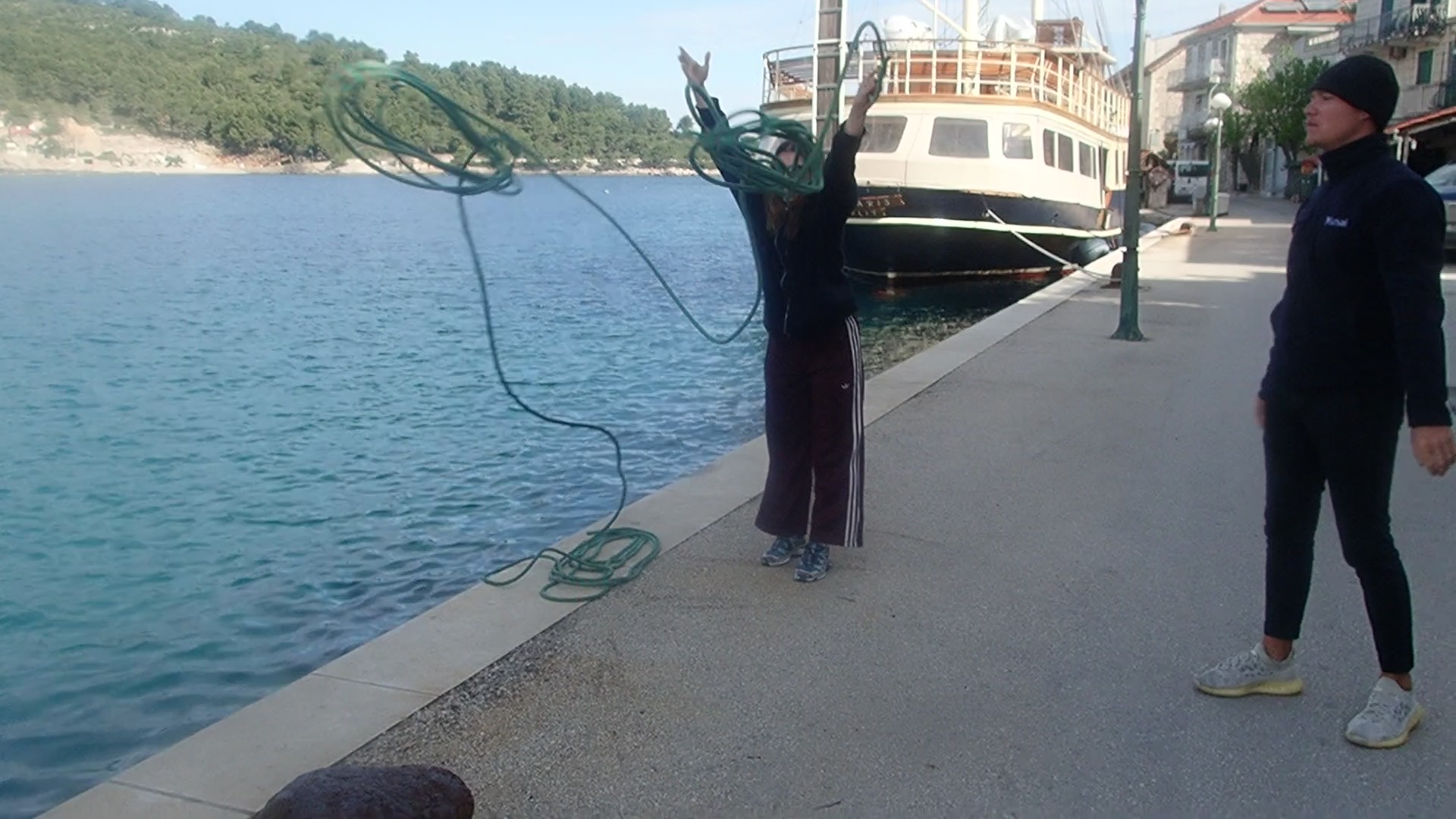
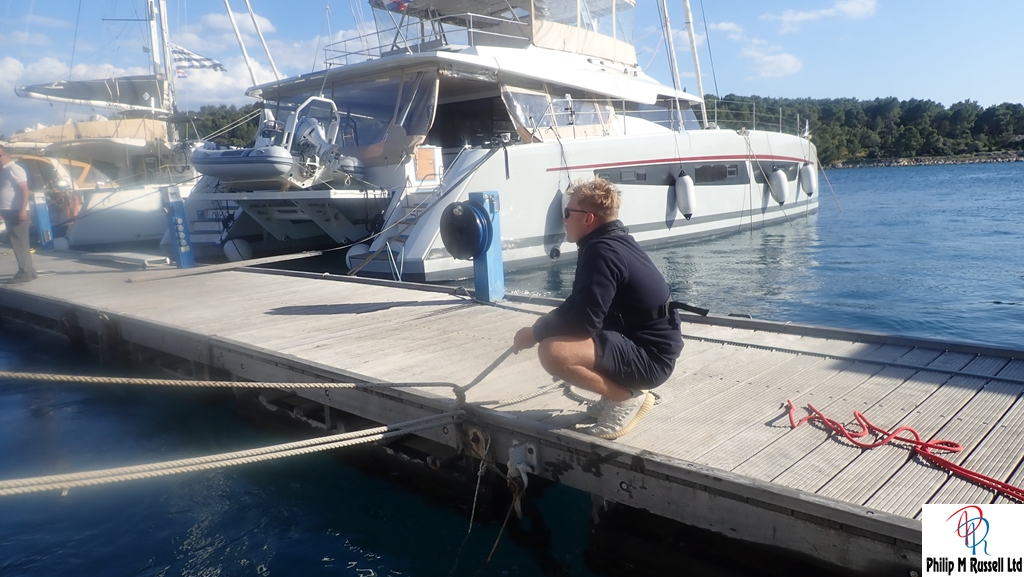
Tadek, our instructor, then announced that our first lesson of the day would be lassoing a rope around a large bollard.
This is one of those skills that sounds extremely easy until you actually try to do it from a moving boat, while holding a line, judging distance, keeping your balance, and trying not to look like someone attempting to catch a reluctant cow at a village fête.
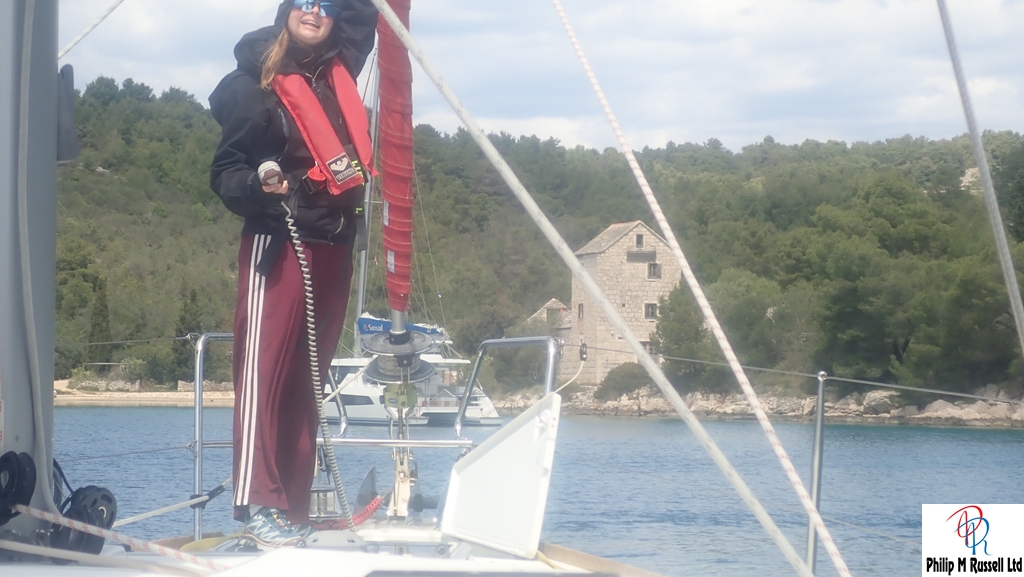
We all took turns practising throwing a loop of rope over the large bollard.
The key instruction was simple but surprisingly important: let go with both hands, but still keep hold of the rope.
That sounds contradictory until you try it. If you cling to the coil too tightly, the loop collapses and lands in an embarrassed heap. If you release everything completely, the rope sails off and you have invented a new and useless sport called “donating rope to harbour furniture”.
The trick is to throw the loop confidently, open your hands at the right moment, and allow the rope to fly while still controlling the standing end.
When it worked, it felt wonderfully professional. When it didn’t, it looked like I had attacked the bollard with a plate of spaghetti.
Fortunately, this was all being filmed, which means future generations may be able to study both the correct technique and my contribution to maritime slapstick.
As we sailed out of the harbour, we talked about why Papaya had moved during the night.
This was a proper real-world sailing lesson. Not something from a textbook, but something that had actually happened to a boat we knew, with people we were sailing alongside.
The anchor alarm had gone off because the catamaran had moved closer to shore as the wind shifted. In daylight, this is inconvenient. At night, it can become serious very quickly.
It made the theory very clear:
An anchor does not fix a boat in one exact position.
The boat swings around the anchor depending on wind and current.
A change in wind direction can completely alter your position.
An anchor alarm is not an optional luxury; it is a very sensible bit of electronic nagging.
If in doubt, move before the situation becomes more exciting than planned.
We radioed Papaya to arrange the day, which also gave us more practice with proper radio procedure. I rather enjoy the radio, partly because it feels official, and partly because it gives you the illusion that you are in charge of something.
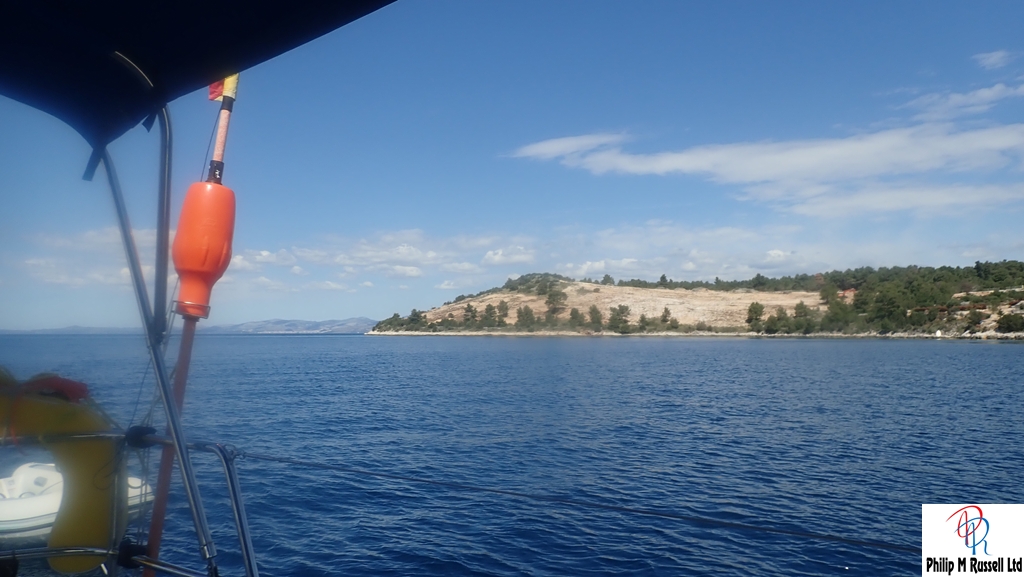
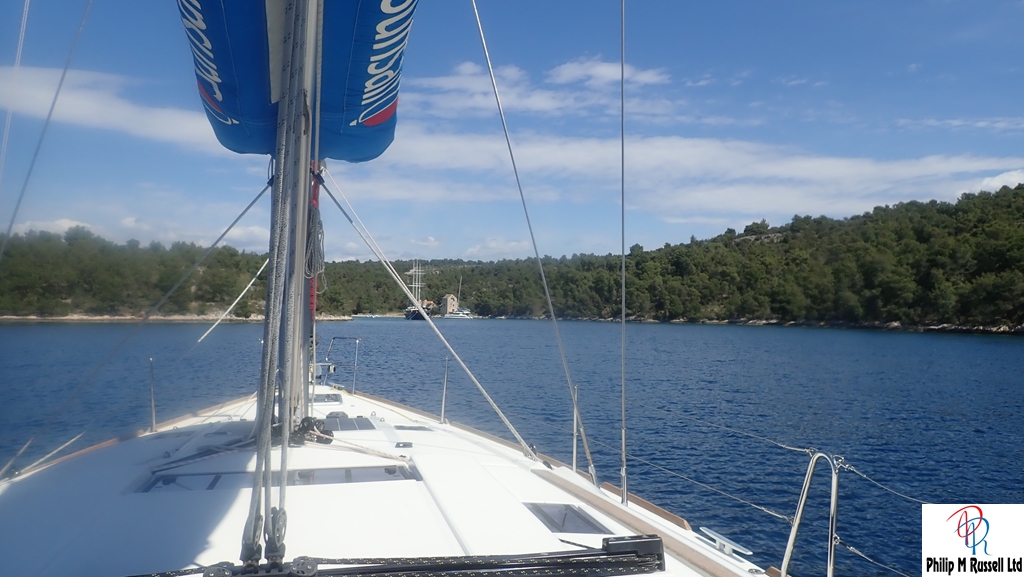
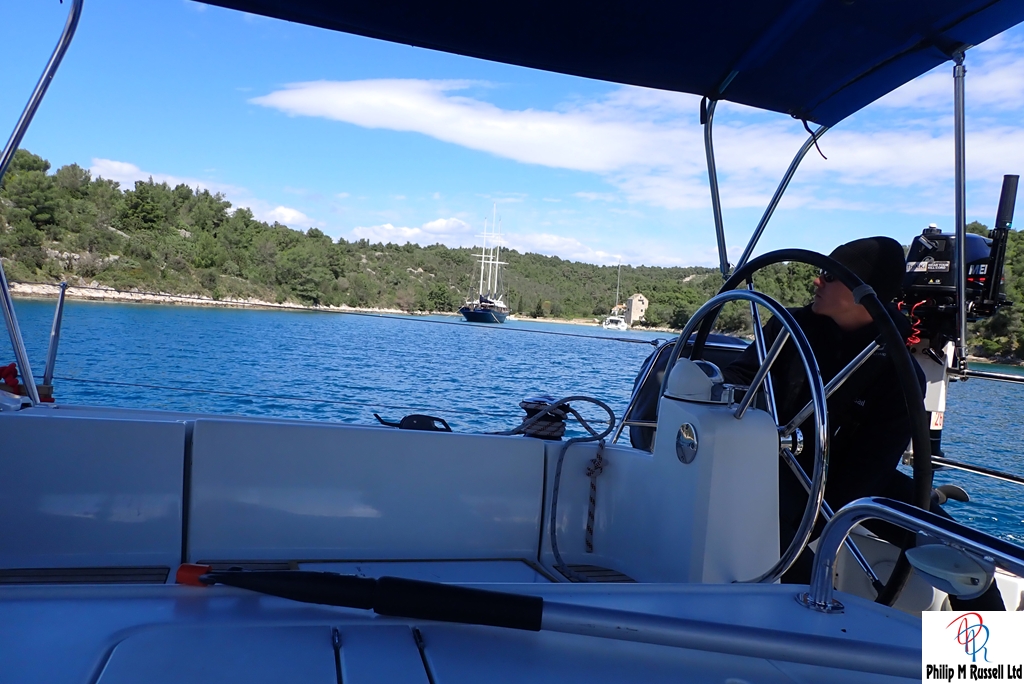
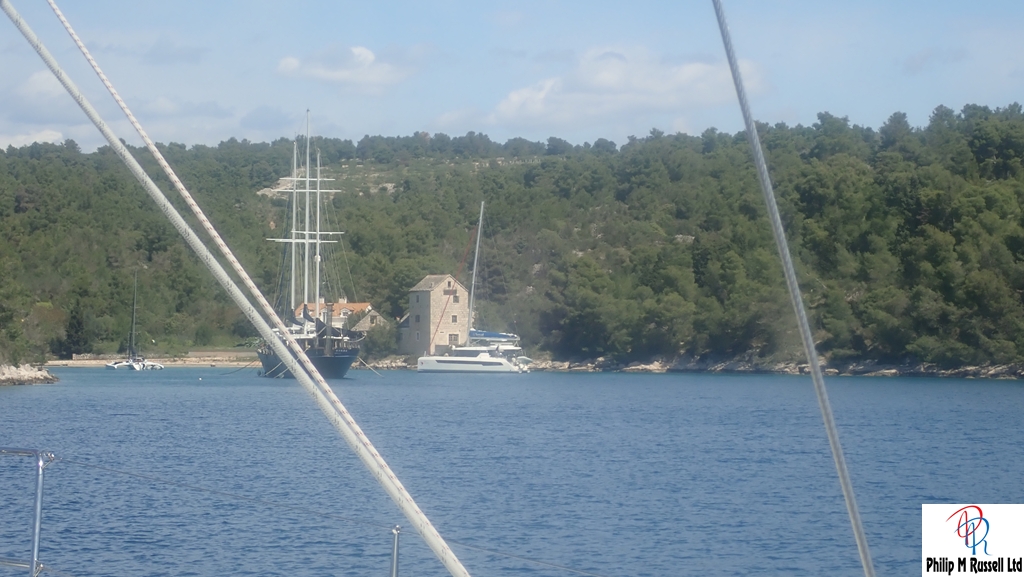
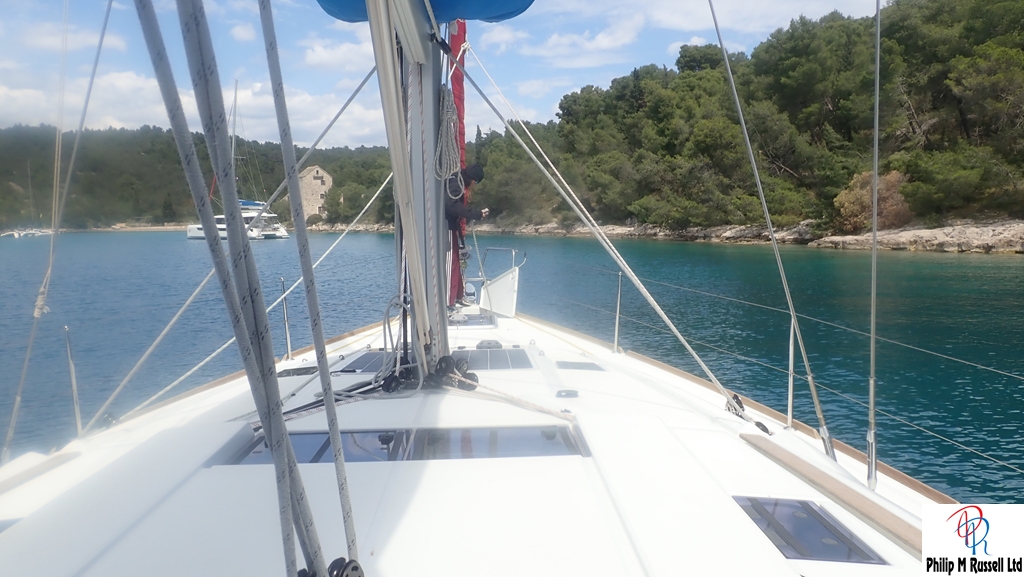
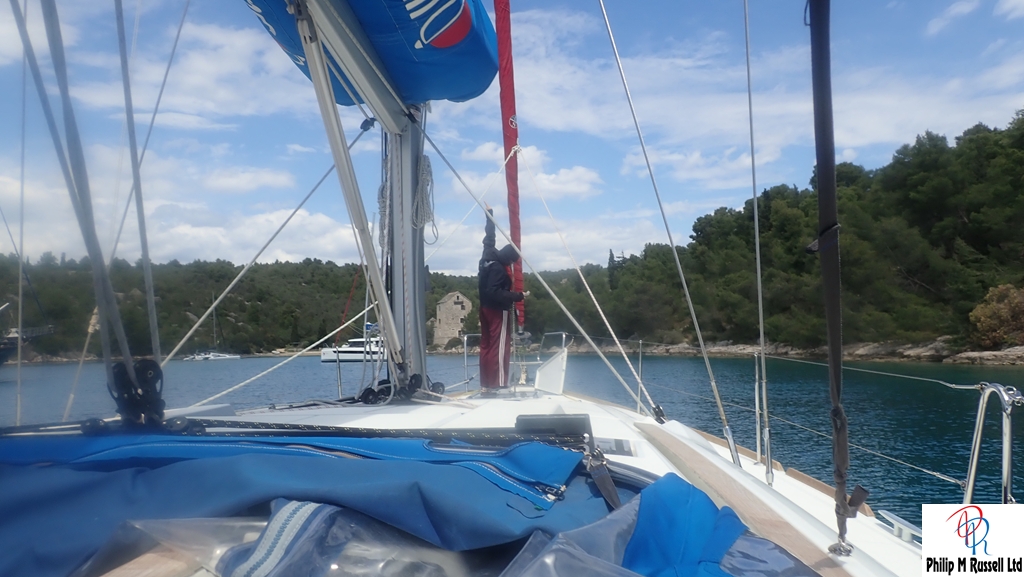
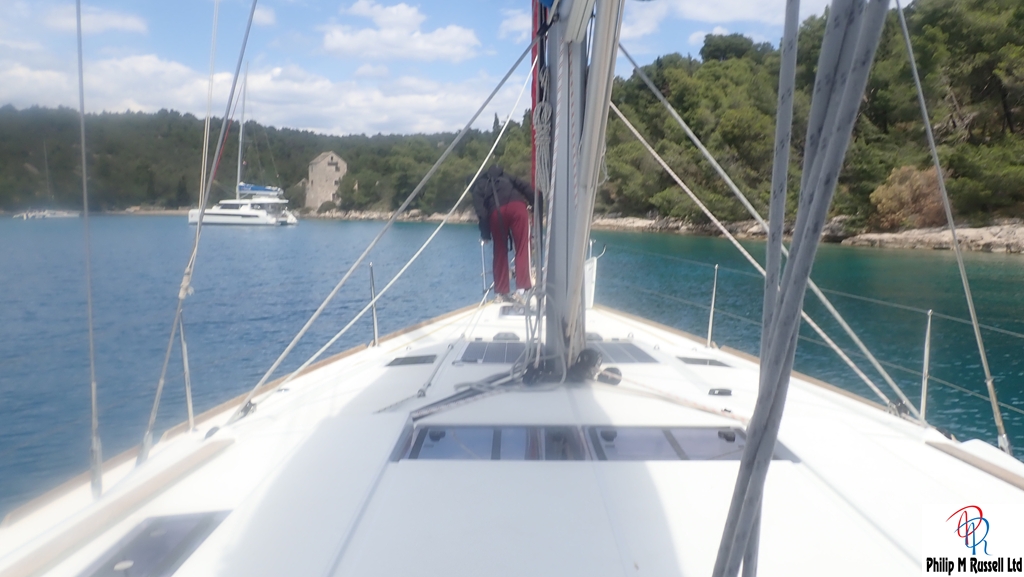
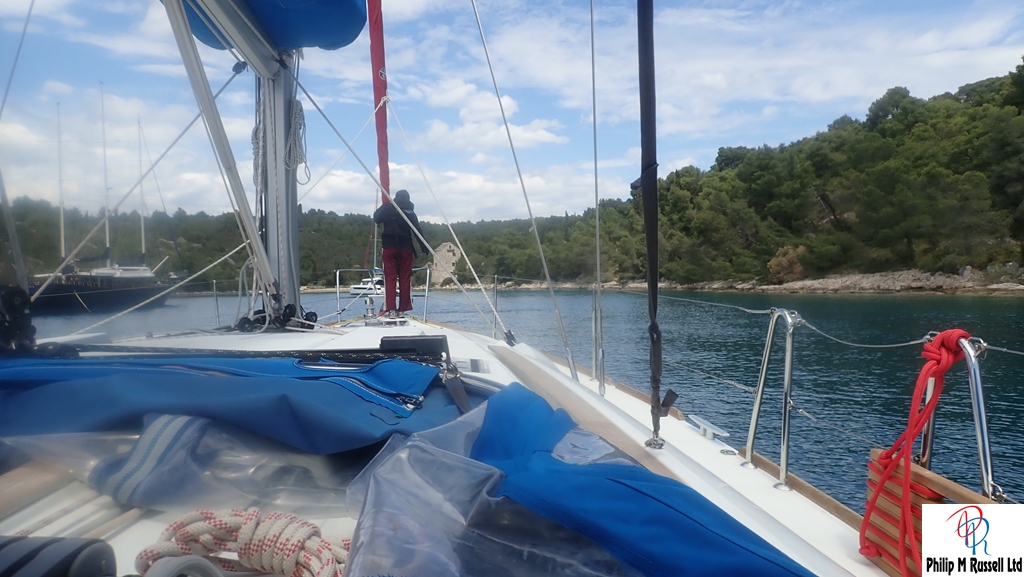
We sailed to a cove where Sailing Fair Isle were already moored. Also anchored nearby were a trimaran and a large sailing boat, giving the bay that lovely Mediterranean look where every boat appears to be casually arranged for a holiday brochure.
We anchored and continued talking to Papaya over the radio. Steve and Barry then came over to us in the dinghy.
There is something very cheerful about people arriving by dinghy. It is not quite like someone knocking on your front door. It is more like your neighbours turning up in a floating wheelbarrow.
Tadek went across to the catamaran to sort out a water problem and turn on the water maker. One of the joys of sailing is discovering that boats are not just vehicles. They are floating collections of systems, pipes, pumps, batteries, switches and mysteries. Some of those mysteries are solved by instructors. Others are solved by turning things off and on again, which appears to be a universal law applying equally to computers, boats and occasionally students.
When Tadek returned, we weighed anchor and moved on to the next lesson.
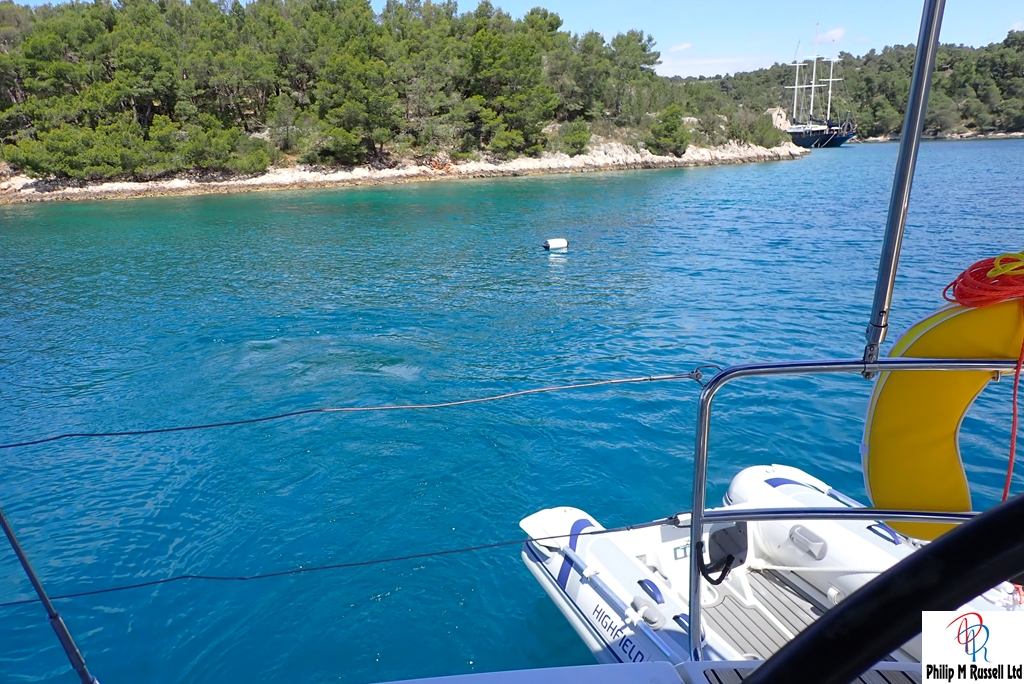
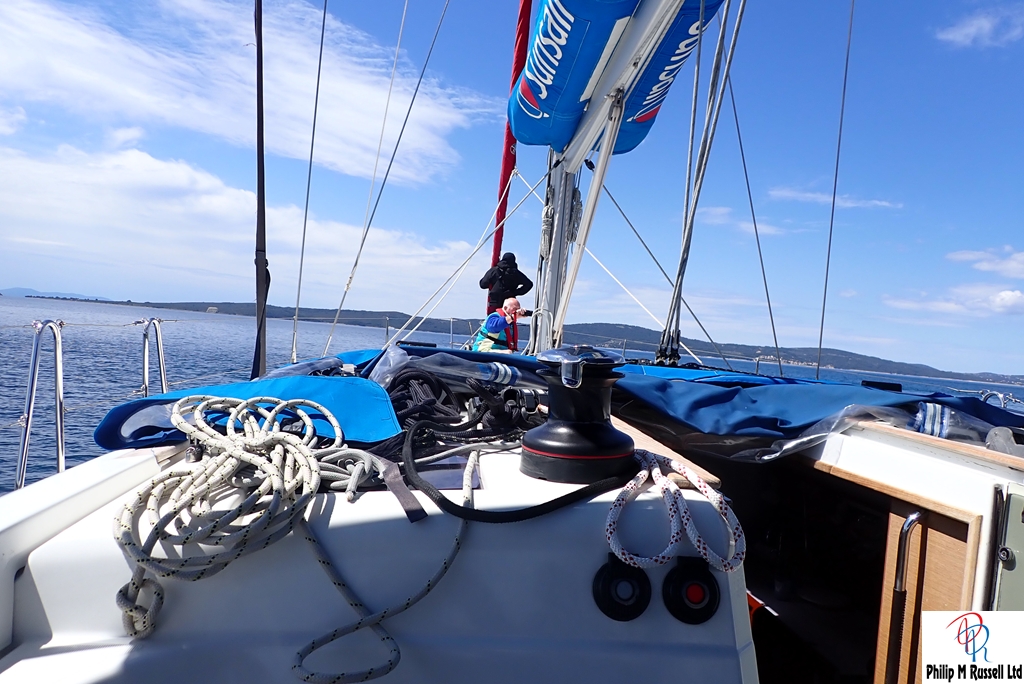
Our next exercise was securing to a buoy outside the bay
where Steve and Judy had retreated.
As we did not have a suitable buoy available for the
purpose, Tadek improvised. We used our faithful man-overboard dummy, Bob, with
an anchor and chain attached, as a pretend buoy.
Obviously, we could not actually moor to Bob. He is not
built for that level of responsibility. But he made a very useful target for
practising the approach.
The exercise was about bringing the boat in carefully,
judging the distance, controlling the speed, and using the boat hook at the
right moment.
This is where I discovered a previously underappreciated
talent. I was rather good at judging the distances.
Perhaps all those years teaching science have finally paid
off. Estimating distance, speed and closing rate is really just applied physics
with a boat hook. I may not have looked especially elegant, but I was accurate,
and in sailing that is often the more useful quality.
After the buoy practice, we anchored again and had lunch.
Lunch on a yacht always has a slightly strange quality. One
moment you are learning serious seamanship skills. The next, you are trying to
balance food, plates, cups, bags, waterproofs and camera equipment in a space
designed by someone who clearly believed elbows were optional.
Still, eating lunch at anchor in a Croatian cove is not a
bad way to spend a Wednesday.
Once lunch was finished, it was time for one of the most
important lessons of the course: man overboard recovery.
Bob was about to go swimming again.
This time, Bob went overboard without his anchor and chain.
This was not a mooring exercise. This was the full man-overboard drill under
sail.
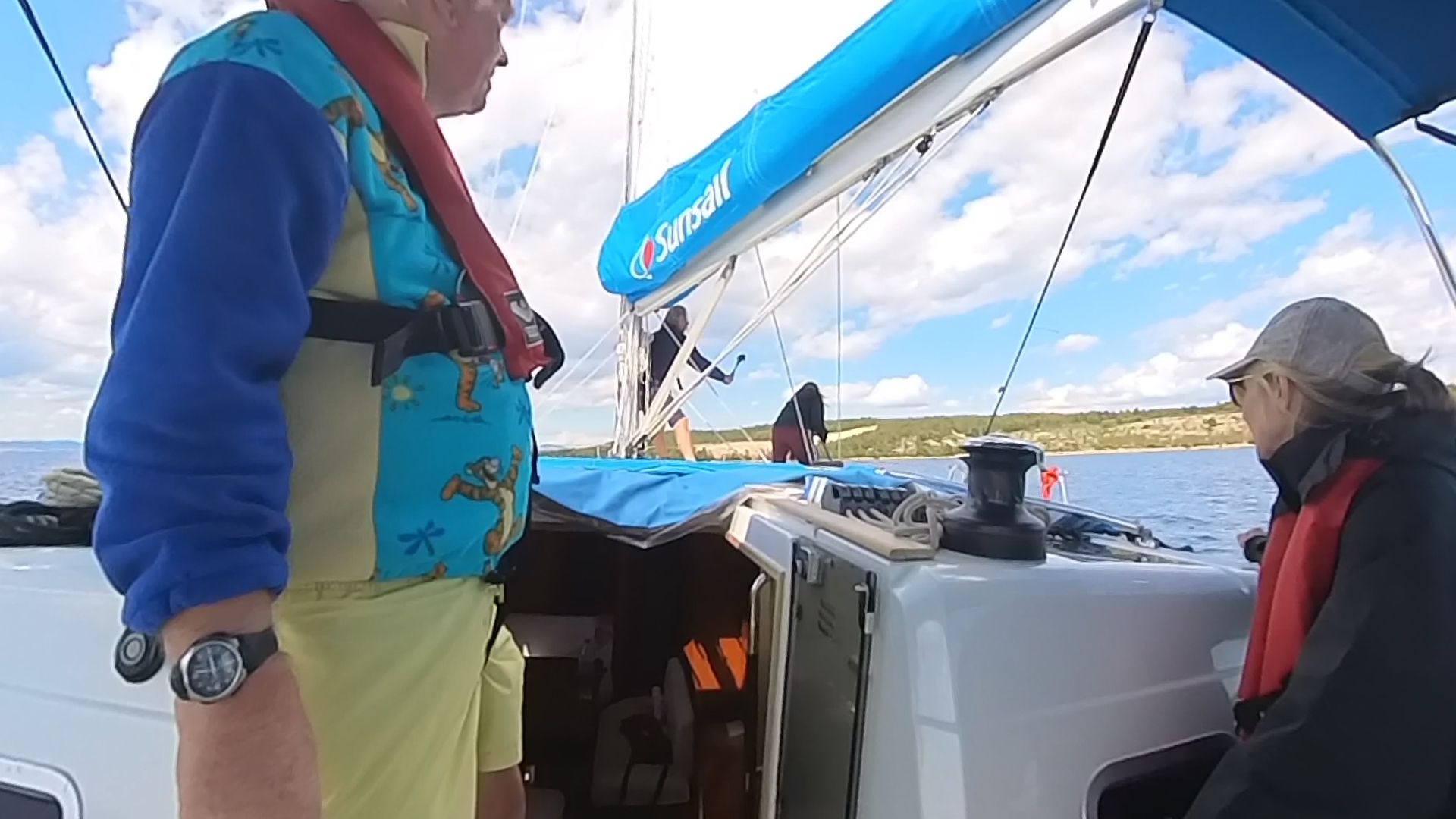
We hoisted the sails, got underway, and then Bob was thrown
into the water.
The moment someone goes overboard, everything changes. Even
with a dummy, the mood shifts. There is a job to do, and everyone has a role.
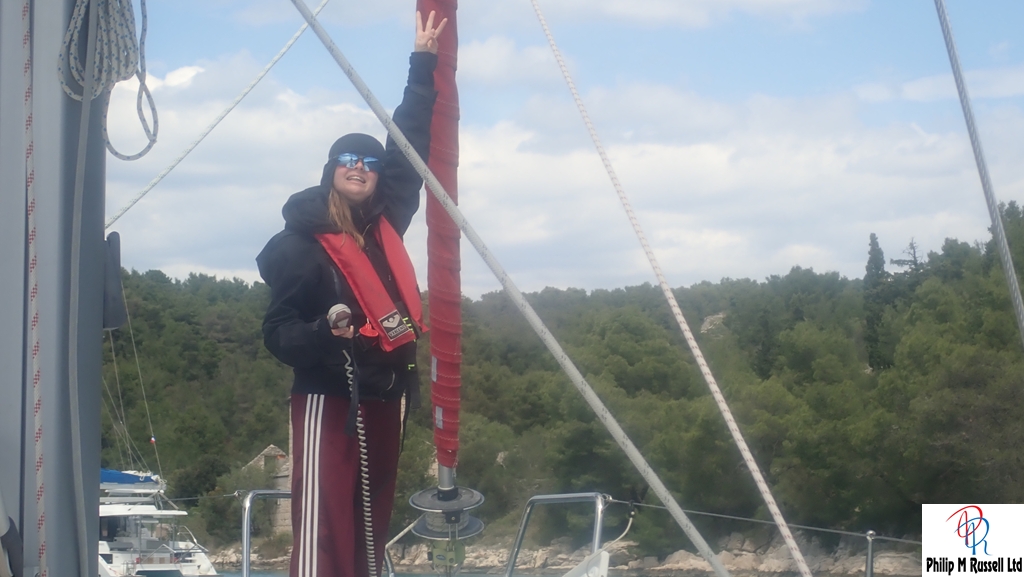
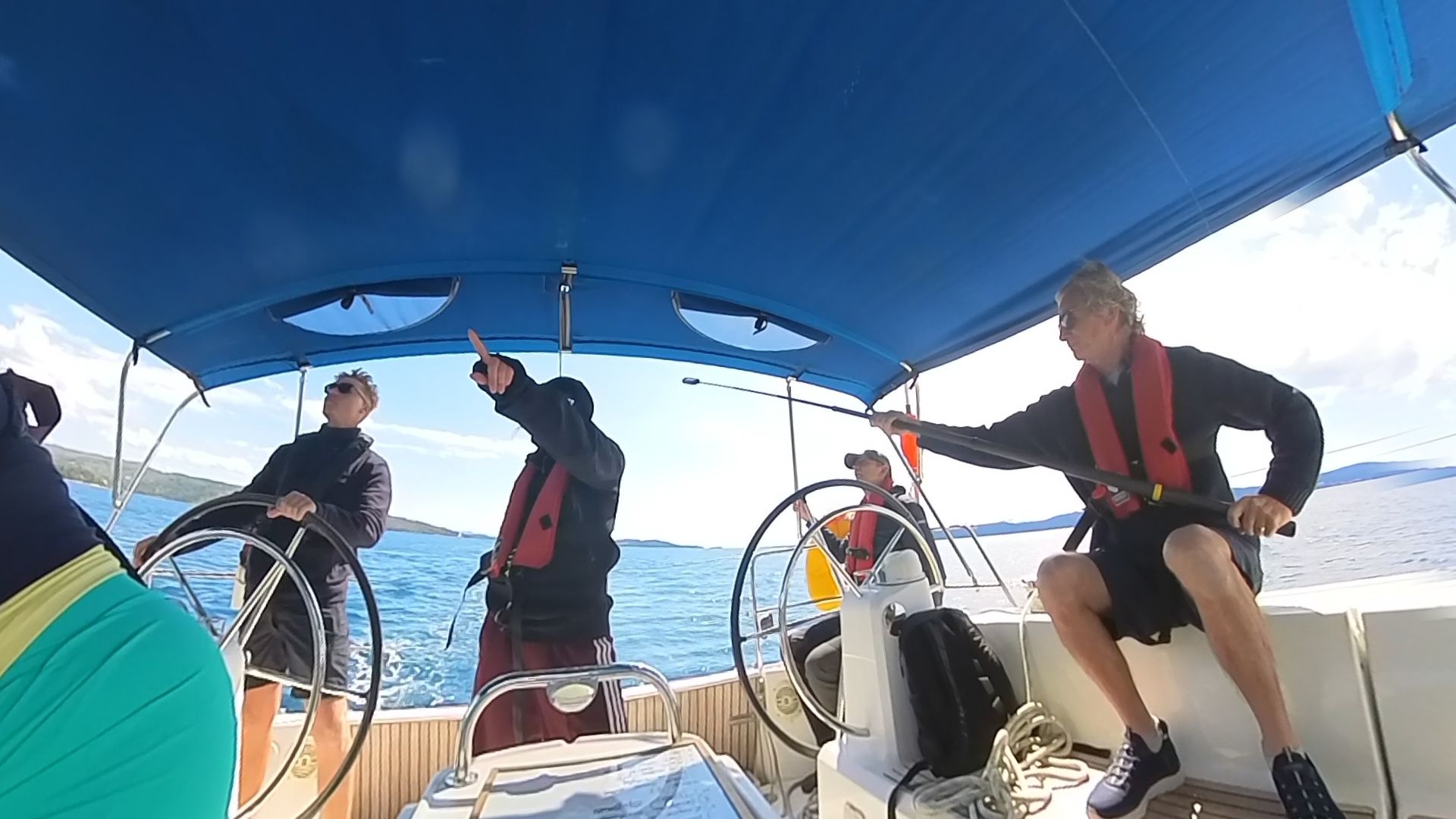
One person points continuously at the casualty.
This sounds
simple, but it is one of the most important jobs on the boat. A person in the
water can disappear from view surprisingly quickly, especially in waves, glare,
or poor visibility. The pointer’s job is not to help with ropes, not to offer
opinions, not to admire the scenery, but to point and keep pointing.
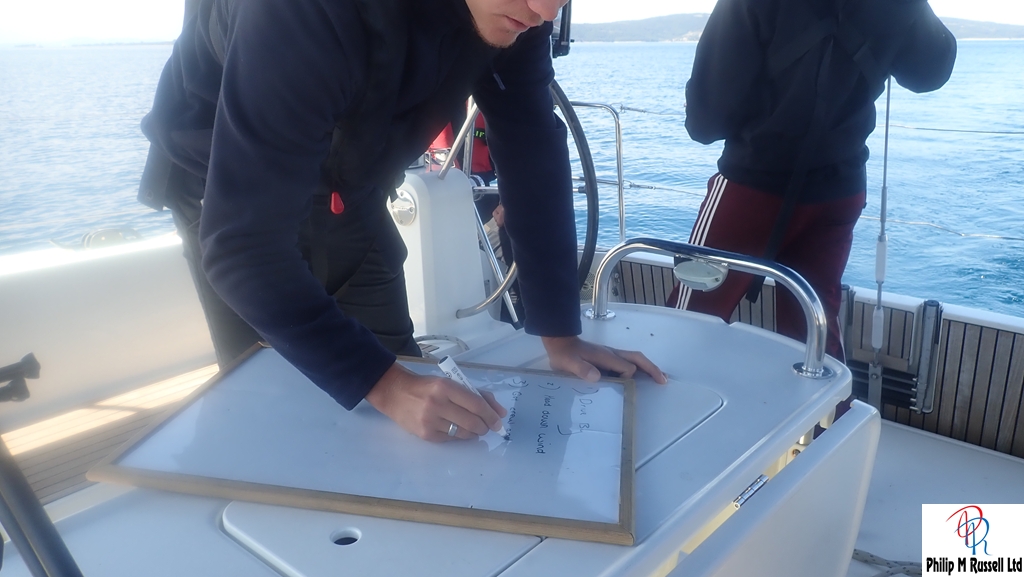
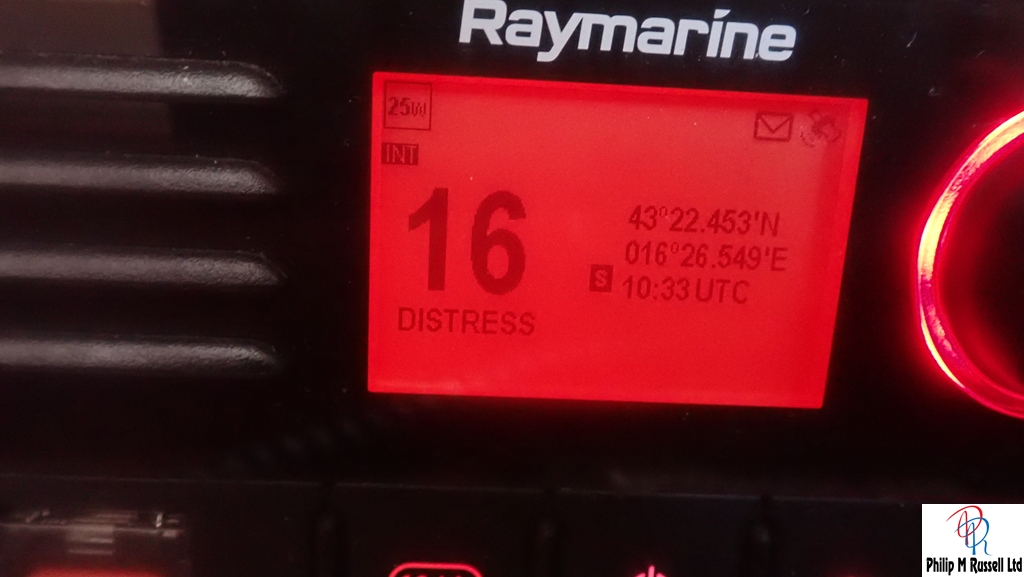
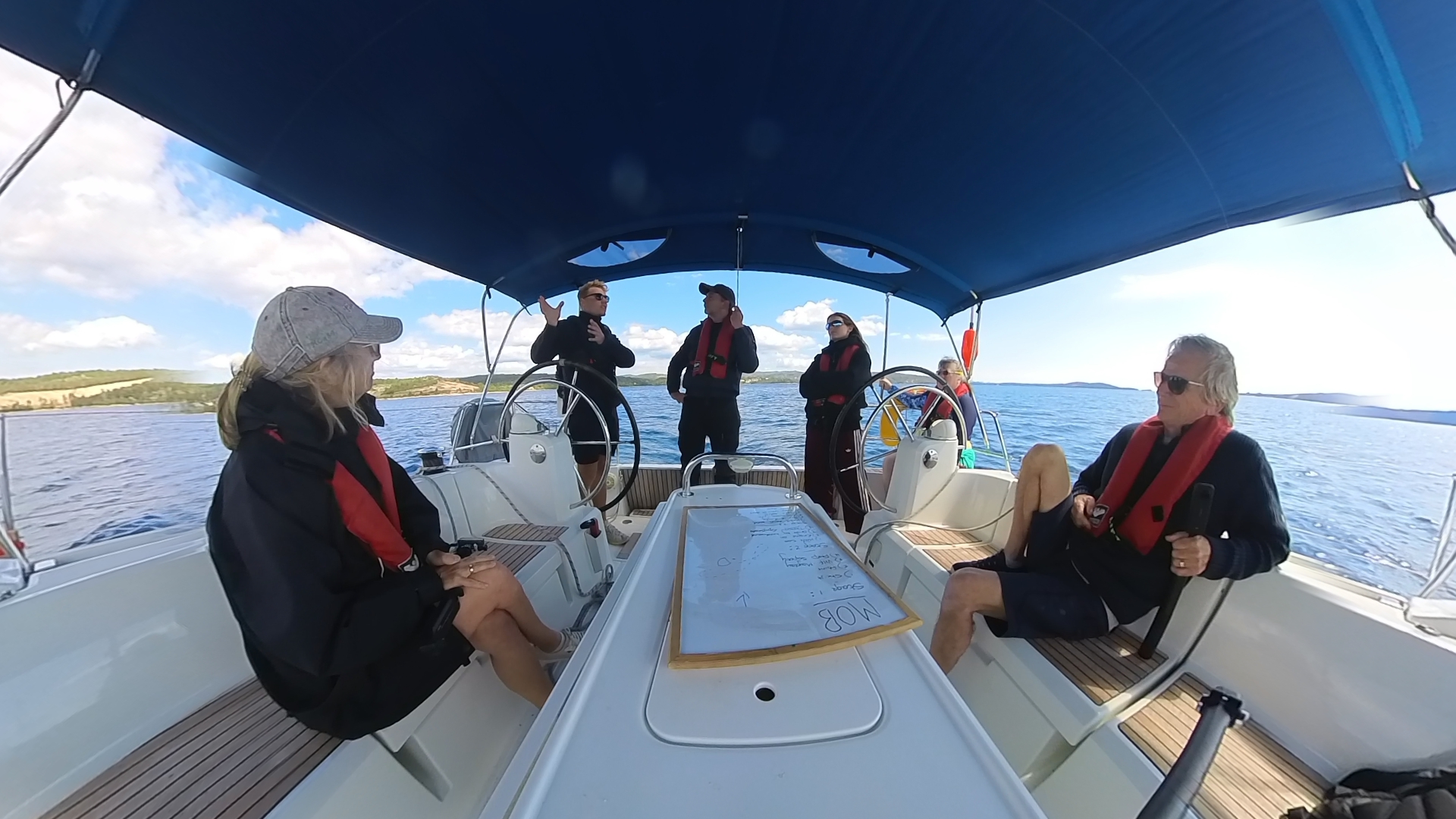
Another person went below to the radio and practised making
a Mayday call. We used the full procedure because, in a real emergency, there
would be no time to invent the wording.
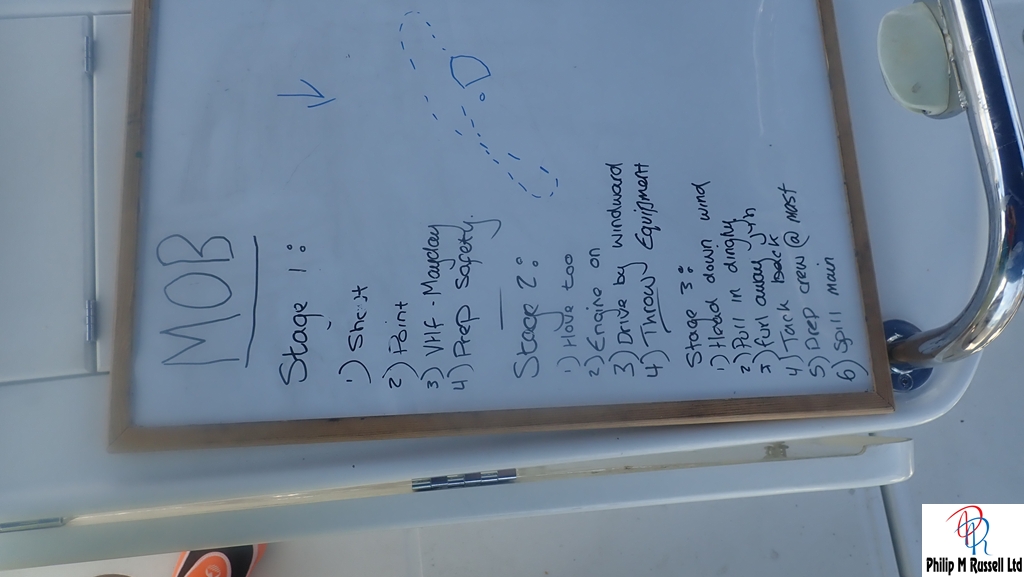
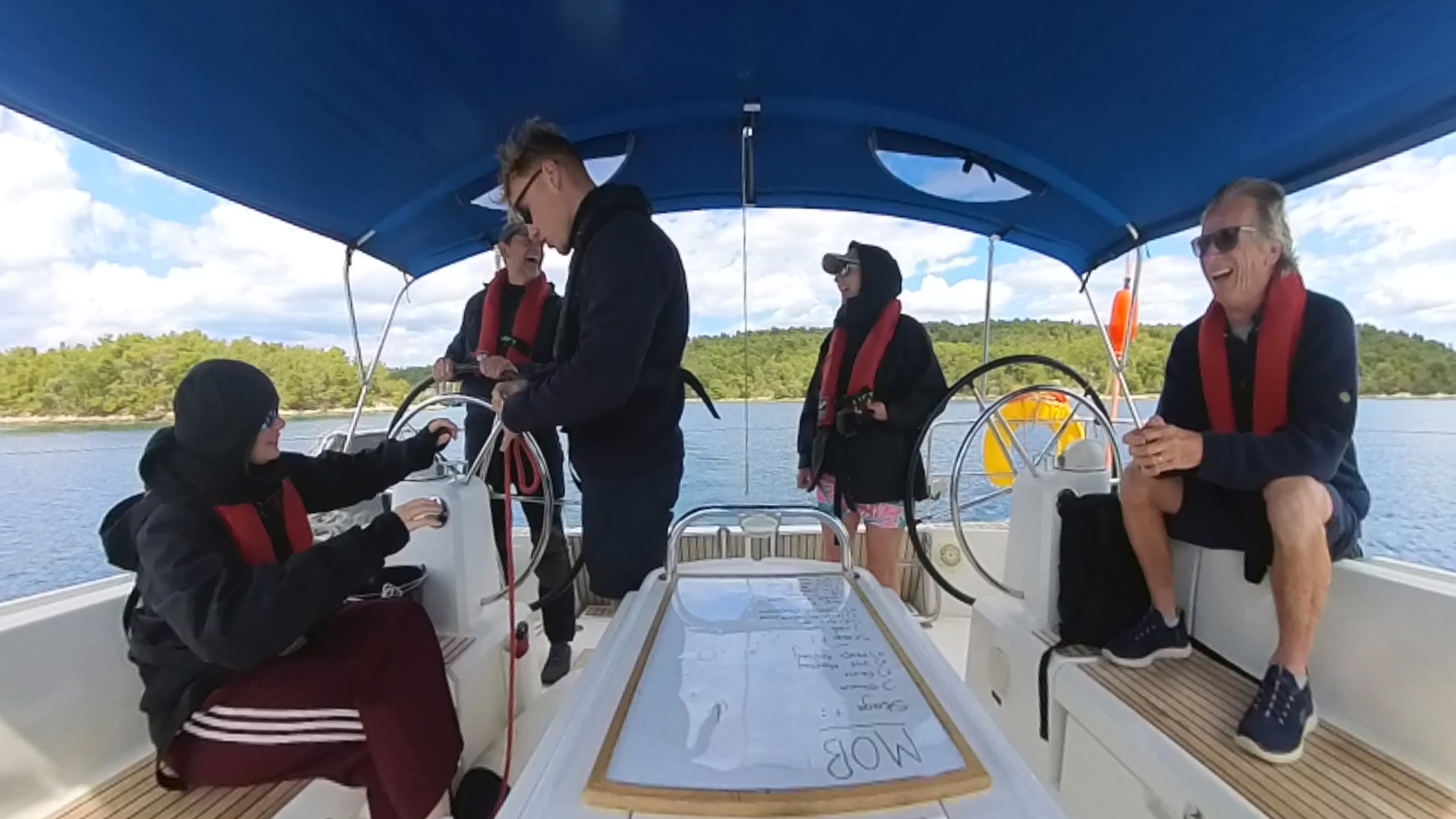
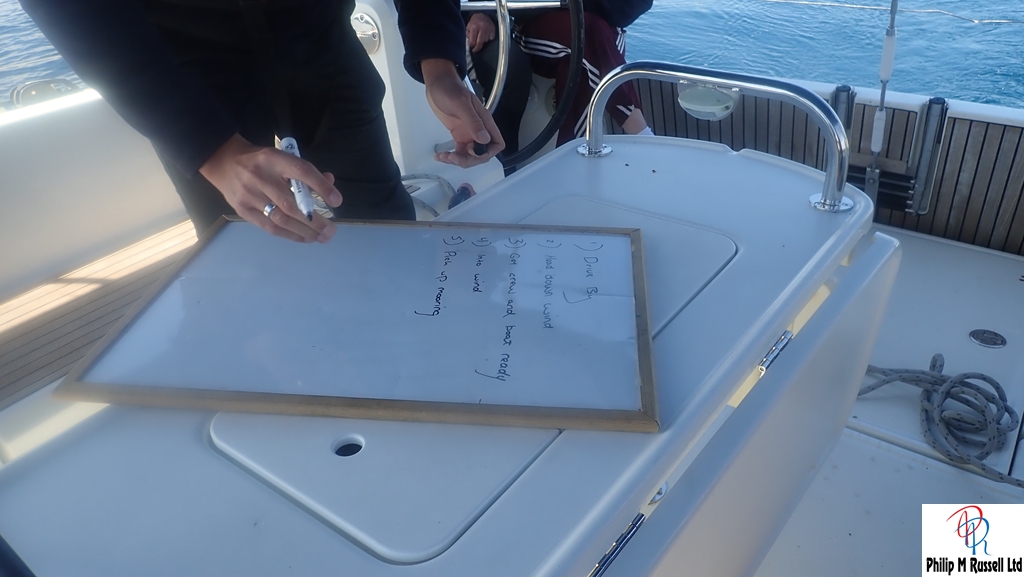
Having the details written on the wall near the radio was
extremely useful.
In an emergency, the brain does not always behave like a calm
and orderly filing cabinet. It is much more likely to behave like a drawer full
of tangled charging cables. A clear written prompt is not a weakness; it is
good safety practice.
We practised the full Mayday message, including the
important information that would be needed in a real emergency:
the
distress call,
the
vessel name,
the
position,
the
nature of the emergency,
the
assistance required,
the
number of people on board,
and
any other useful information.
It is easy to imagine that you would remember all of this
under pressure. In reality, even remembering your own postcode can become
difficult if someone has fallen overboard and the boat is moving away from
them.
This is why drills matter.
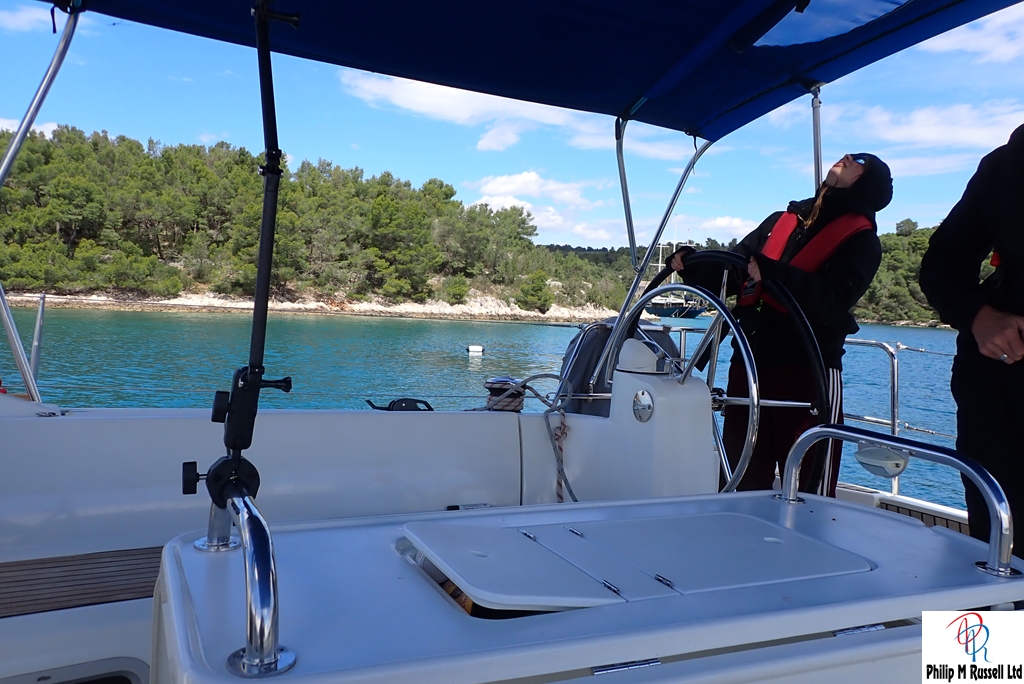
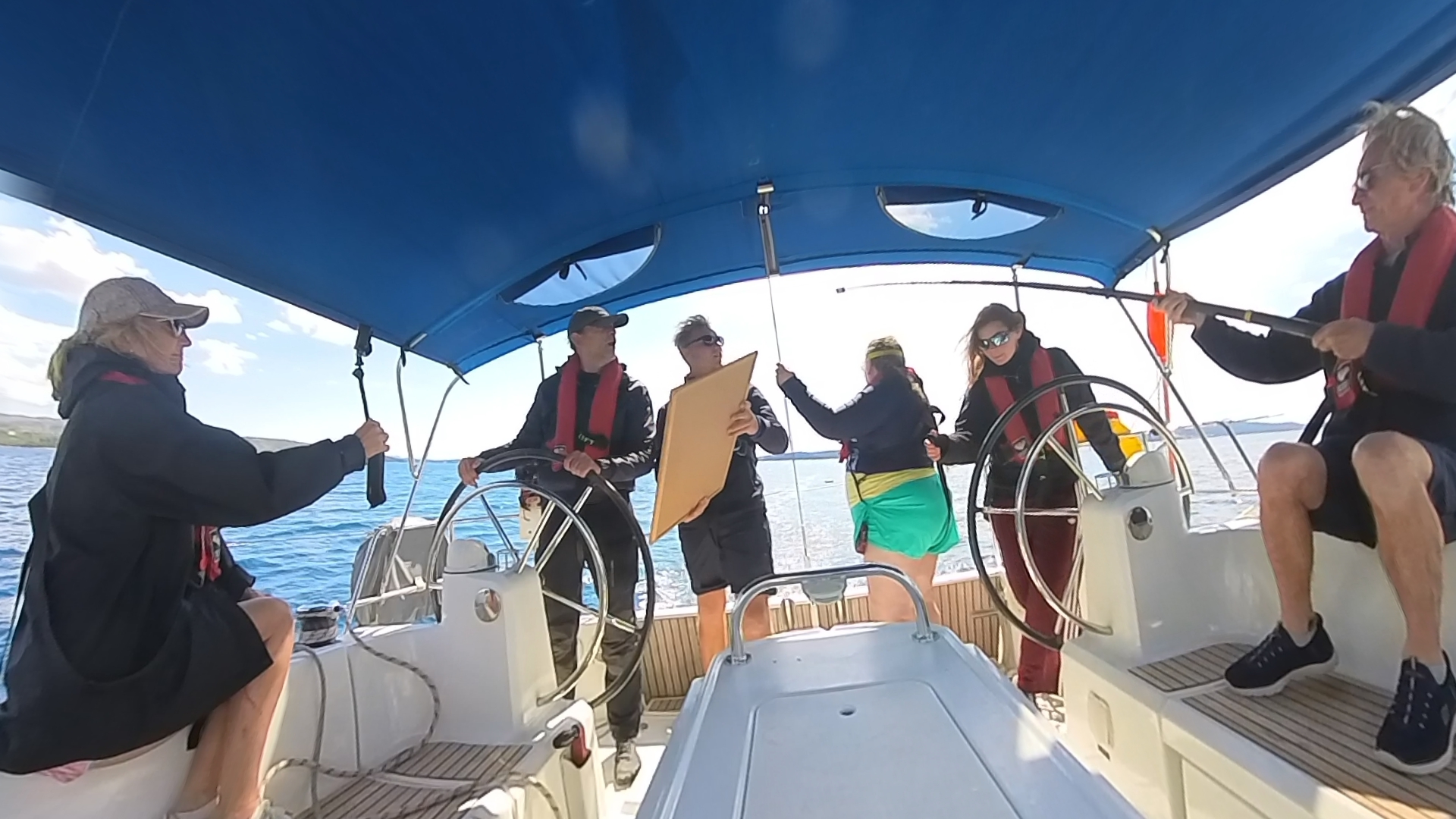
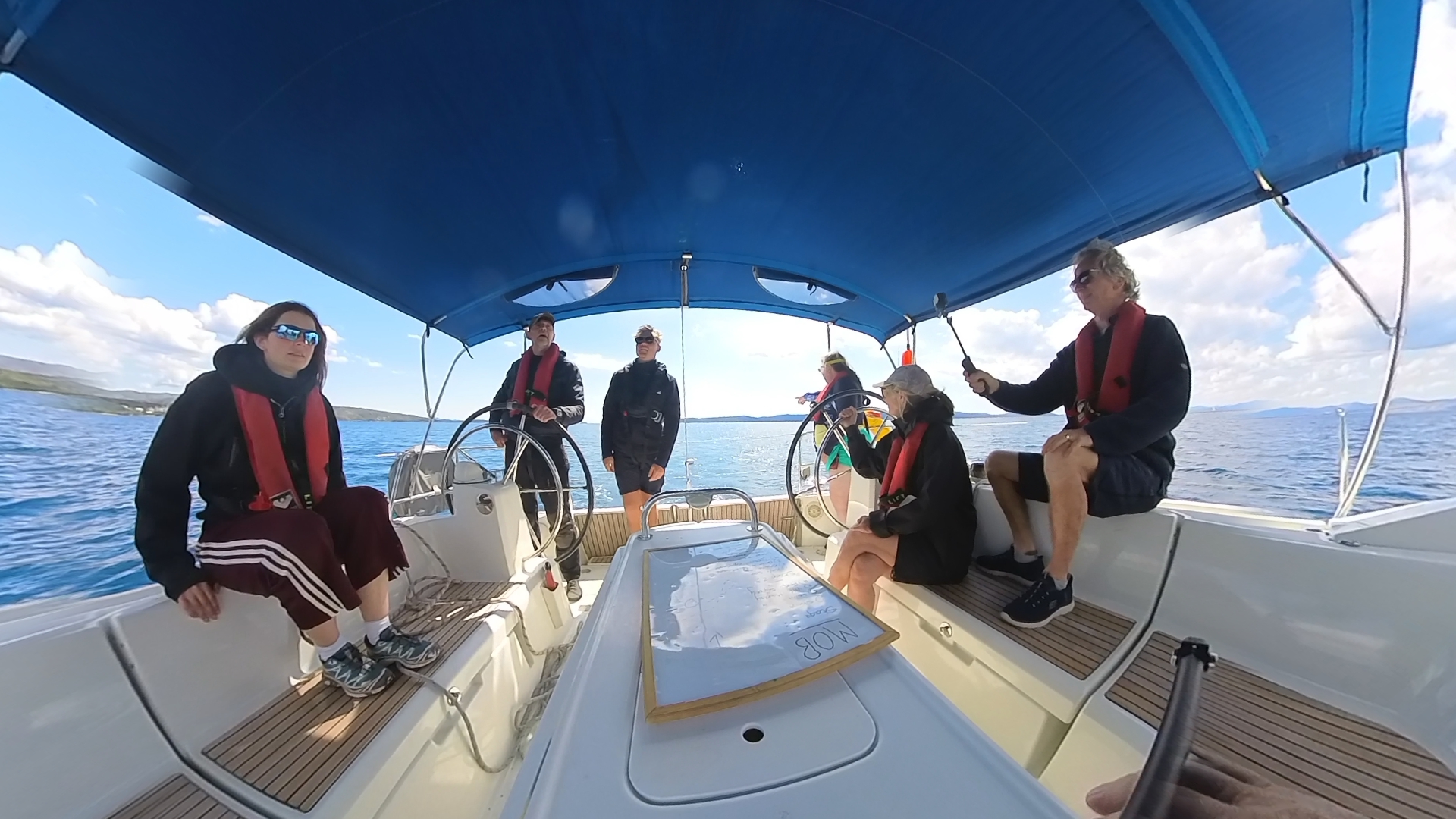
We repeated the drill we had learnt on the first day, but
this time John was in charge.
To make matters more interesting, he could not use the cheat
sheet.
This is where training starts to become more realistic. It
is one thing to follow instructions when someone is standing beside you. It is
quite another to take command of the process yourself.
We approached Bob on the leeward side, pretending to throw
the danbuoy as we passed, then circled round again for the recovery. Emily was
ready with the boat hook, and I returned to my new specialist role of counting
down the distance.
I have decided that every boat should have someone whose
official job title is “Distance Announcer”. It sounds much grander than “man at
the front shouting numbers”.
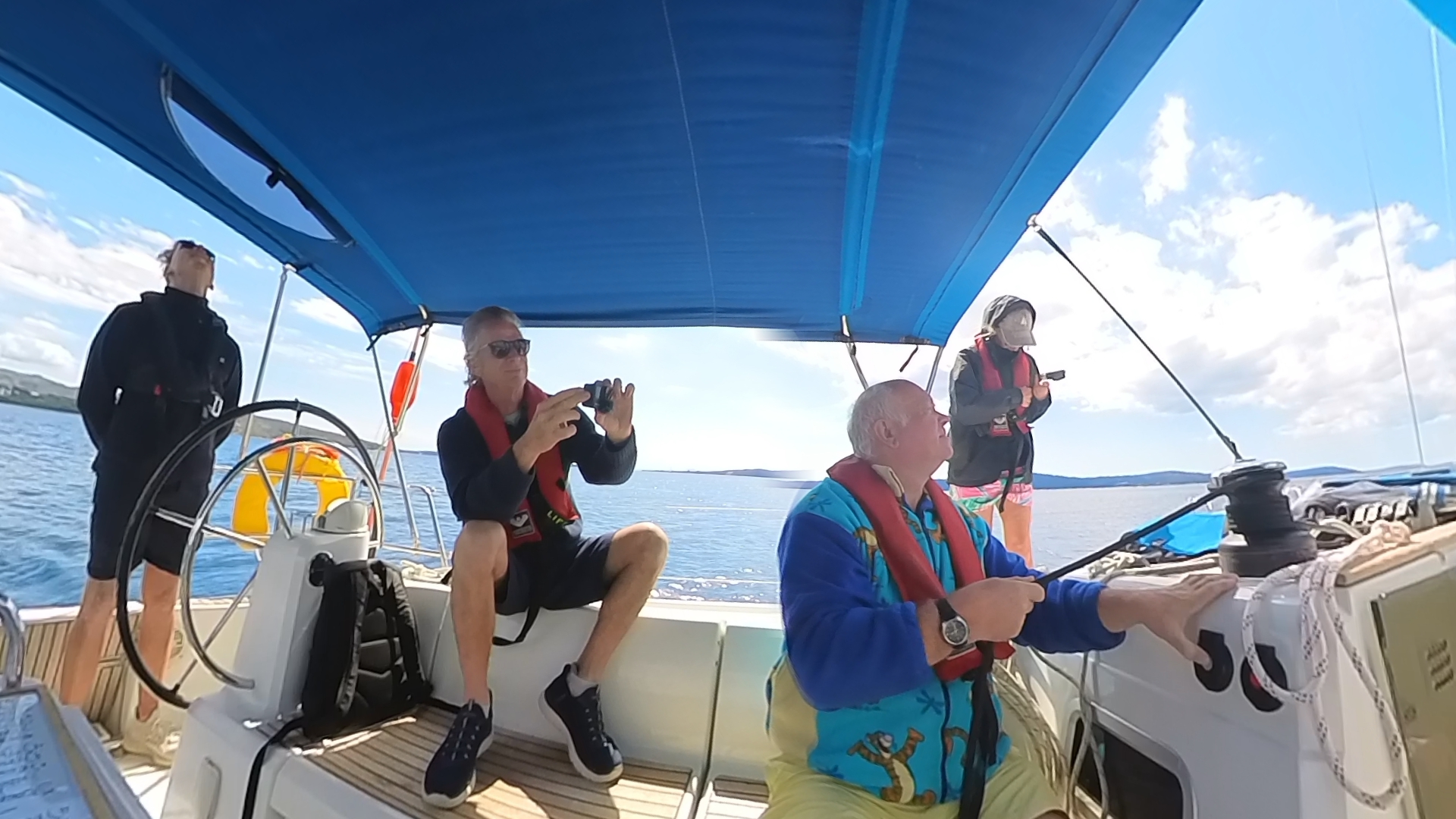
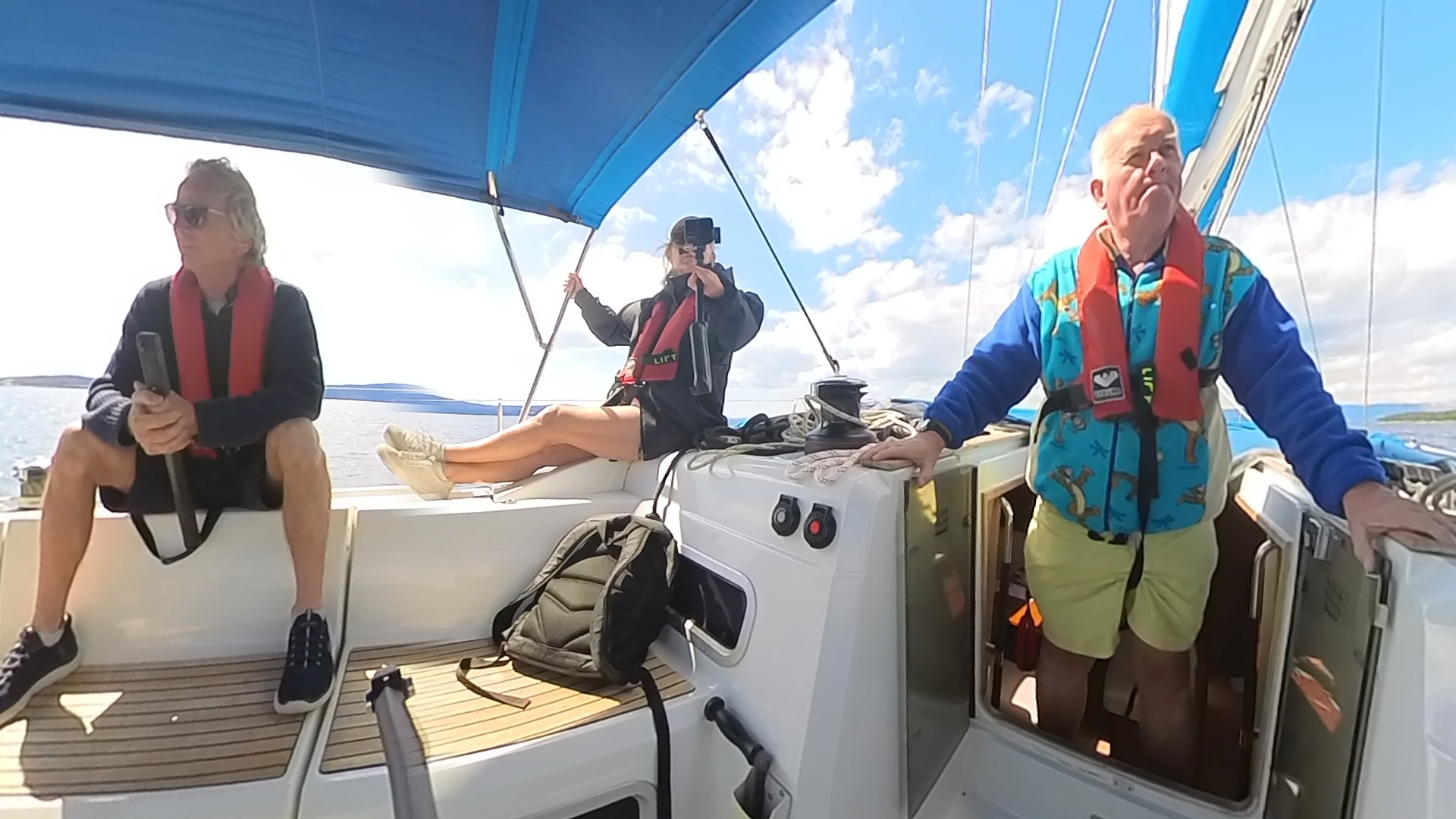
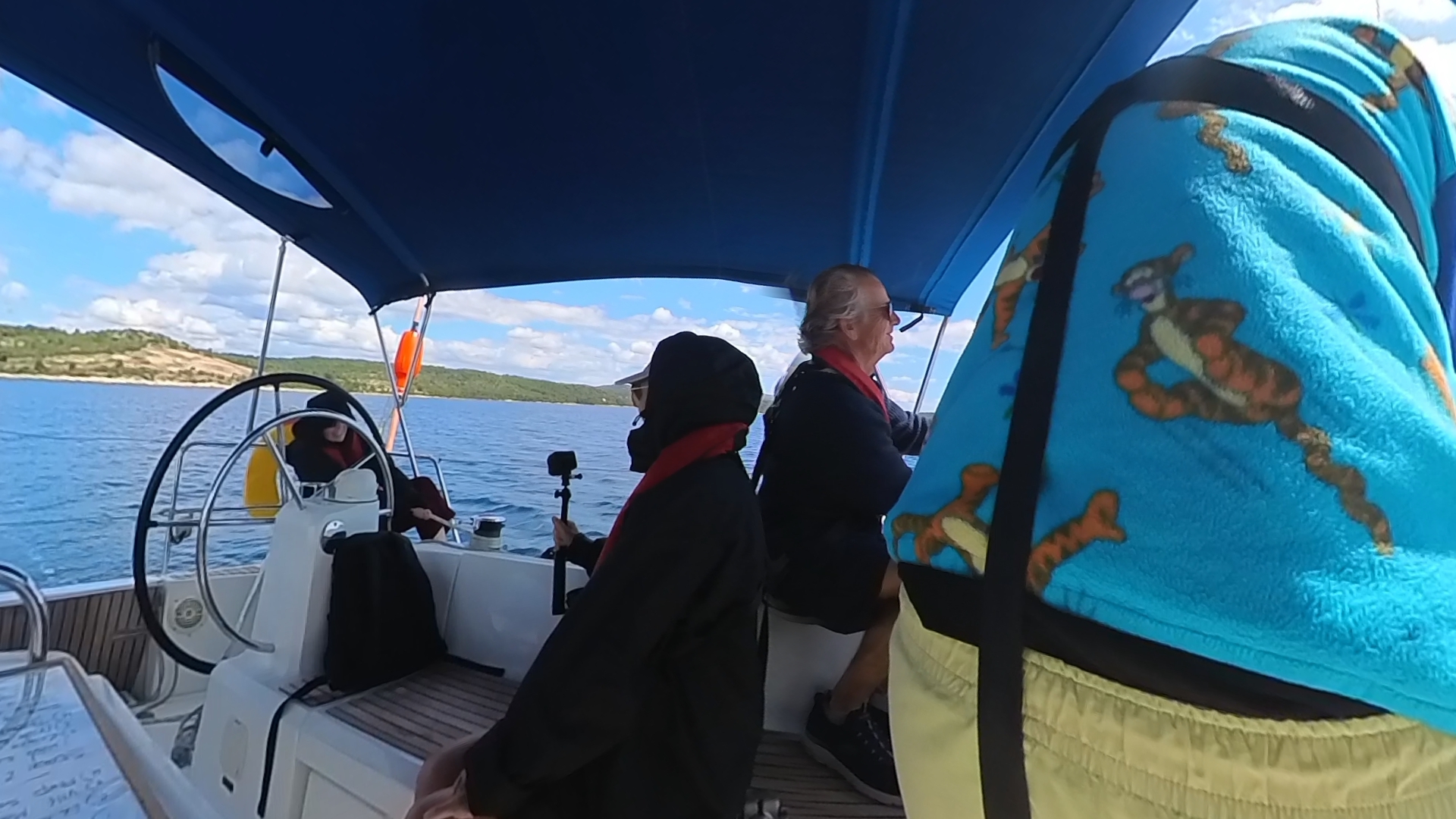
All the while, Steve and Judy were filming us from every
possible angle.
They filmed from the side. They filmed from ahead. They
filmed from behind. They filmed the approaches, the turns, the recovery
attempts and probably several facial expressions that I had not authorised for
public release.
We repeated the drill five or six times, which gave them
plenty of material. It also gave us the chance to improve.
The first attempt at any boat handling exercise often feels
slightly chaotic. By the fifth or sixth, you begin to understand the rhythm:
Spot the casualty.
Keep pointing.
Communicate clearly.
Prepare the boat.
Control the approach.
Recover safely.
It was an excellent exercise, and Bob, as usual, suffered
without complaint.
After the man-overboard practice, we took Steve, Judy and
Tadek back.
Then we discovered that the catamaran had been flooding
because Barry could not find the stopcock.
This is the sort of sentence that sounds amusing afterwards
but is probably less amusing when you are on the boat in question.
Fortunately, the problem was sorted. The stopcock was found,
the water was controlled, and Papaya was saved from becoming a very
expensive paddling pool.
It was another reminder that sailing is not only about
sails, wind and navigation. It is also about knowing where everything is on
board, especially the things that stop water coming in.
With the drama resolved, we went sailing again.
At first there was wind. Then there was less wind. Then
there was the suggestion of wind. Then there was the memory of wind.
We battled on for a while, trying to make progress under
sail, but eventually the breeze faded to almost nothing. There comes a point
when even the most optimistic sailor has to admit that the sails are mostly
decorative.
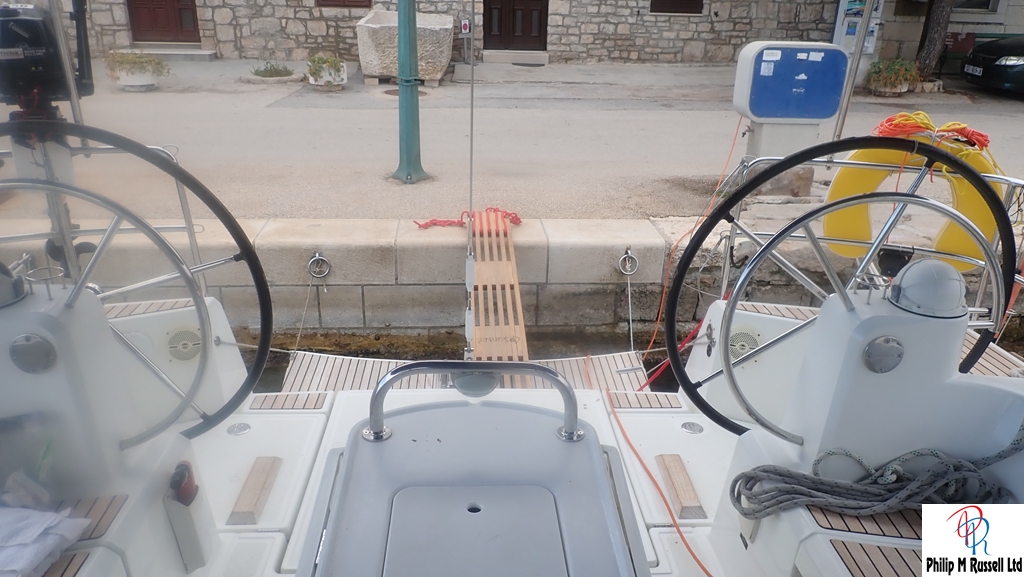
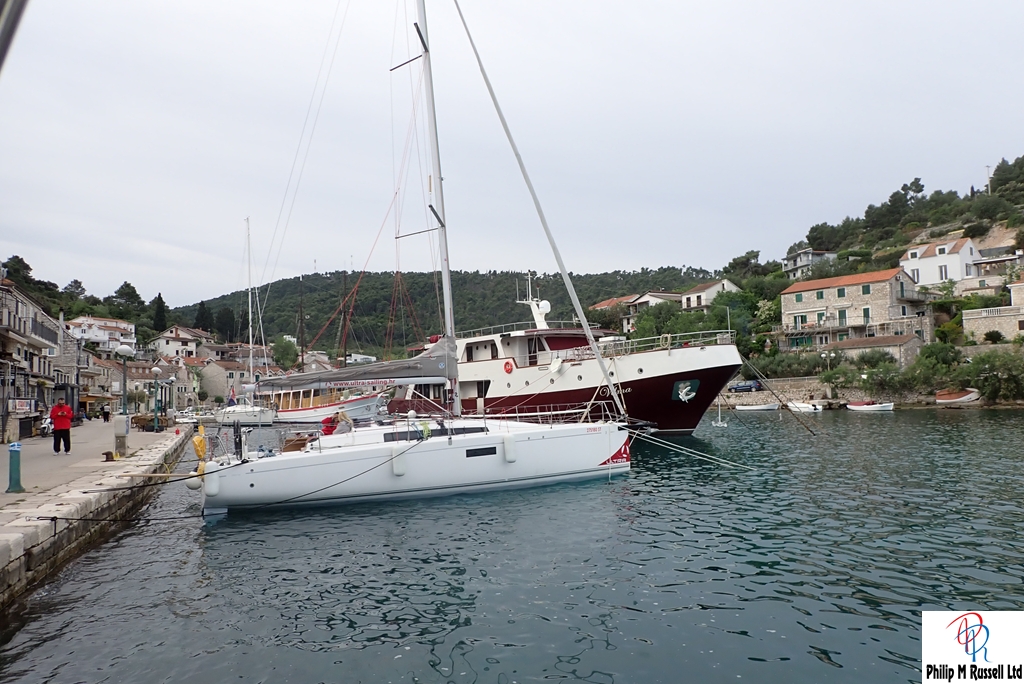
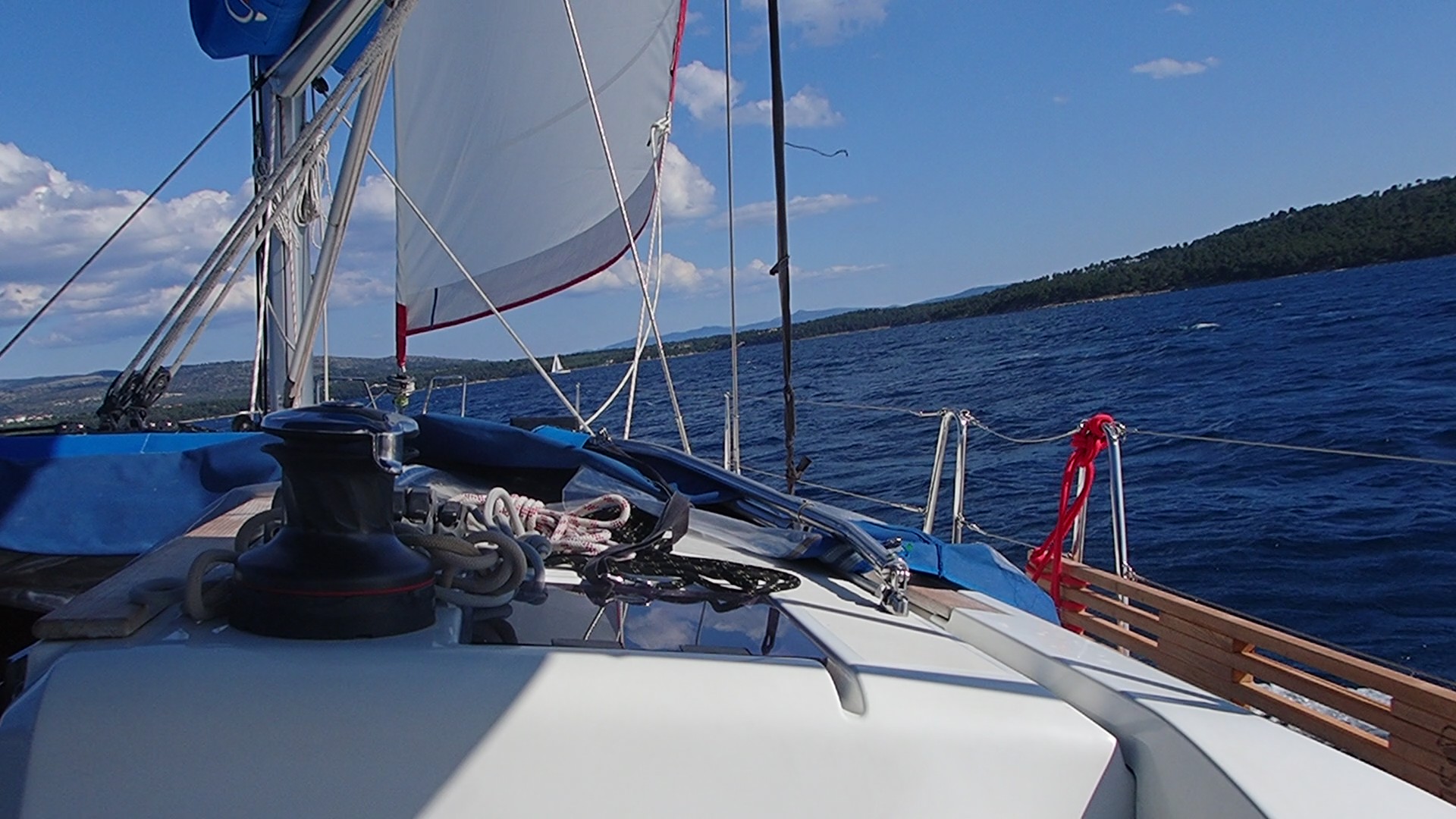
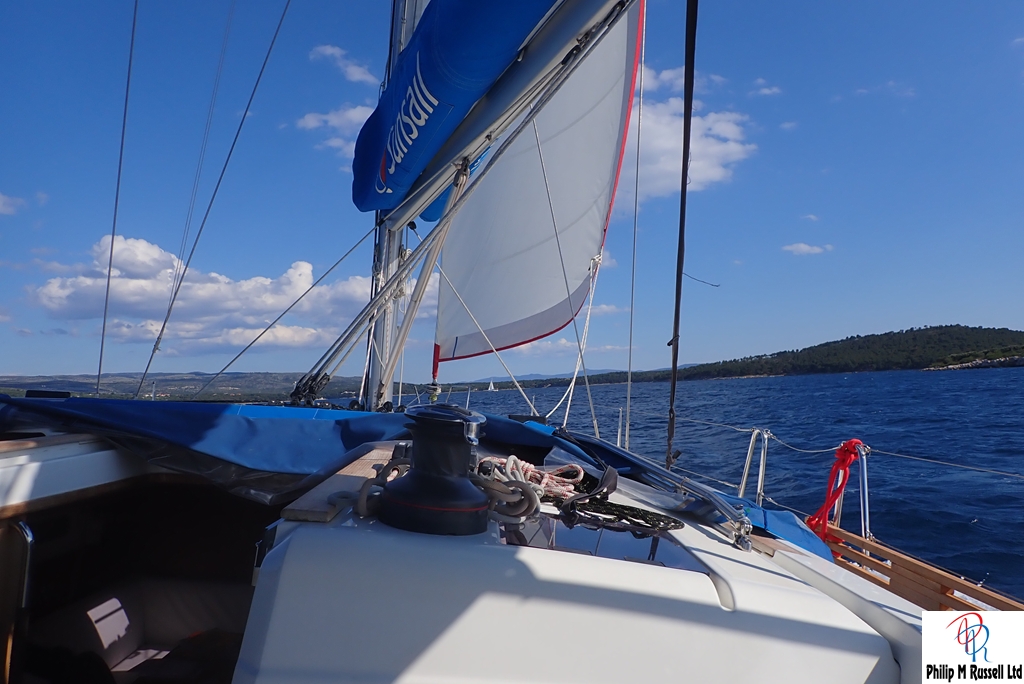
So we took the sails down and motored towards the marina at
Milna.
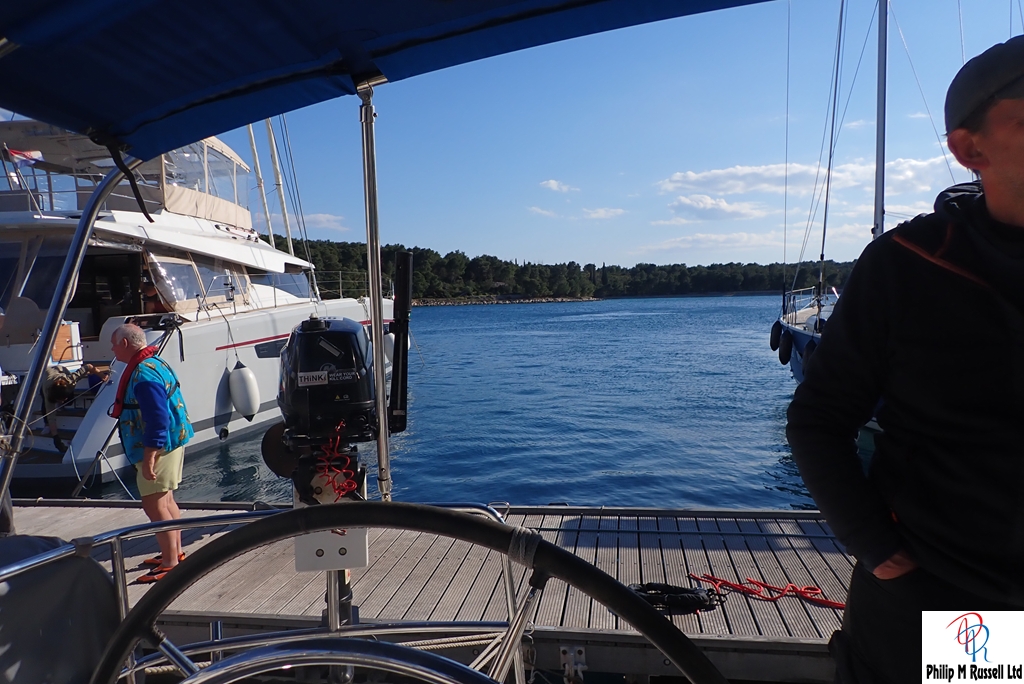
Steve and Judy followed us in, as the marina had been booked
by Sunsail and we had agreed to have a meal together that evening.
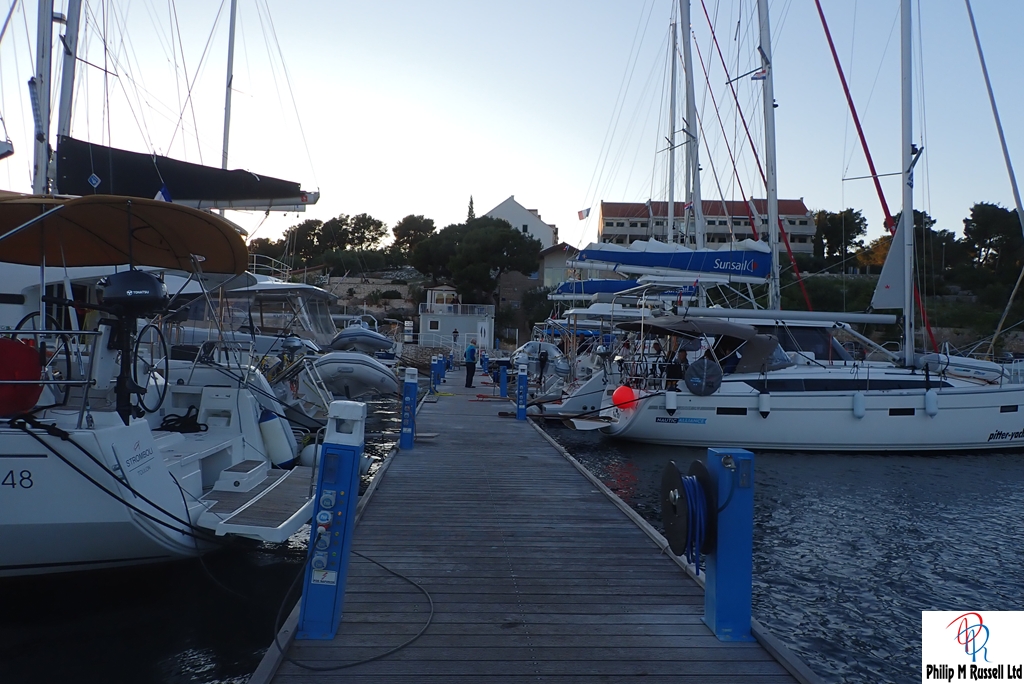
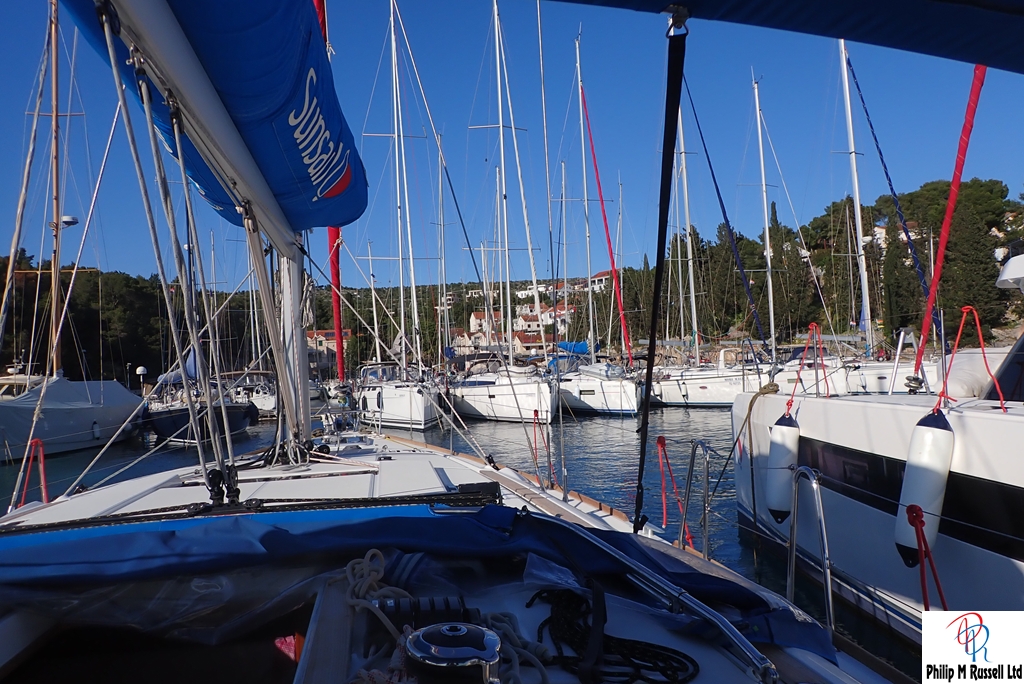
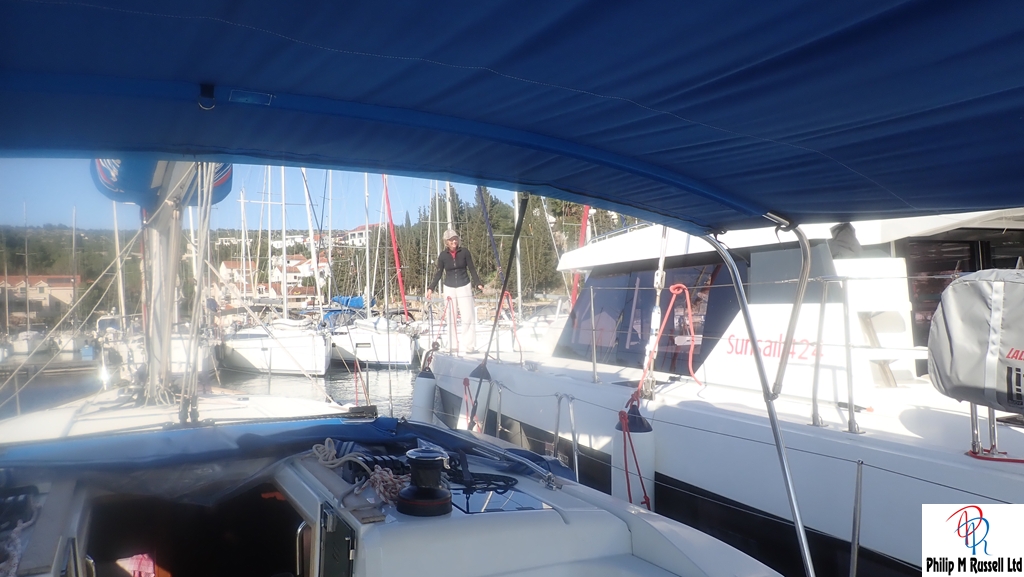
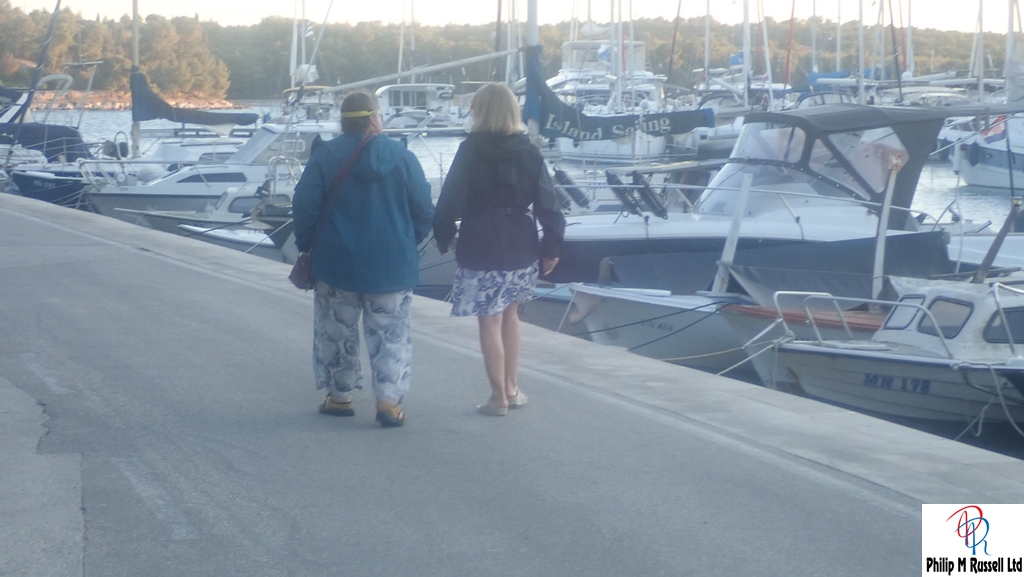
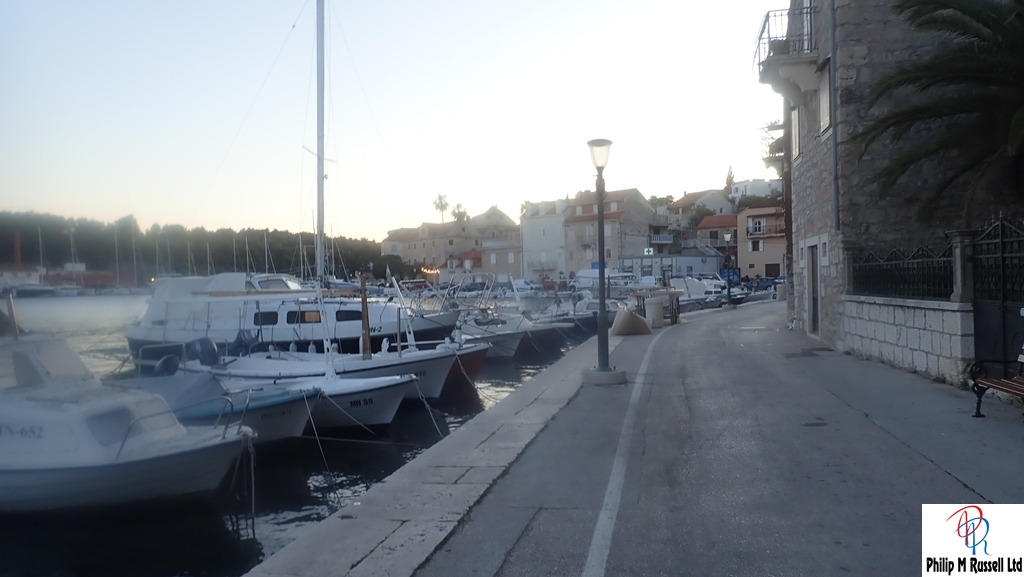
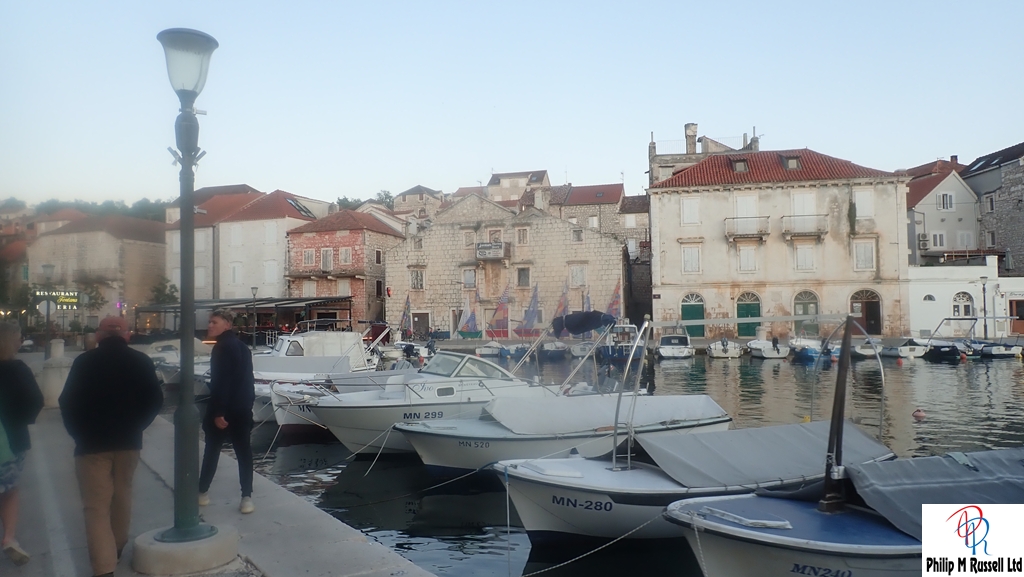
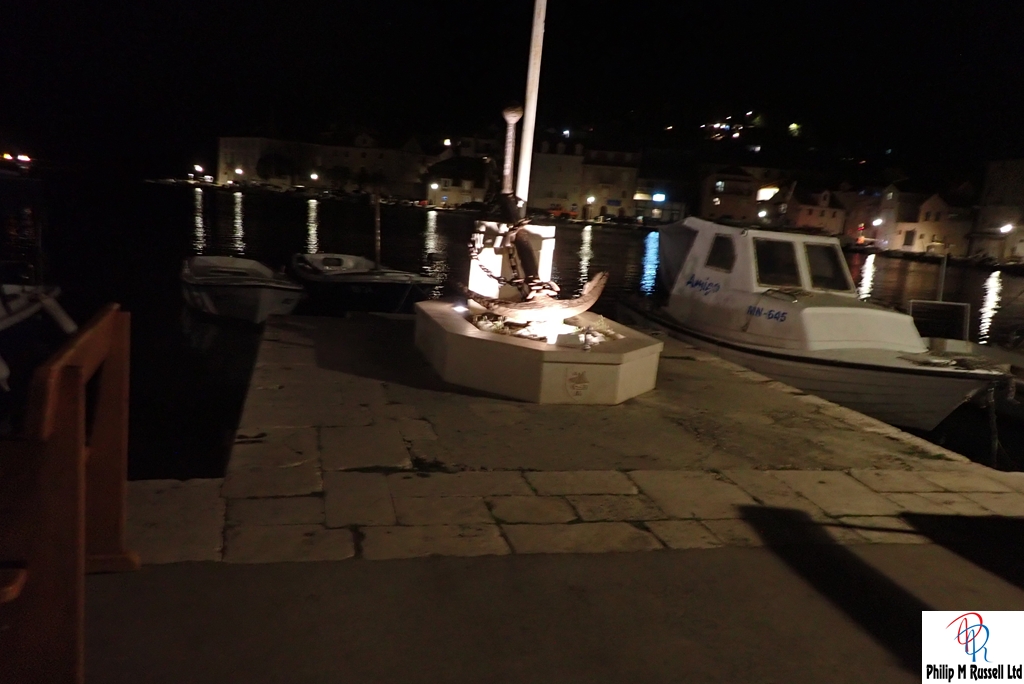
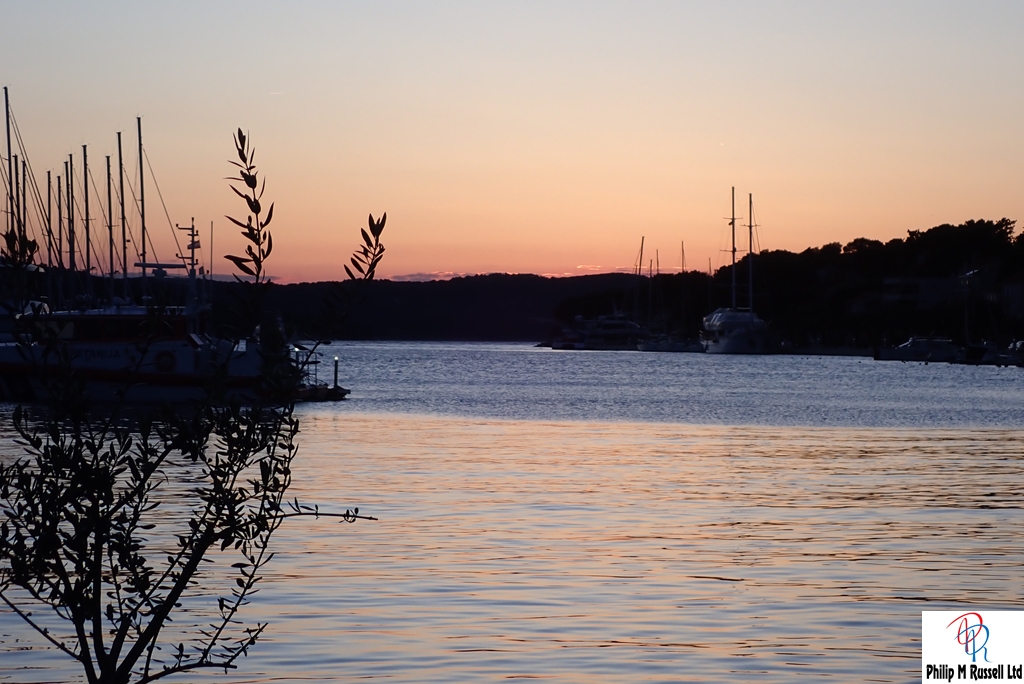
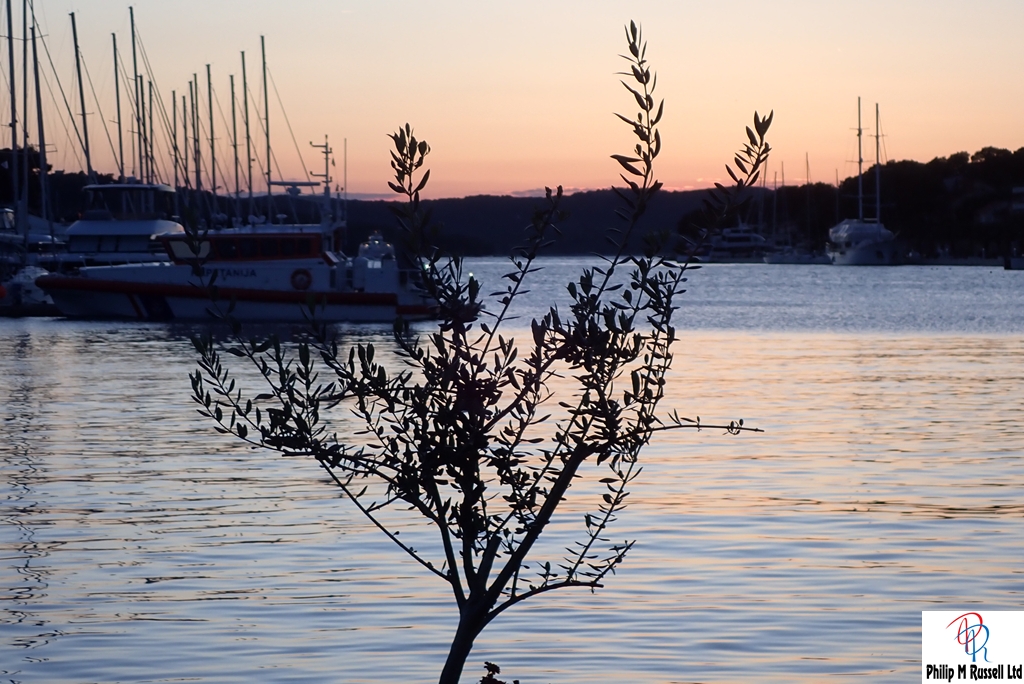
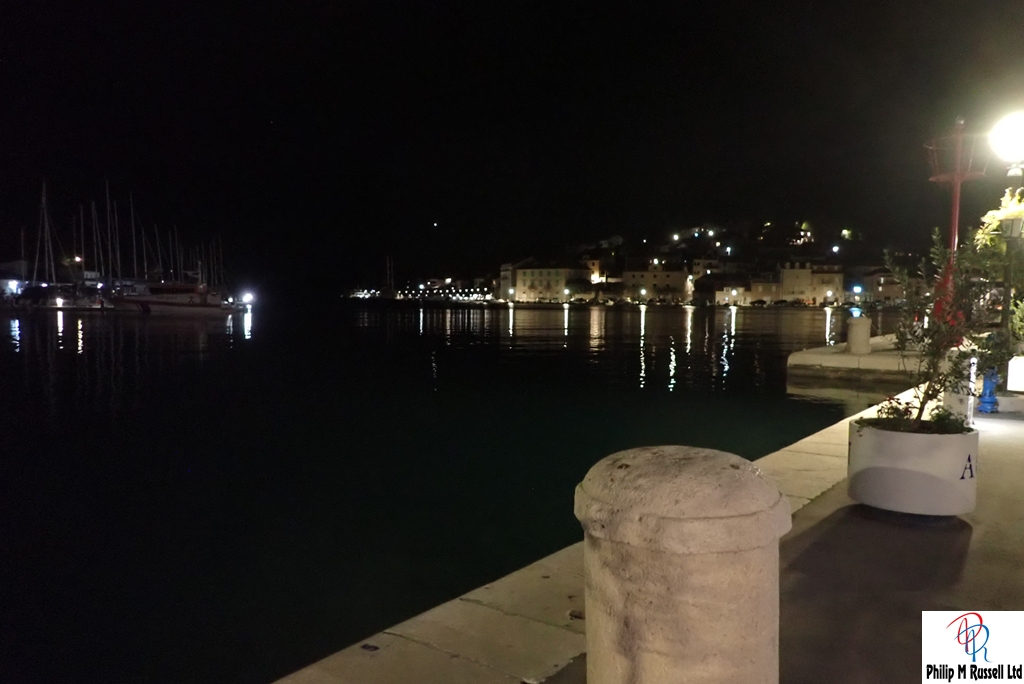
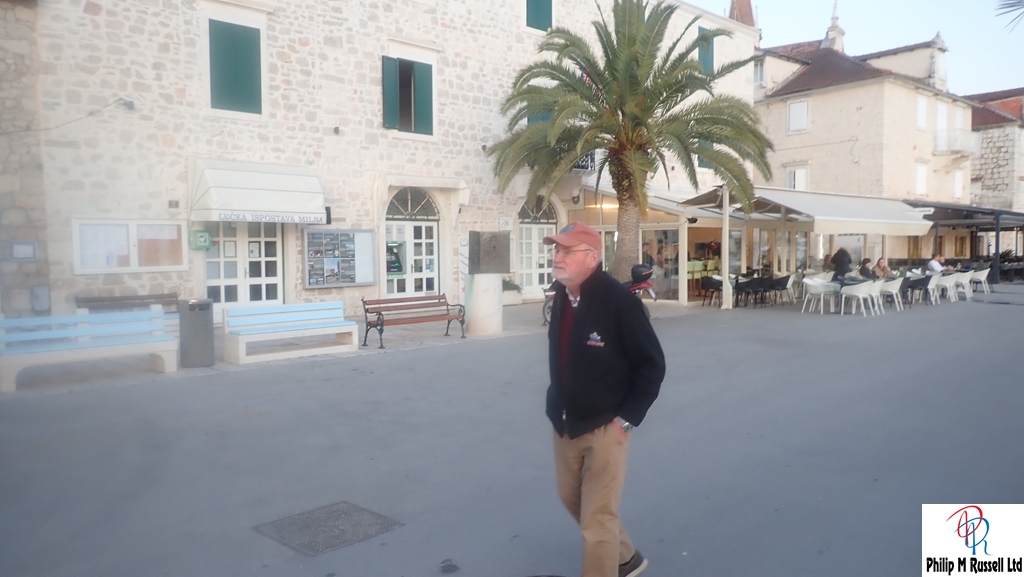
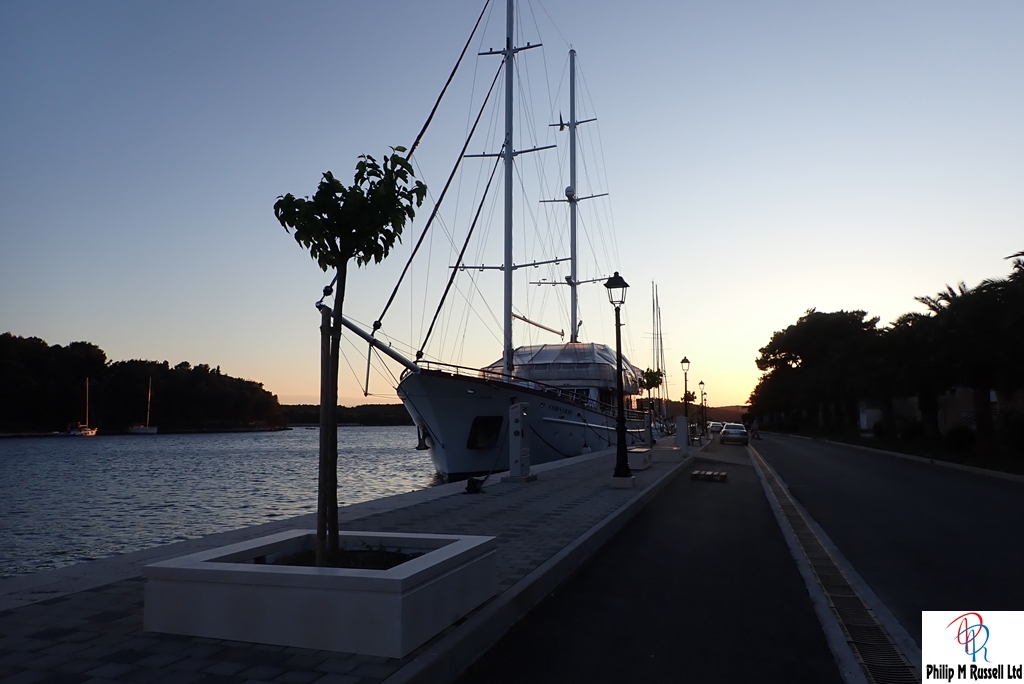
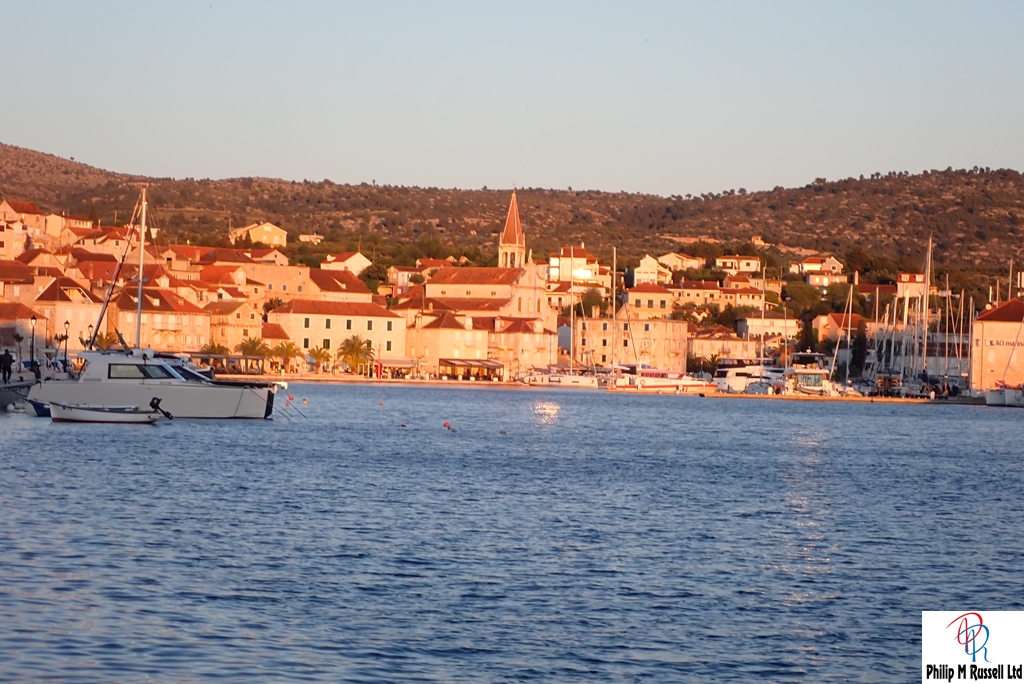
Milna was another beautiful Croatian harbour, with boats
lining the marina and the warm evening light giving everything that gentle
holiday glow that makes even tired sailors look slightly more civilised than
they feel.
Michael joined us with his two crew, adding to the
gathering. Ros spotted that Michael had the same camera as her and showed him
her lens. Michael immediately thought the extra lens would be excellent for
photographing dolphins.
This is how photographers communicate. One person reveals a
lens, and instantly everyone imagines what it might capture. Wildlife, sunsets,
boats, dolphins, rigging details, people pretending they knew what they were
doing all along — all of it becomes possible with the right piece of glass.
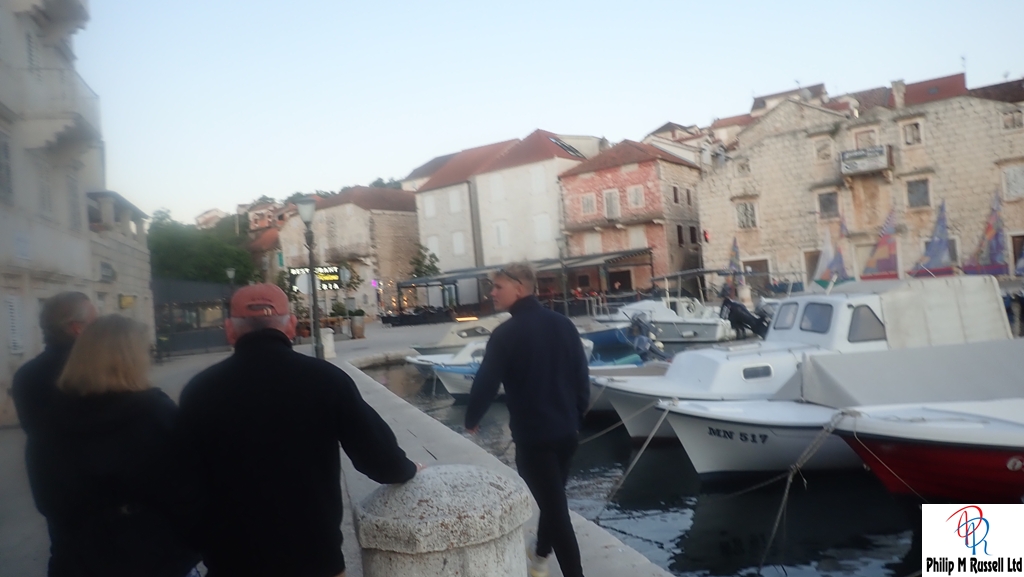
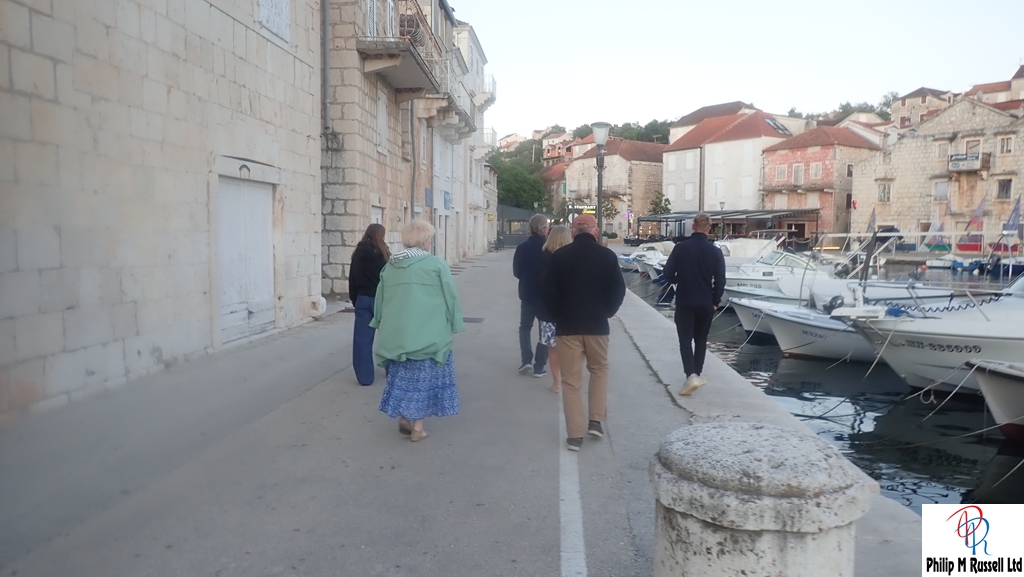
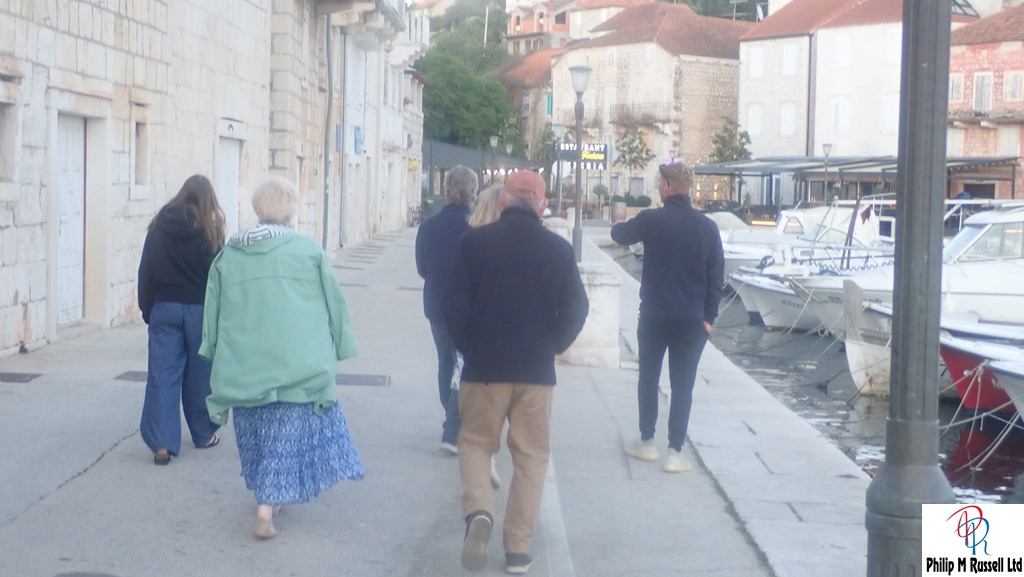
We then set off into town for the recommended restaurant.
It was, as these things often are, rather further away than
expected.
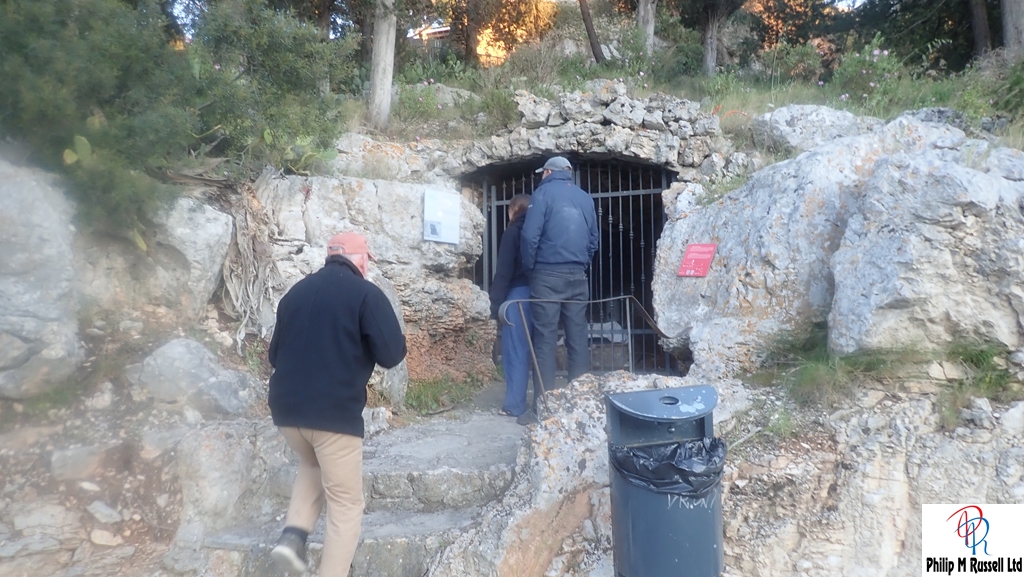
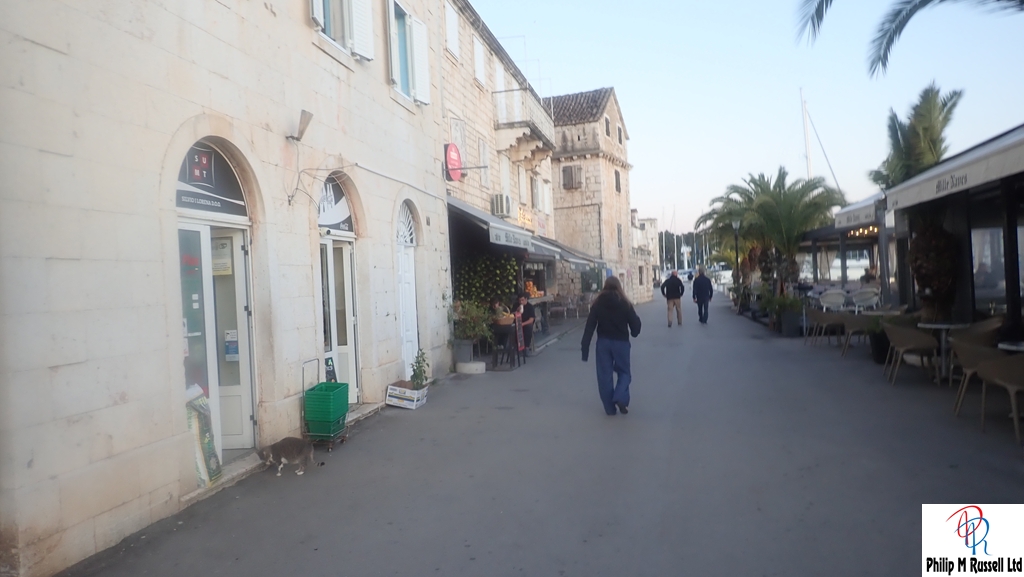
We walked past a chandlery that had wooden boats on the wall
and real material sails. This was the sort of place that makes sailors slow
down and stare. There is something about traditional boatbuilding materials
that immediately captures the imagination. Wood, canvas, varnish, rope — they
all suggest that sailing is not just a sport but a long conversation between
people, tools, weather and water.
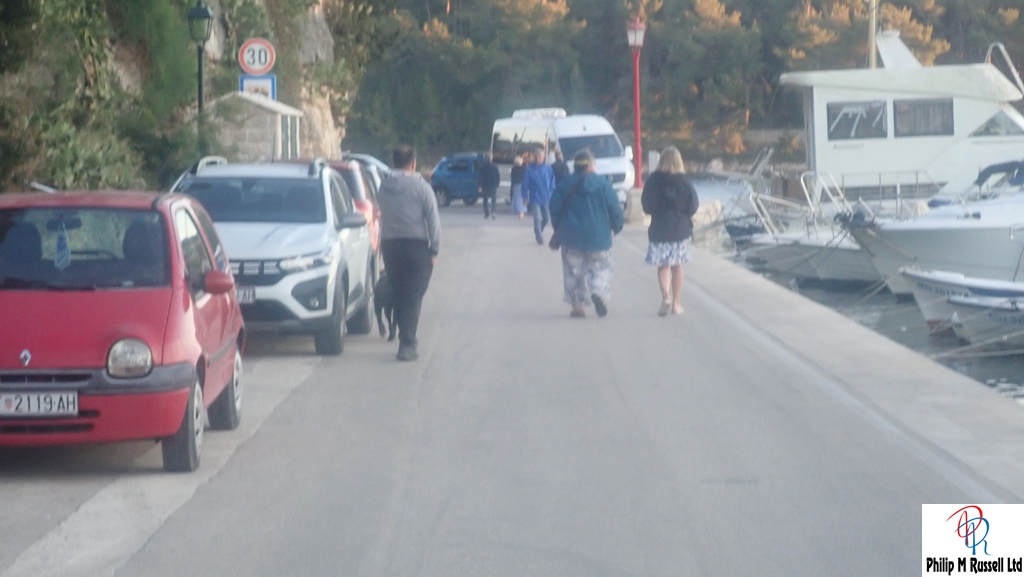
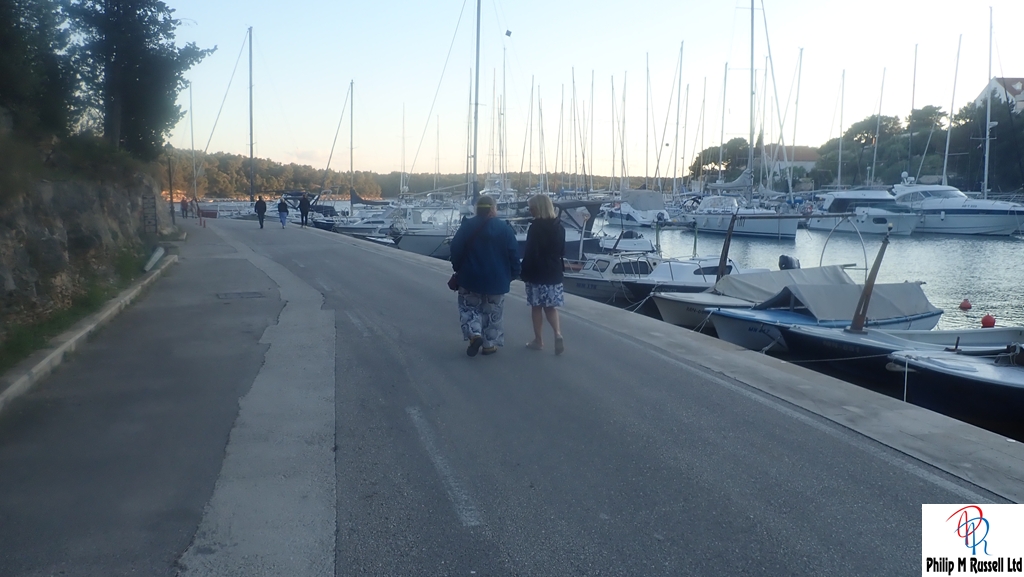
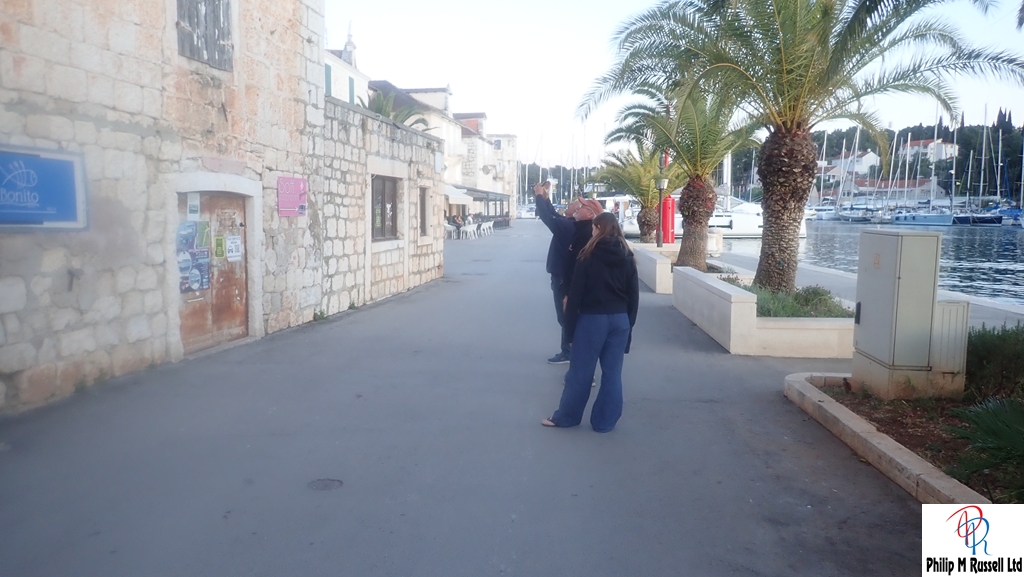
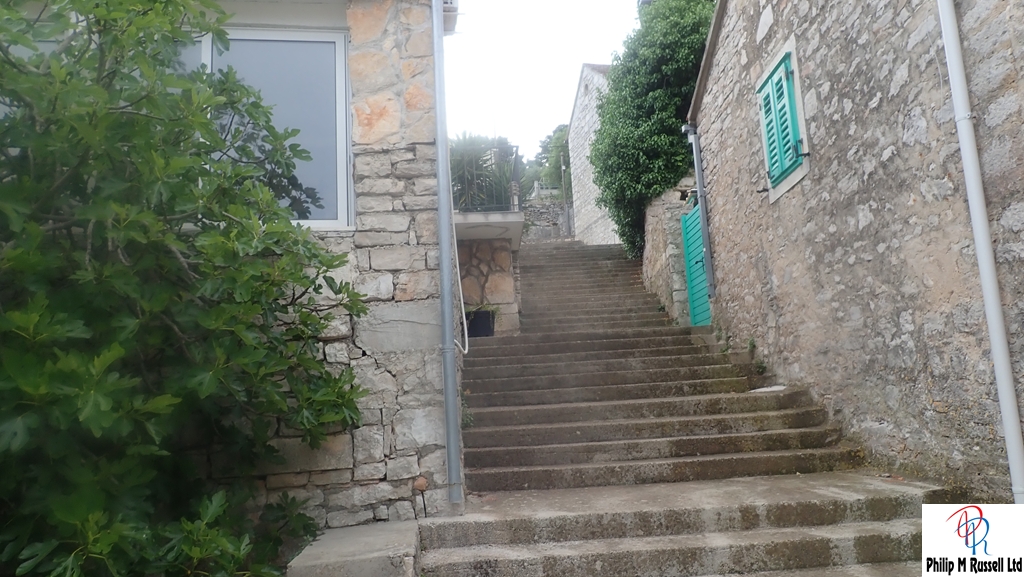
After what felt like a complete circumnavigation of the
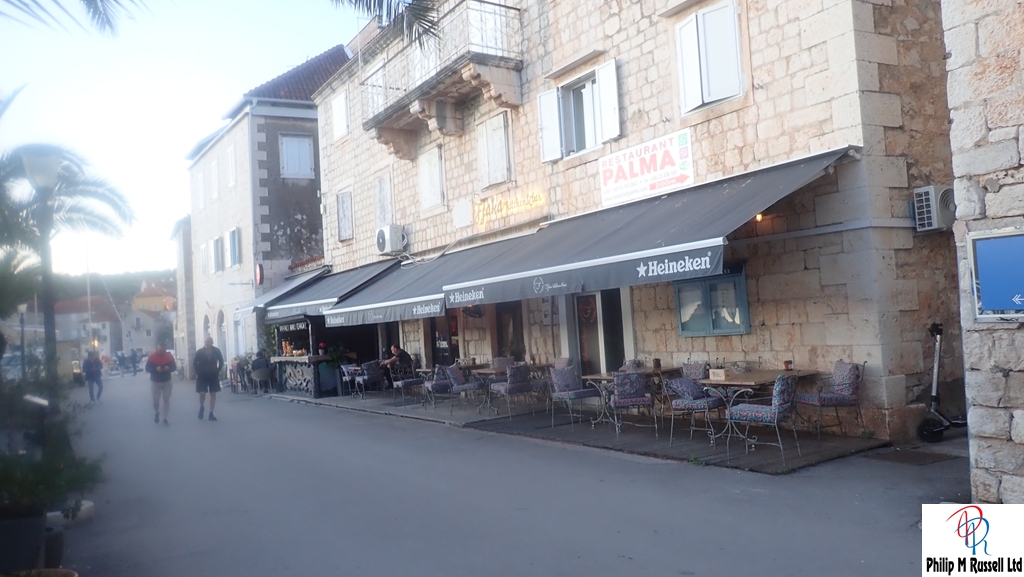
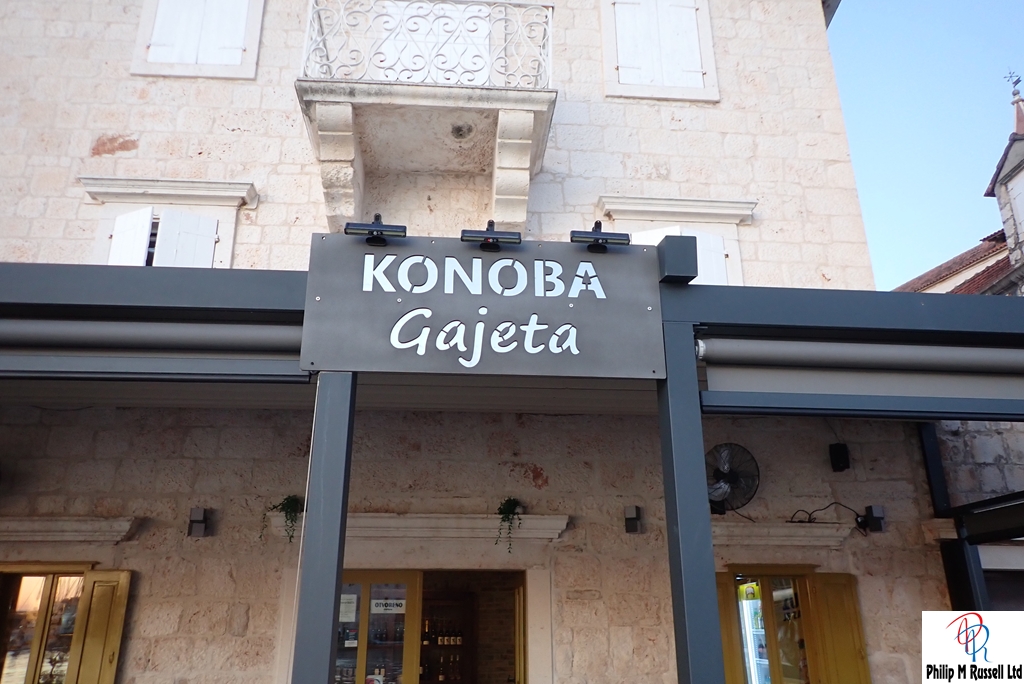
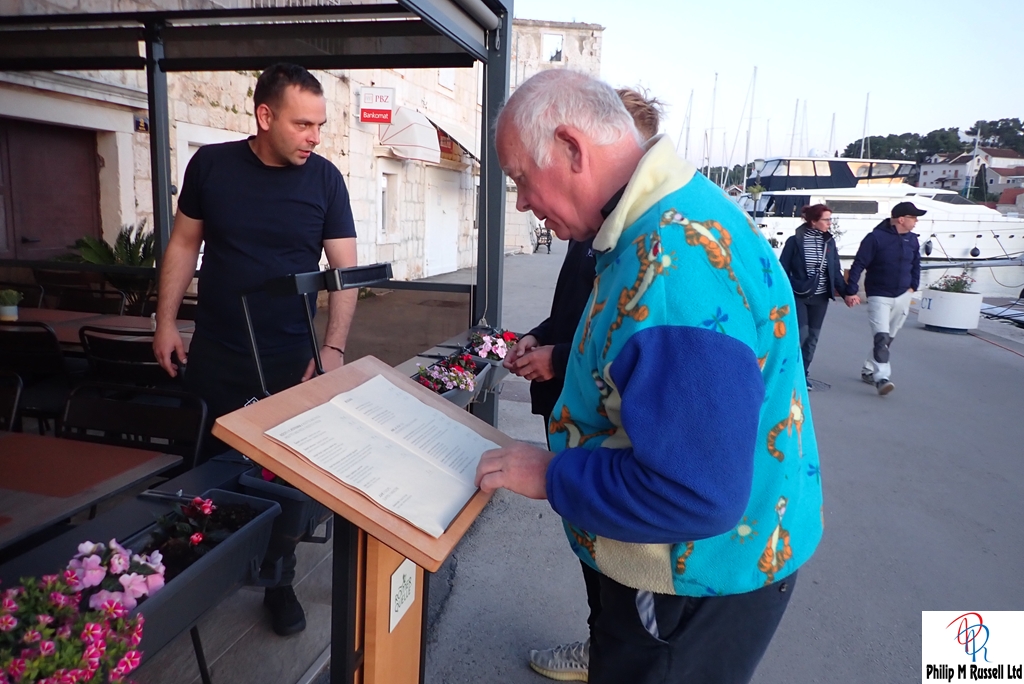
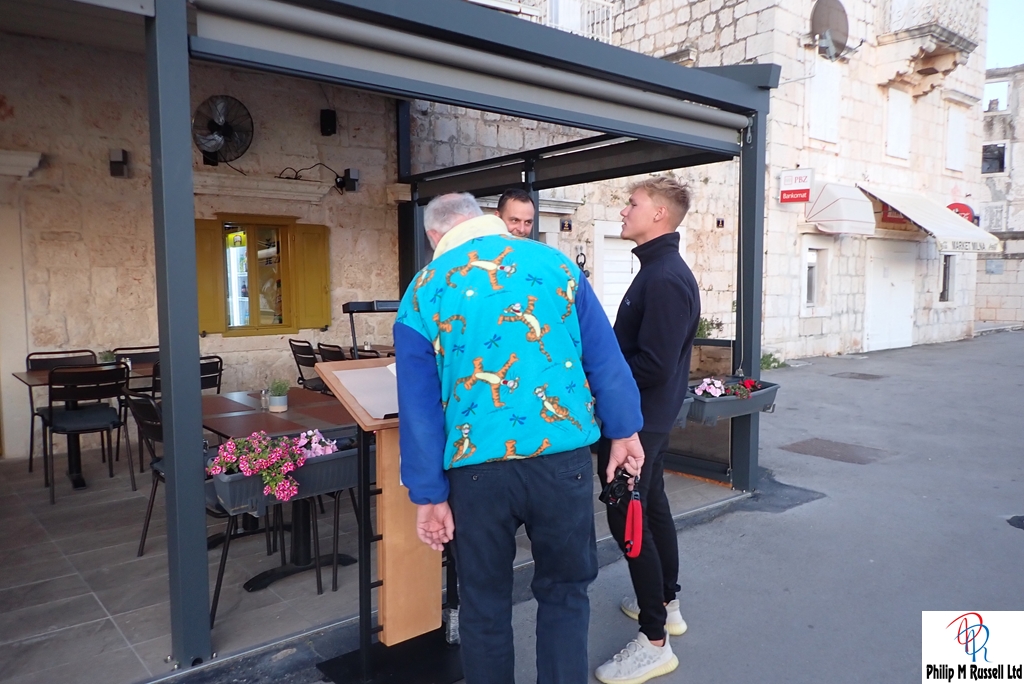
harbour on foot, we finally reached the restaurant.
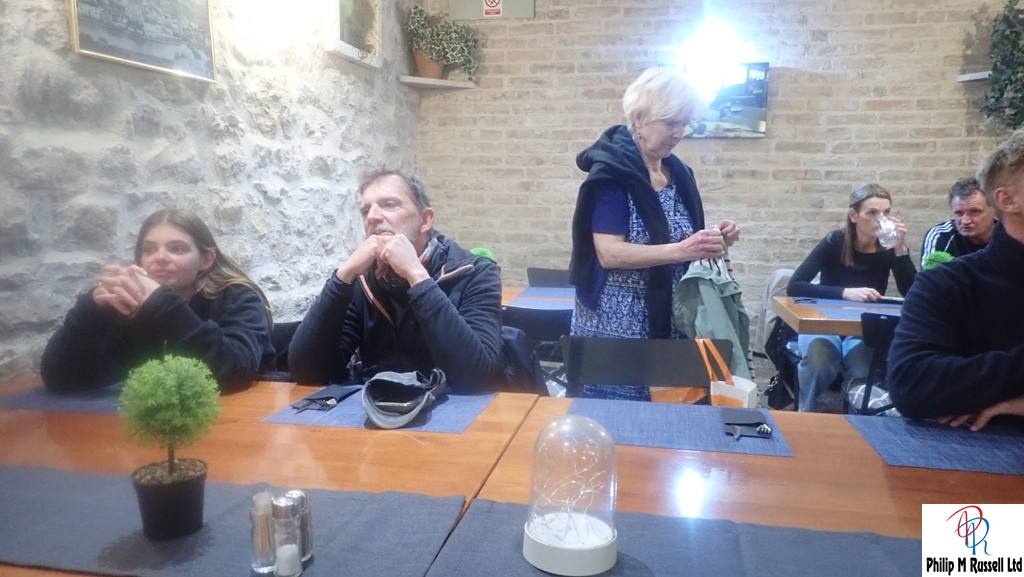
There was a table inside, which was very welcome. Like
several of the restaurants that week, it was nearly empty. Croatia in April has
many advantages, and one of them is that you can find beautiful places before
the full rush of the season begins.
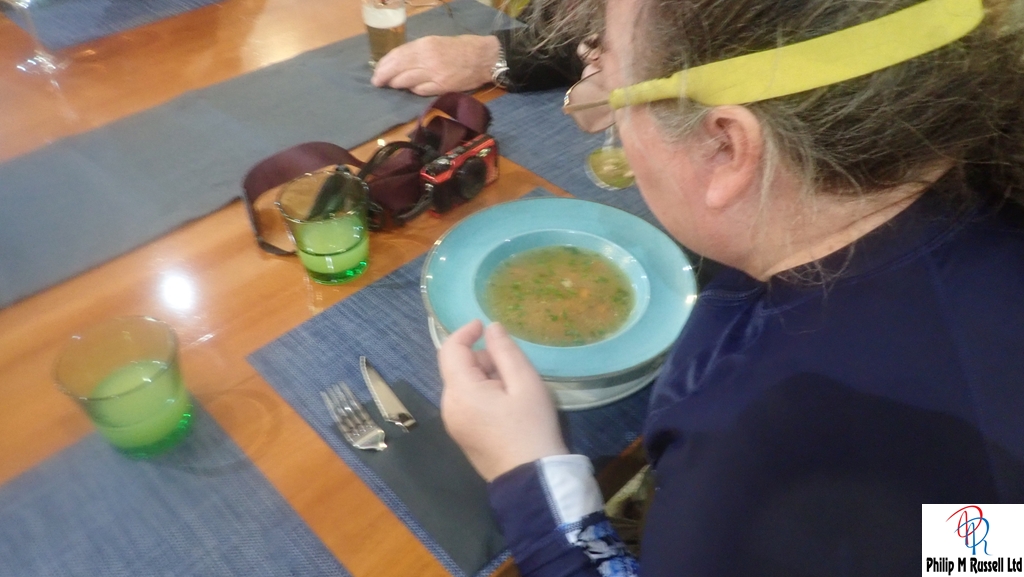
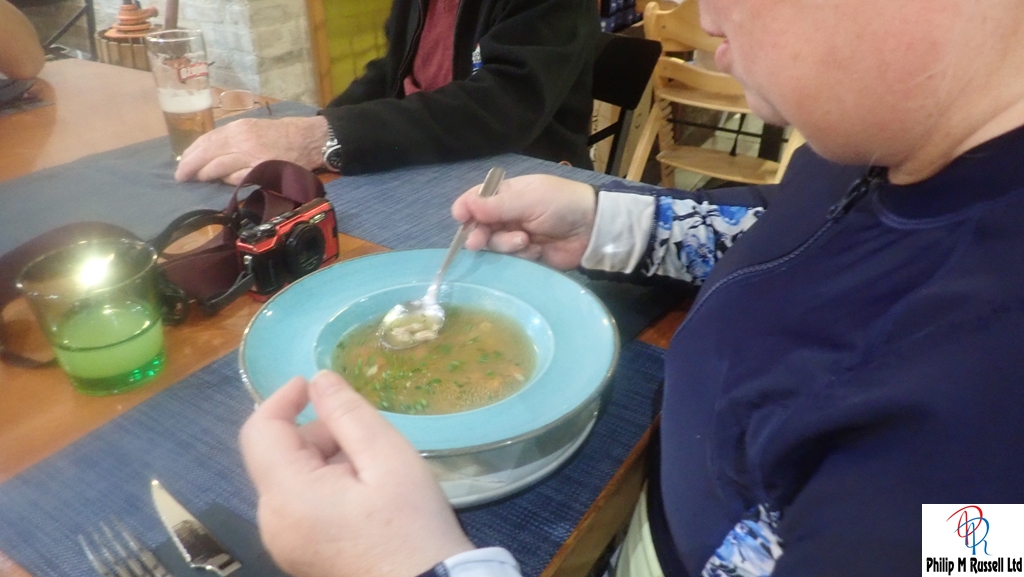
Ros started with veal and vegetable soup. We then had
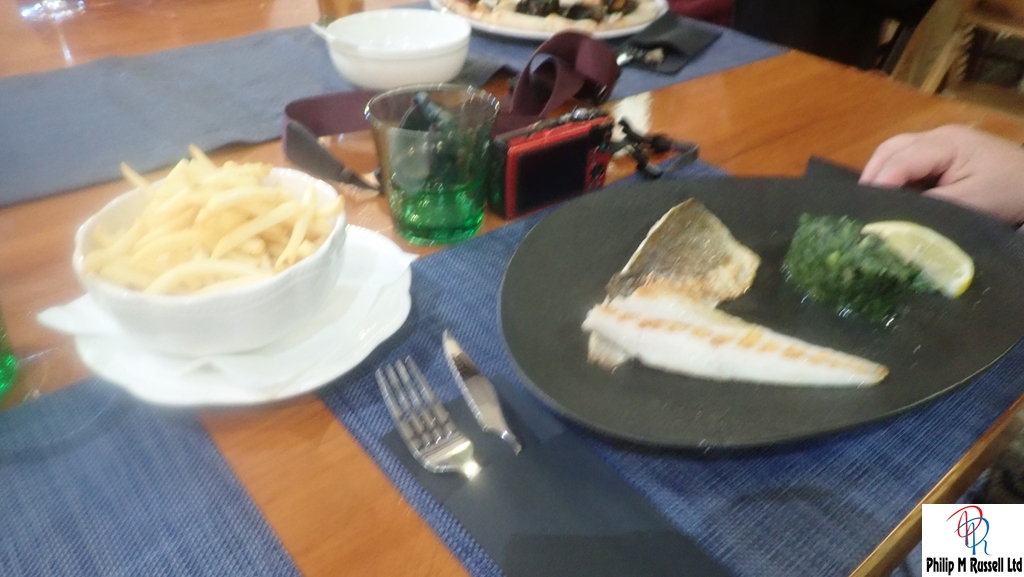
seabass and vegetables, with a large side of French fries.
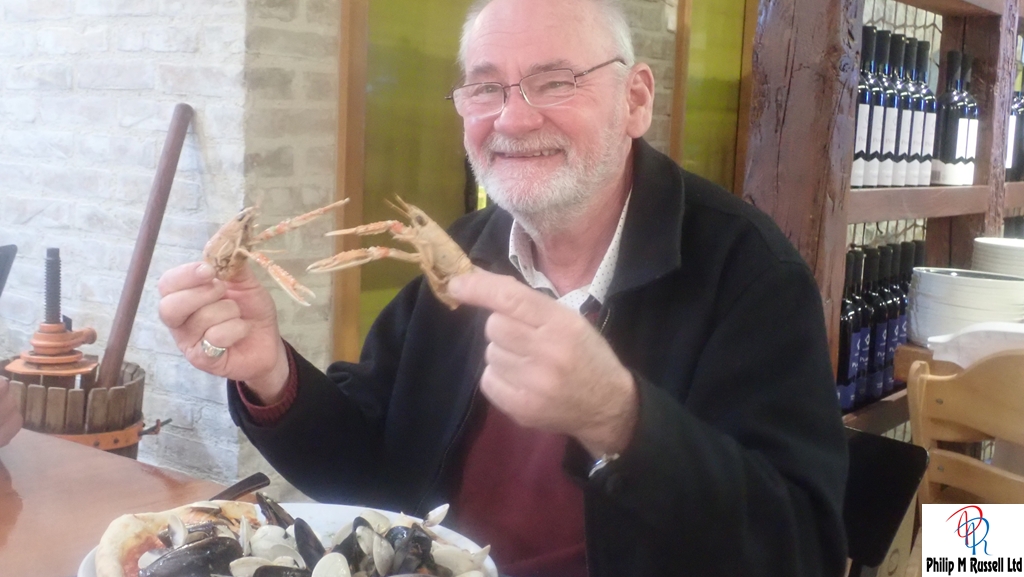
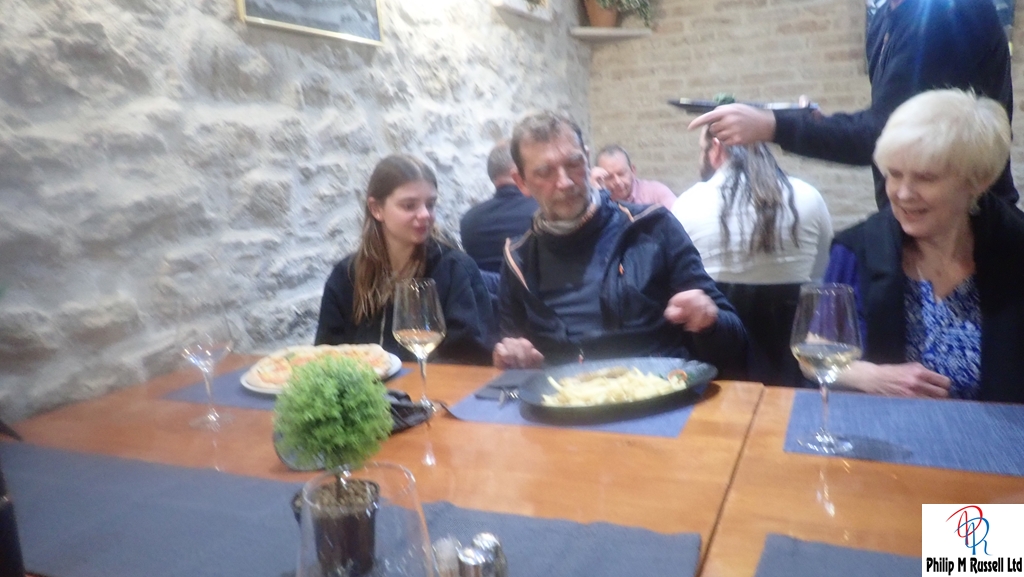
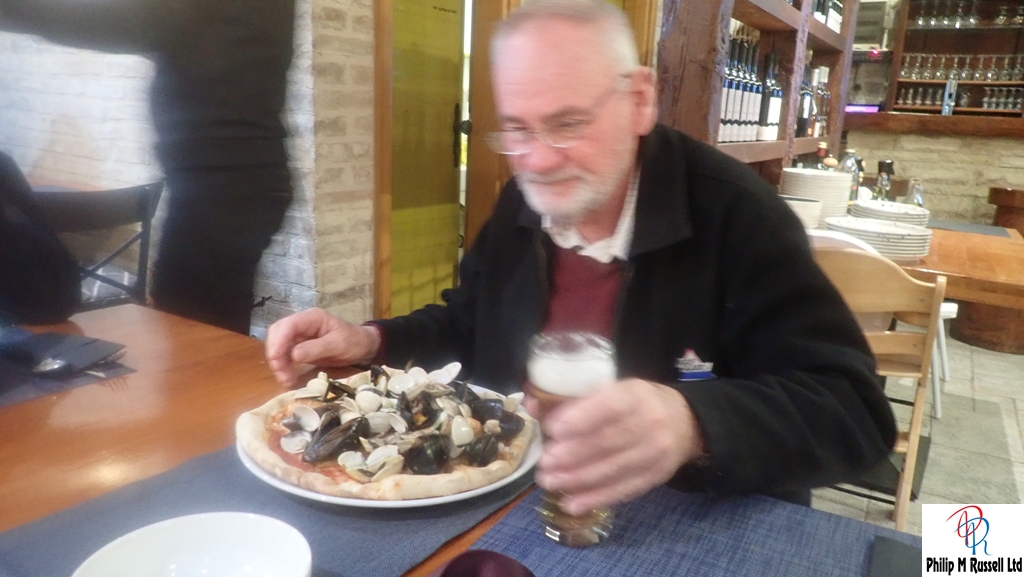
Barry ordered a seafood pizza, which arrived with seafood
still in shells on top of it.
I feel there should be a rule that Barry is not allowed to
play with his food in public. It is one thing to eat dinner. It is another to
conduct a marine biology practical on a pizza.
Still, it caused great entertainment, and by this stage of
the course we had all become used to the mixture of sailing, food, storytelling
and mild chaos that seemed to follow us from harbour to harbour.
We walked back with Jane, chatting about everything.
We started off with Emily, but she walked on without us
while Jane stopped to buy some chocolate in a shop. Emily was tired, and by the
time we returned to the boat she was already asleep.
Back on board, we chatted to John about boats, jobs and life
in general. Ros, being a town planner in London, was able to give John some
thoughts on where Emily might move in London. Sailing conversations have a
wonderful habit of drifting from anchors to housing, from camera lenses to
career advice, from weather forecasts to where someone might sensibly live.
Eventually, tiredness caught up with us.
Getting into bed was one of the trickier manoeuvres of the
entire course.
Our cabin was under the cockpit. This meant there was less
than a foot of space above the mattress where our feet went, a little more
where we could sit up, and approximately two square feet of standing room in
which to get dressed, turn round, locate clothing, avoid bruising ourselves,
and sneak into the head and shower.
The shower had its own personality. Water rose up from the
plug hole, so entering the compartment involved first turning on the pump to
evacuate the water. This is not quite the spa experience advertised in luxury
travel magazines.
A yacht cabin teaches humility. It also teaches flexibility,
patience and the ability to put on trousers while folded like a deckchair.
By the time we finally climbed into bed, we were very ready
to sleep.
This was one of the most varied days of the course.
We had started with a real anchoring lesson from Papaya’s early morning move. We practised rope handling on a bollard, talked over the
radio, anchored in a cove, approached a pretend buoy, carried out repeated
man-overboard drills, helped with filming, watched a catamaran plumbing problem
being solved, chased a dying wind, motored into Milna, walked halfway round a
harbour for dinner, and finished the day discussing London housing inside a
yacht.
It was a day that showed how sailing is rarely just one
skill.
It is rope work.
It is judgement.
It is communication.
It is boat handling.
It is safety procedure.
It is problem solving.
It is teamwork.
It is also knowing where the stopcock is.
Most of all, it showed why repetition matters. The
man-overboard drill became better each time we did it. The more we practised,
the more the sequence made sense. In an emergency, you do not want to be
inventing a system. You want your body and your crew to already know the
rhythm.
Bob may have been only a dummy, but he had done us a great
service.
He had fallen overboard repeatedly so that, one day,
if a
real person ever did, we would be much better prepared.
And after a day like that, even climbing into a tiny cabin
under the cockpit felt like a small victory.