admin Date , June 21, 2026 Sailing Previous Blog Moving in an A-Rater Comments (0)
There are sailing days when the wind howls, the river chops up, the spray flies, and everyone returns to the club with heroic stories of survival.
This was not one of those days.
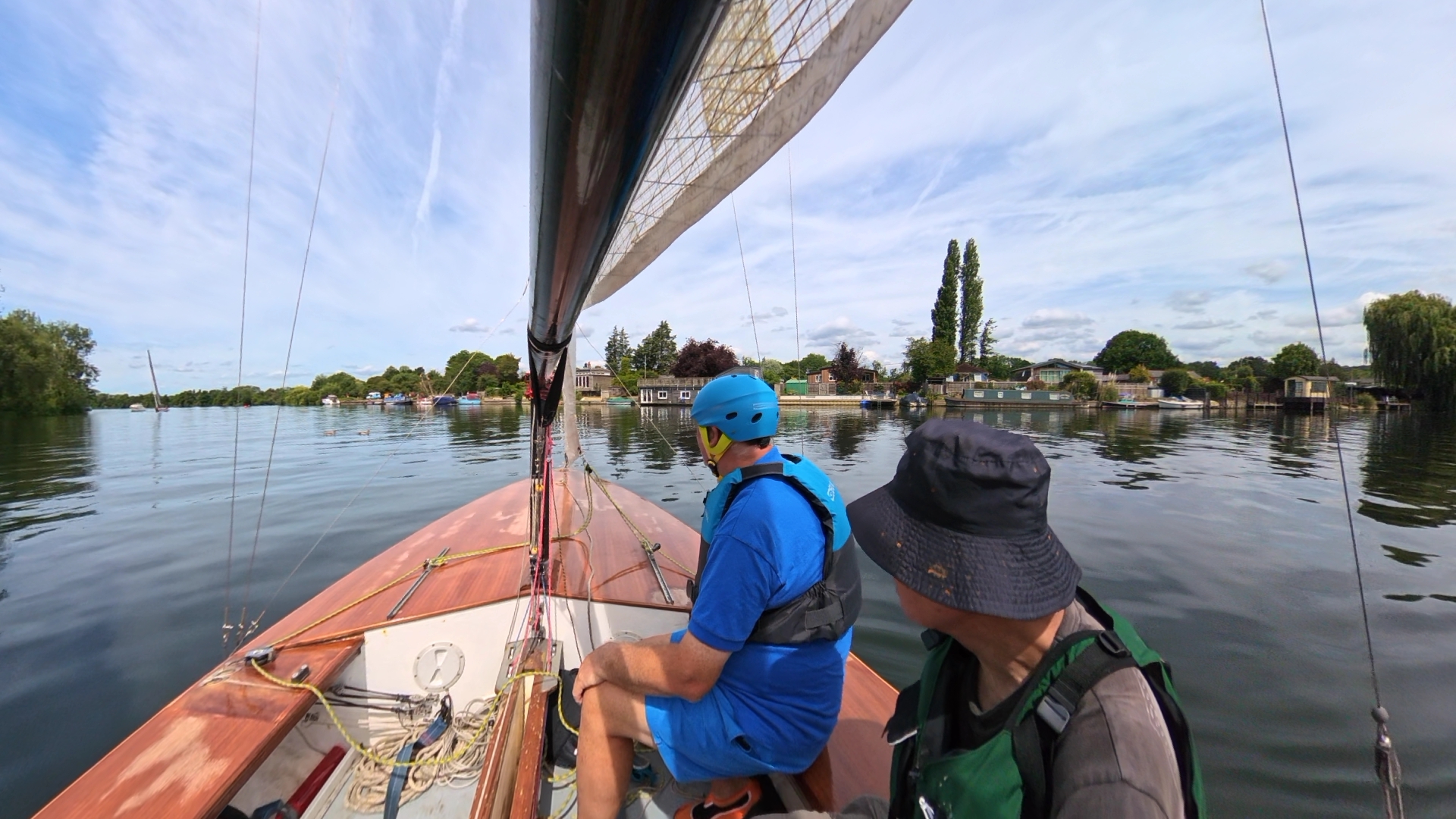
This was a day of heat, haze, drifting, hope, the occasional teasing puff of wind, and three people in a Thames A-Rater trying very hard to look as if they knew exactly what they were doing.
It was also an important day for us. This was our first race in Champagne where we had rigged her ourselves, launched her, sorted ourselves out, and joined the start line as a proper racing boat rather than as a restoration project with sails.
That felt like progress.
The day was hot. Not just pleasantly warm, not just “remember to wear a hat” warm, but properly hot. The sort of heat where the river looks beautiful, the grass looks inviting, and the inside of the race box begins to resemble a greenhouse experiment.
The Officer of the Day reported that the temperature inside the box had reached 43.5°C, which is less like race management and more like slow roasting. Sensibly, the race team decided to organise the race from outside.
At that point, the weather had already made its first important tactical decision of the day: the humans would be overheating, and the wind would be underperforming.
The forecast suggested less than 5 mph of breeze, and for much of the race even that seemed optimistic. But Thames A-Raters are extraordinary boats. With their vast sail area, long elegant hulls, and almost unreasonable ability to move in light air, they should, in theory, be perfect for these conditions.
The phrase “in theory” was going to do quite a lot of work during the day.
Only two A-Raters entered the race.
The first was Carina, built in 1902, with Rater Captain Simon at the helm. A beautiful, historic boat, sailed by someone who clearly knew exactly how to persuade movement from almost no wind at all.
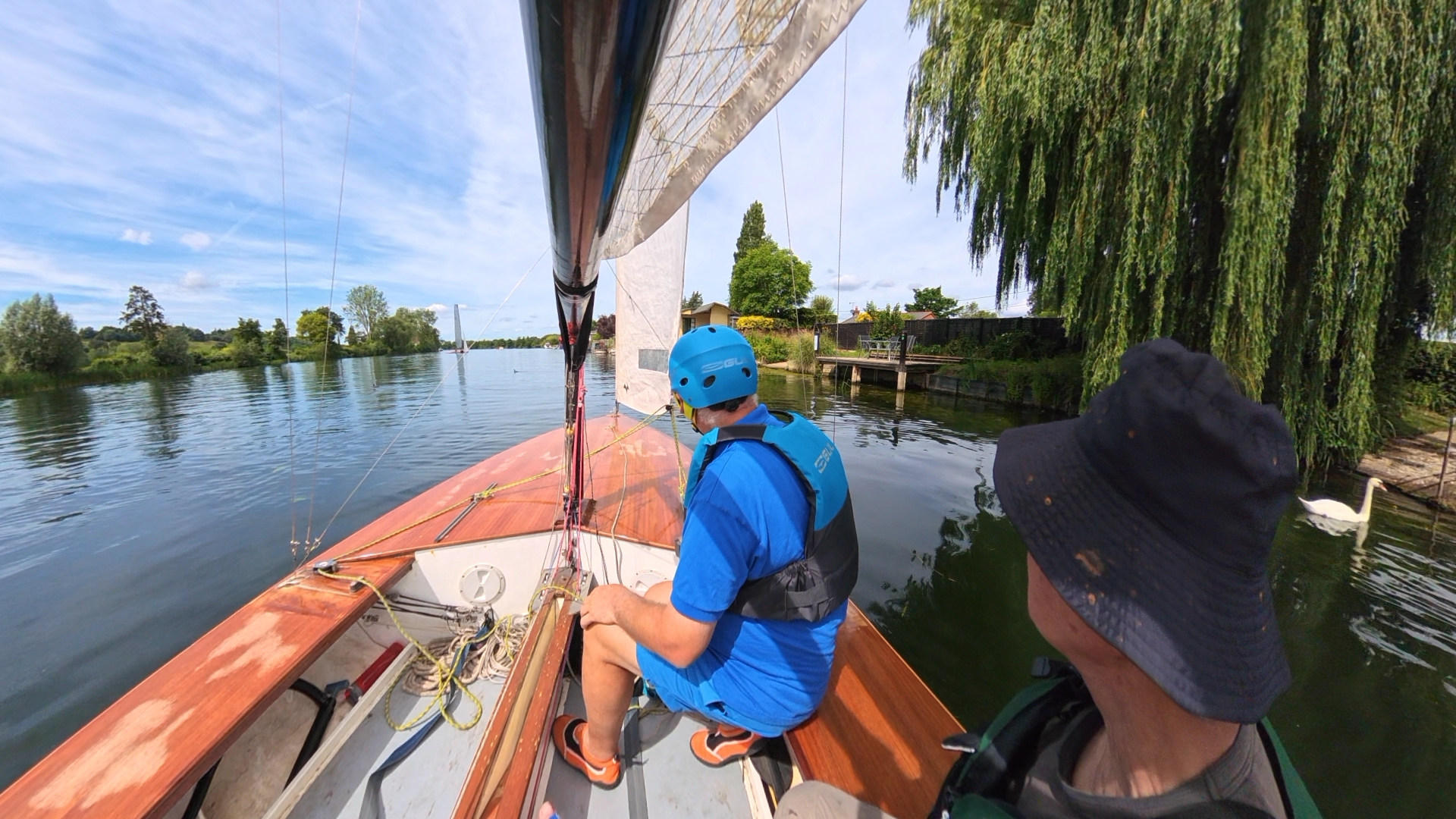
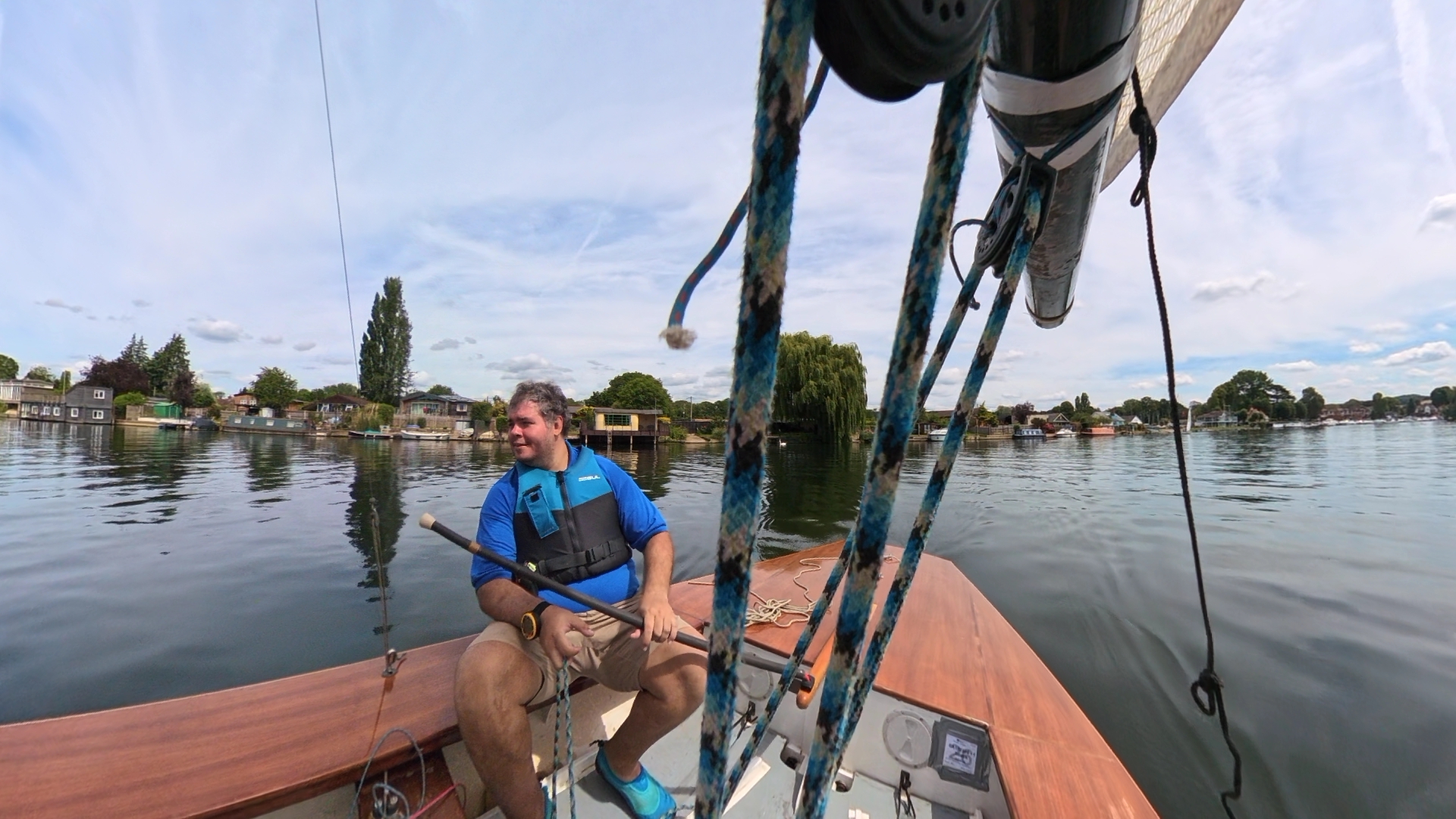
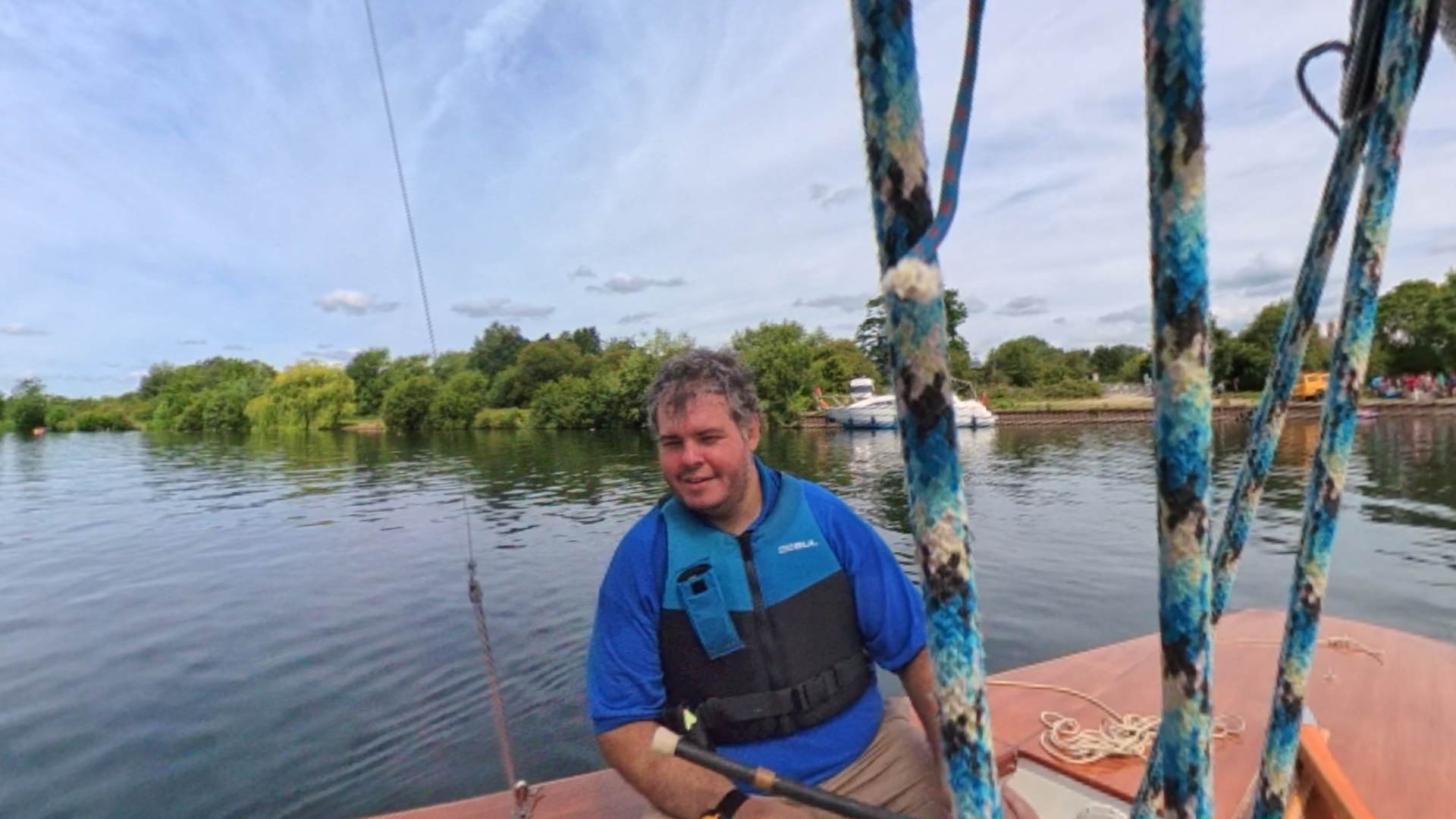
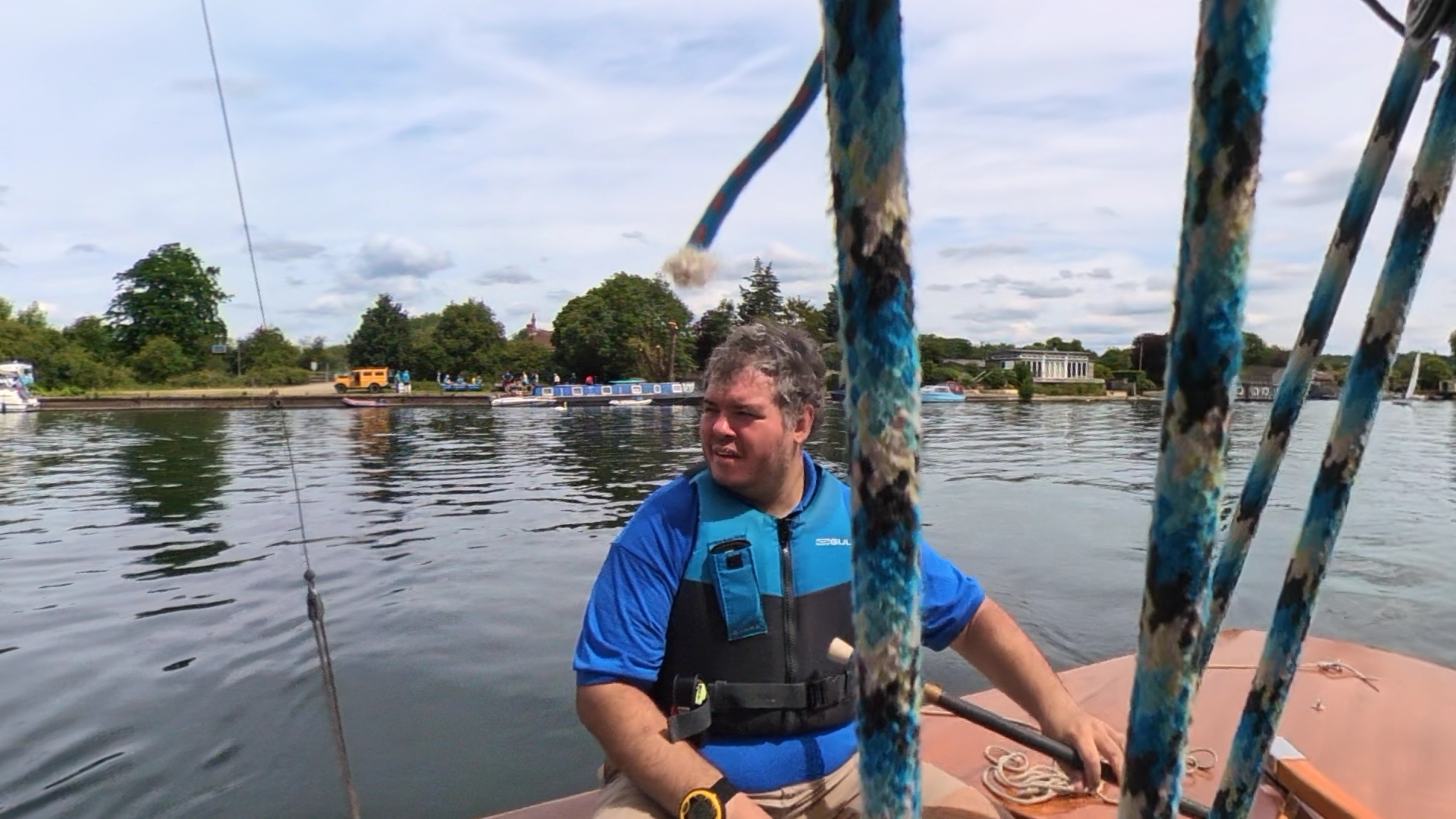
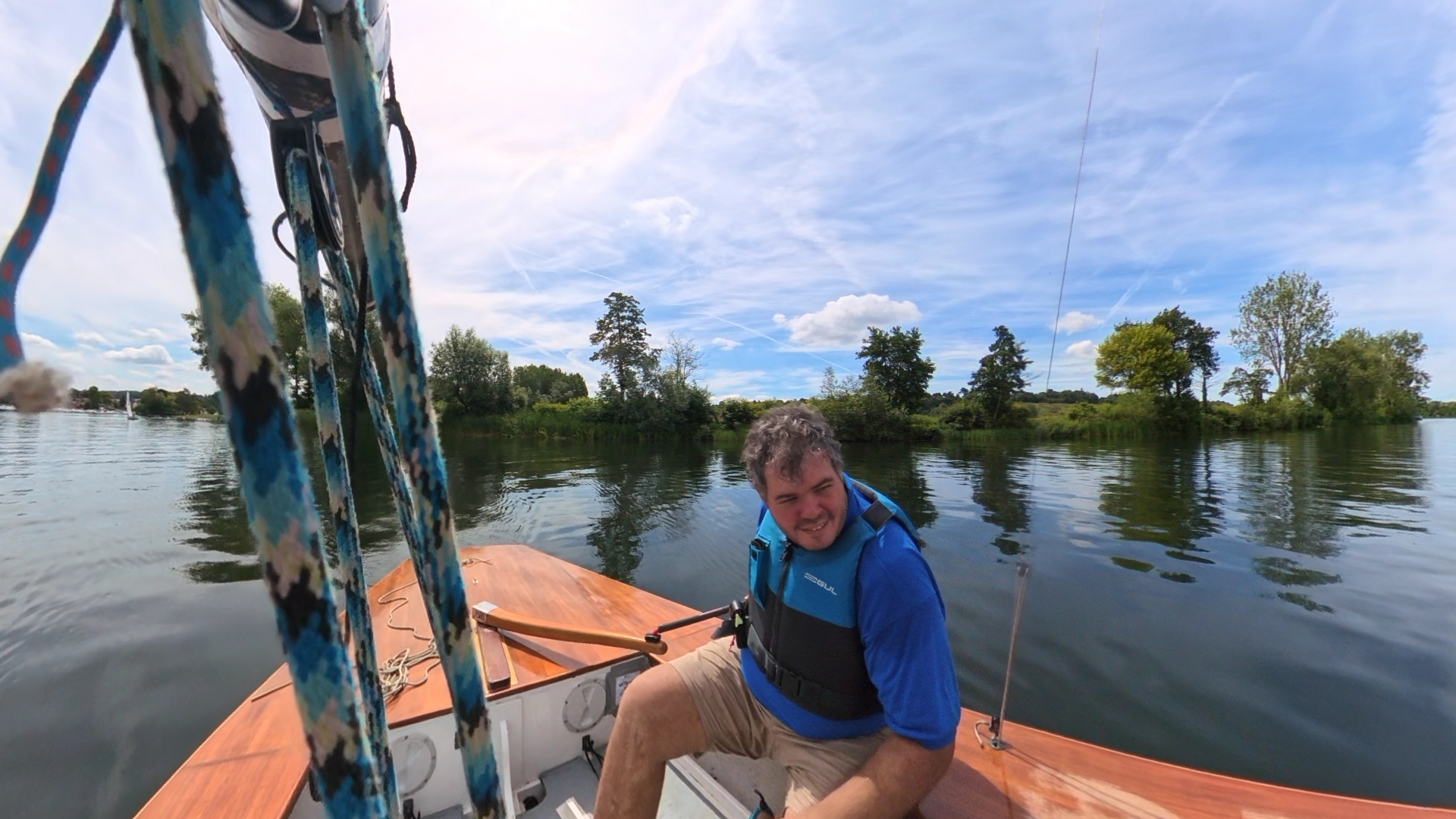
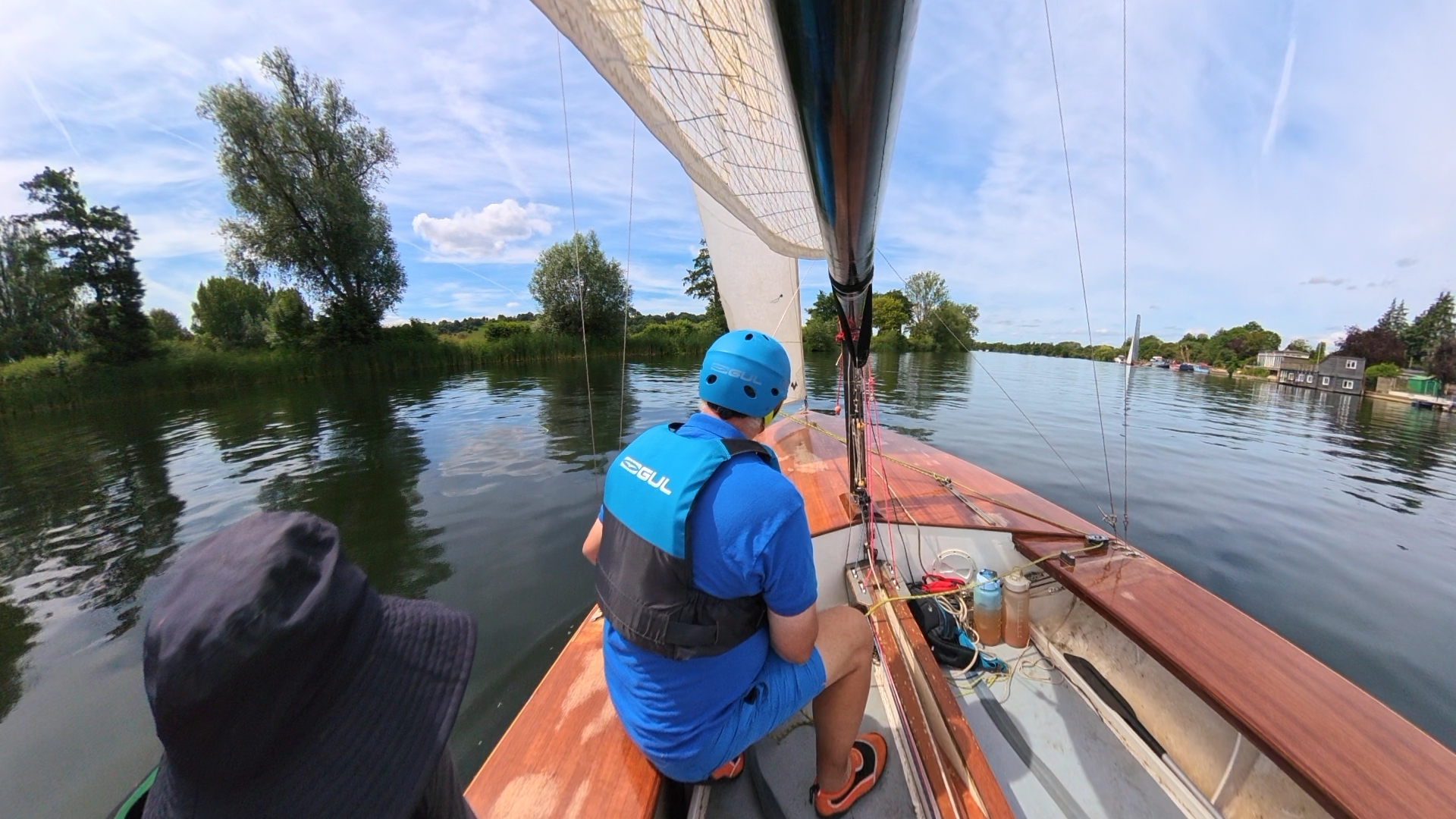
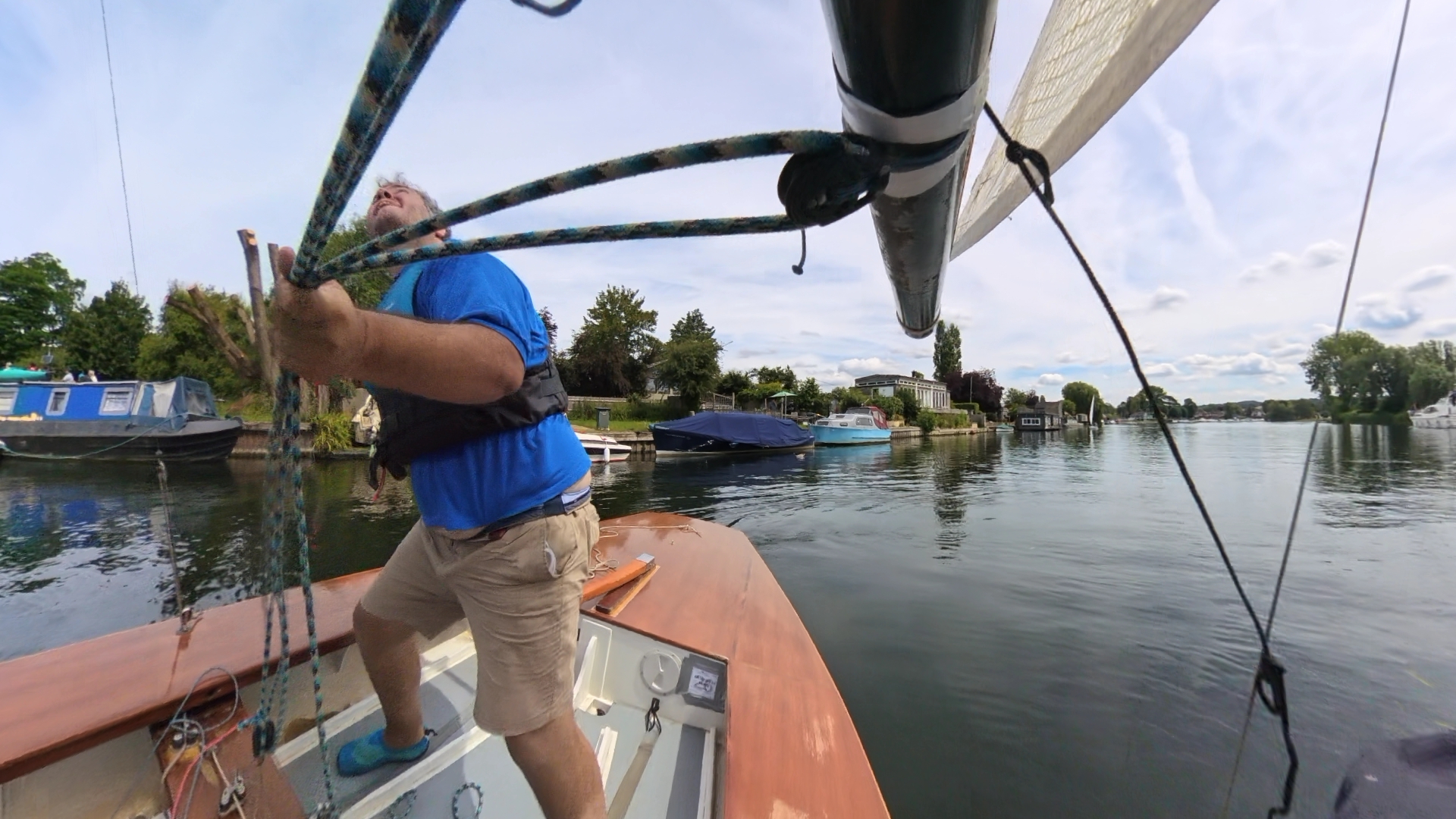
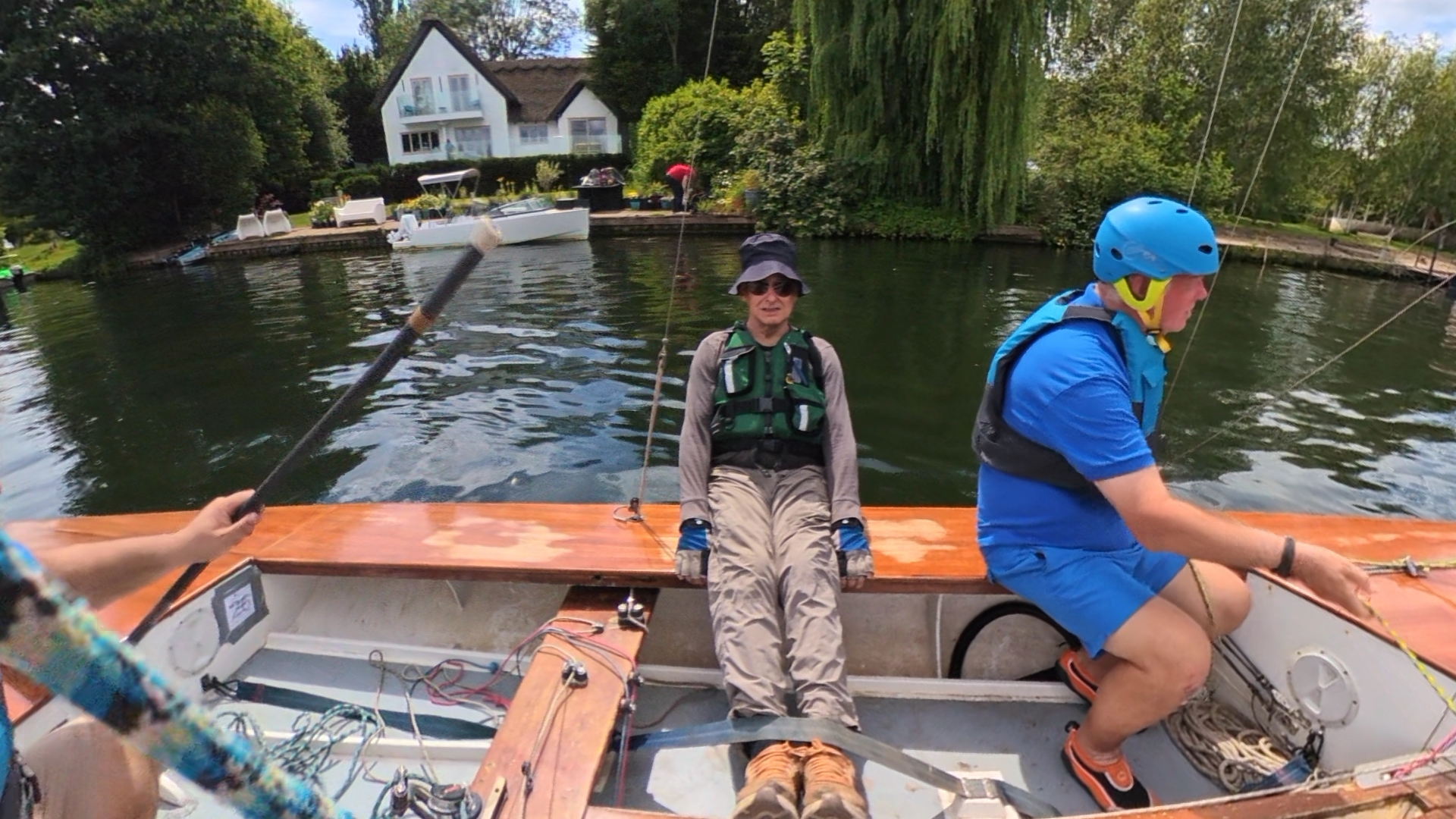
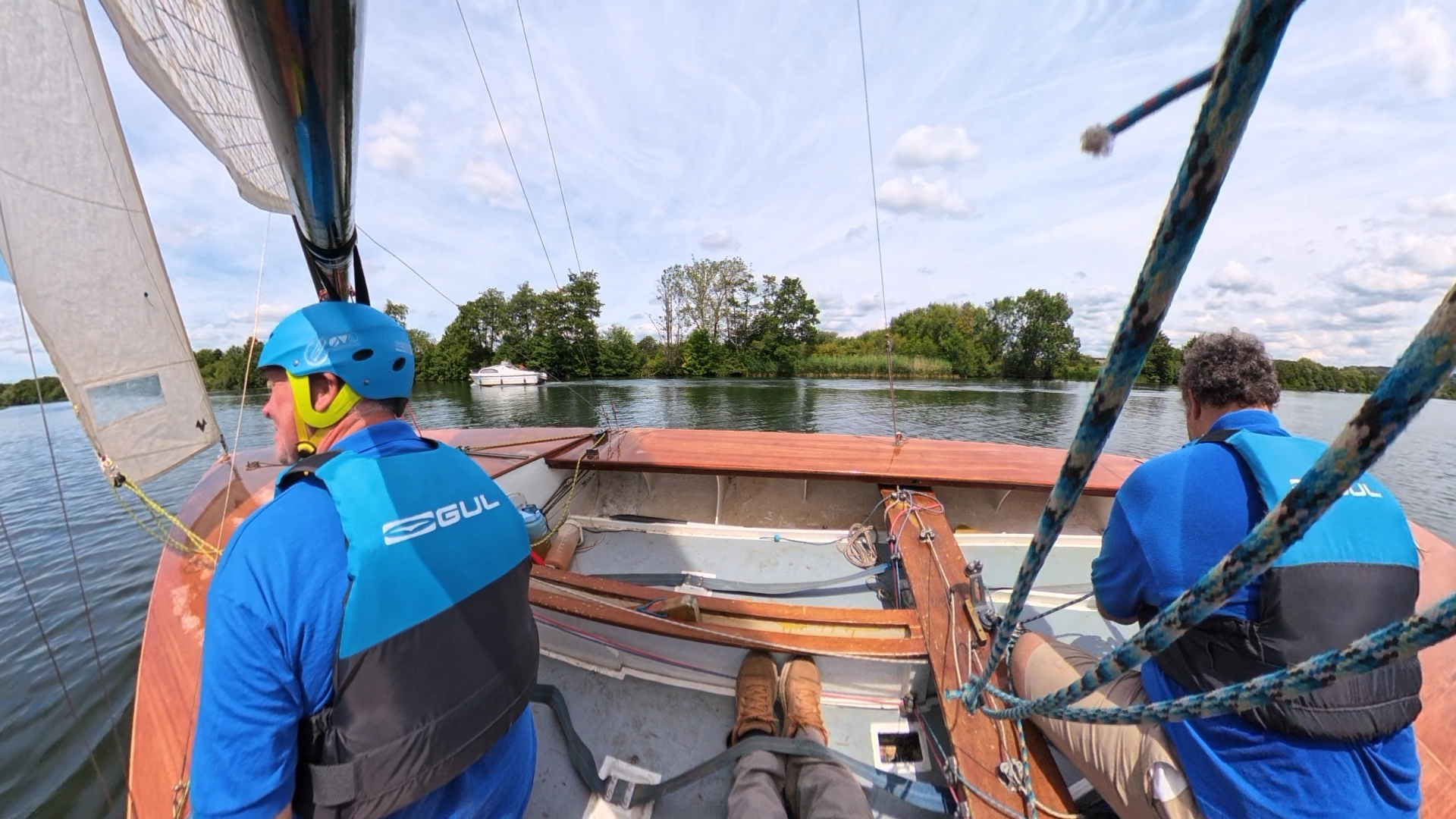
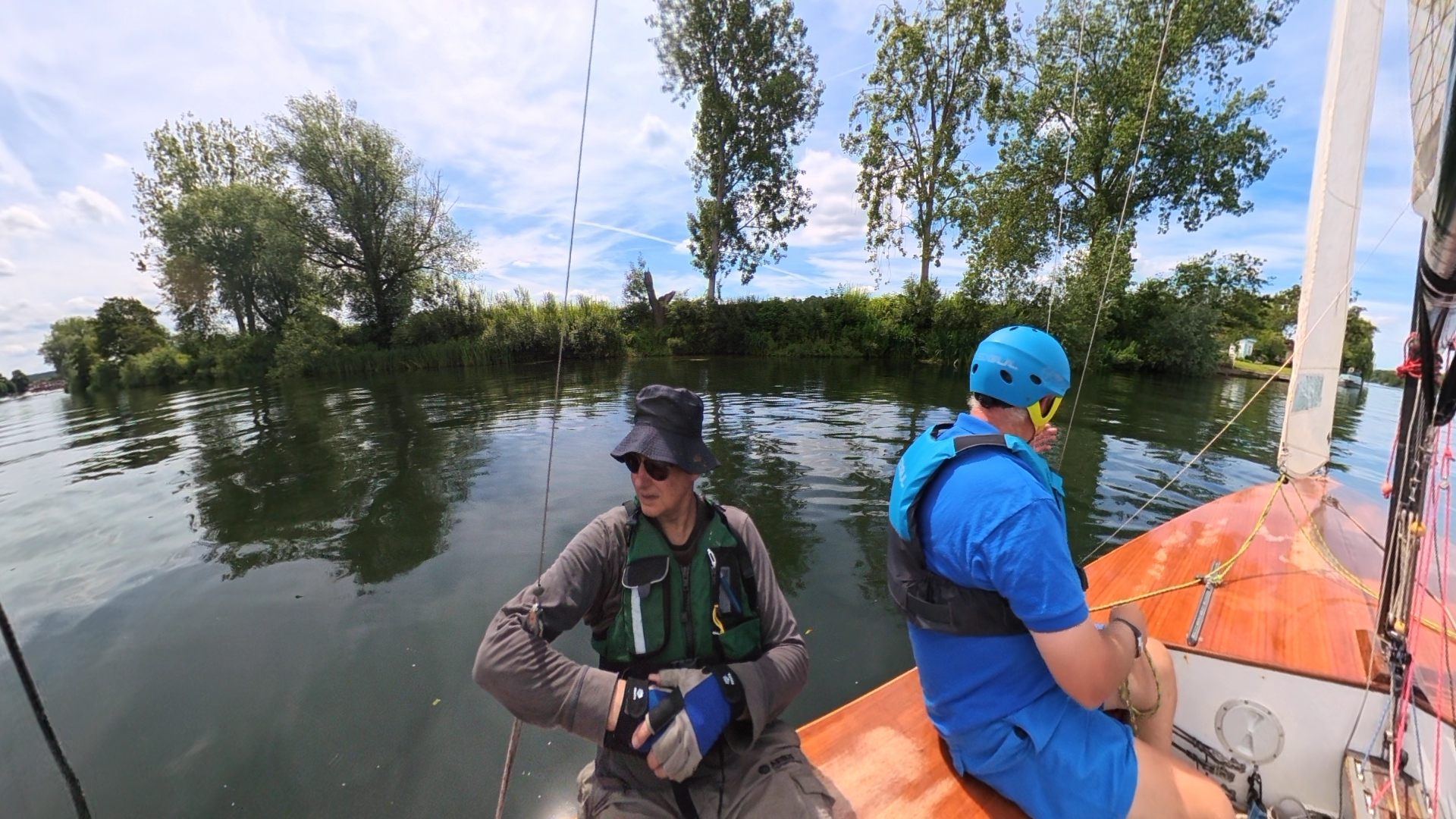
The second was Champagne, with Paul at the helm, our good friend Guy learning the mid-hand role, and me on the jib, still learning what to do and when to do it.
That is one of the things I am enjoying about Champagne. She is not just a boat to restore. She is a boat to learn from. Every time we take her out, she teaches us something new. Sometimes politely. Sometimes firmly. Occasionally with a silent but unmistakable suggestion that the crew might like to improve.
At the five-minute and four-minute klaxons, we were still on the bank.
This is rarely considered the ideal tactical position for a racing start.
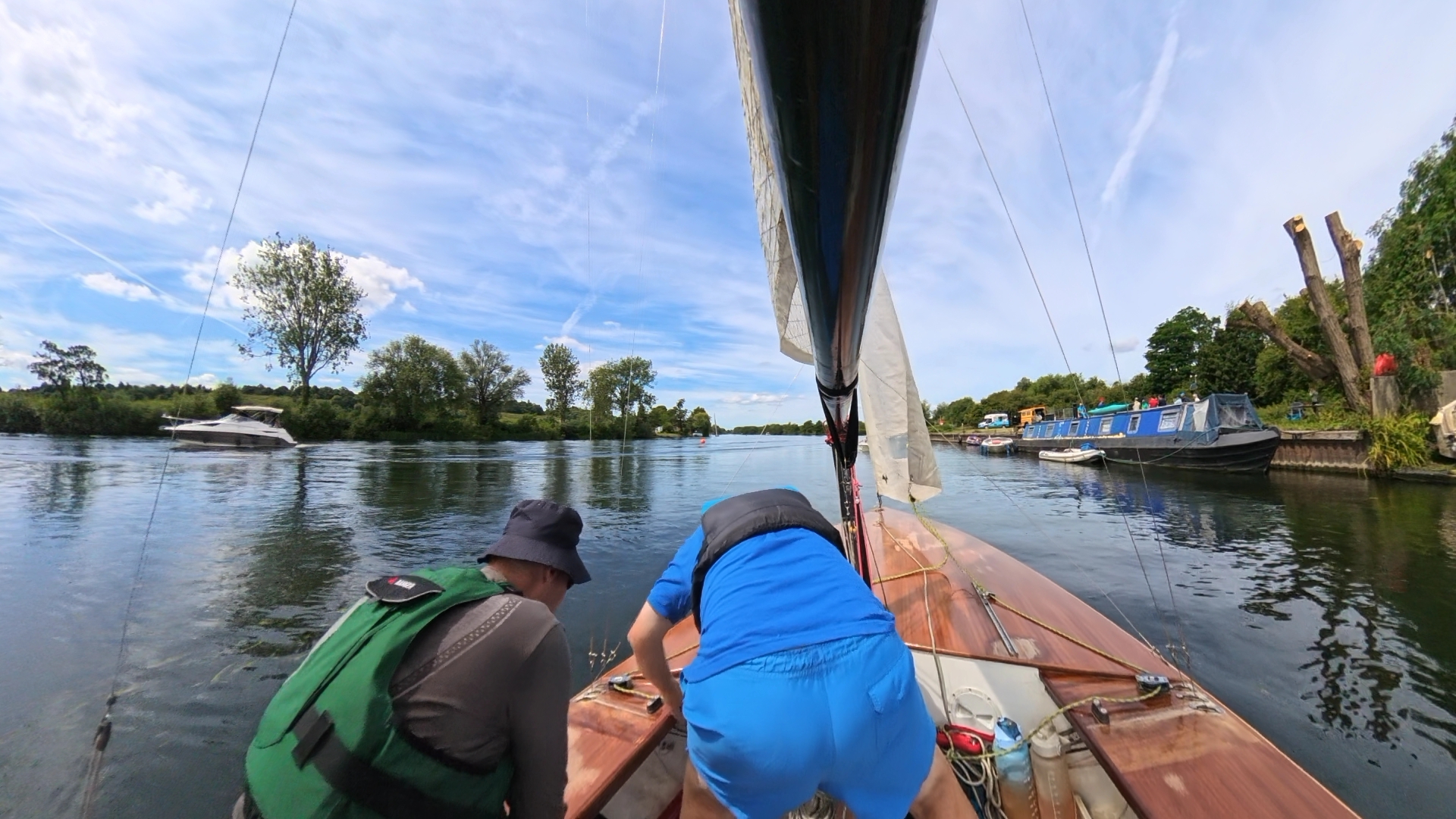
However, we managed to get away and did cross the start line at about the right time. Unfortunately, we were facing the wrong direction.
It is good to be original, but perhaps not quite that original.
At almost exactly that moment, the wind where we were decided to disappear completely. Carina, by contrast, managed to cross the line in the correct direction and drift upstream using what little momentum she had.
By the time we had turned Champagne around, Carina already had around a 25-metre lead. In a strong breeze, that might not sound disastrous. In almost no wind at all, 25 metres can feel like the Solent.
We were not moving well.
Adrian, an experienced Rater hand, was in the safety boat and came alongside. His advice was simple and very useful: increase the jib tension.Not slightly.
A lot.
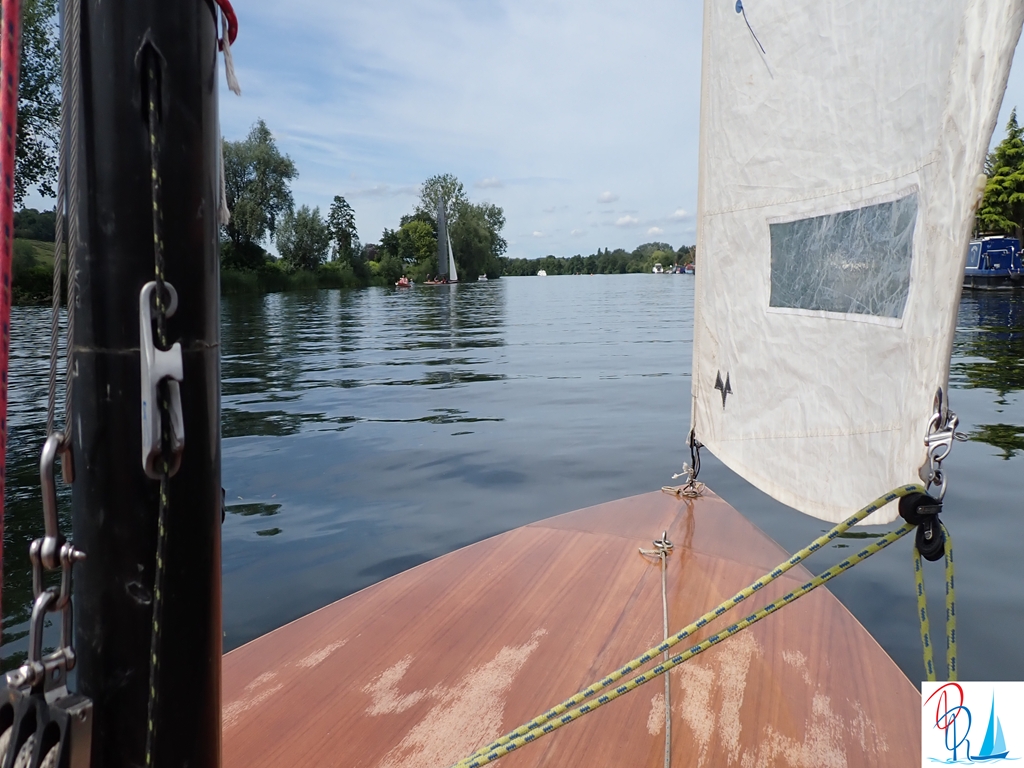
We tightened the jib properly, and the boat immediately felt better. It is one of those simple things that makes a huge difference, especially in a boat like an A-Rater. In light airs, the shape of the sail matters enormously. Too loose, and the sail does not drive properly. Too tight in the wrong conditions, and it can be overdone. But on this occasion, the change helped.
For me, this was a very practical lesson. On a large sailing dinghy, especially one with the sail area of a Thames A-Rater, the jib is not just a bit of cloth at the front. It is part of the engine. Get it wrong, and the boat feels sluggish. Get it closer to right, and suddenly the whole boat begins to respond.
am still learning the jib. I am still learning what the sail should look like, how the tell-tales should behave, and how much adjustment is needed as the wind changes. But this race gave me a clear example of how important that role is.