admin June 18 2026 Sailing Previous Lesson Comments (0)
Is there a clear progression is sailing from a single hander to a thorough bred A-Rater
Every sailor starts somewhere.
For some, it is a slightly wobbly first sail in a club dinghy, wondering which rope does what, why the boom appears to have a personal grudge, and why the boat seems perfectly happy going in every direction except the one intended.
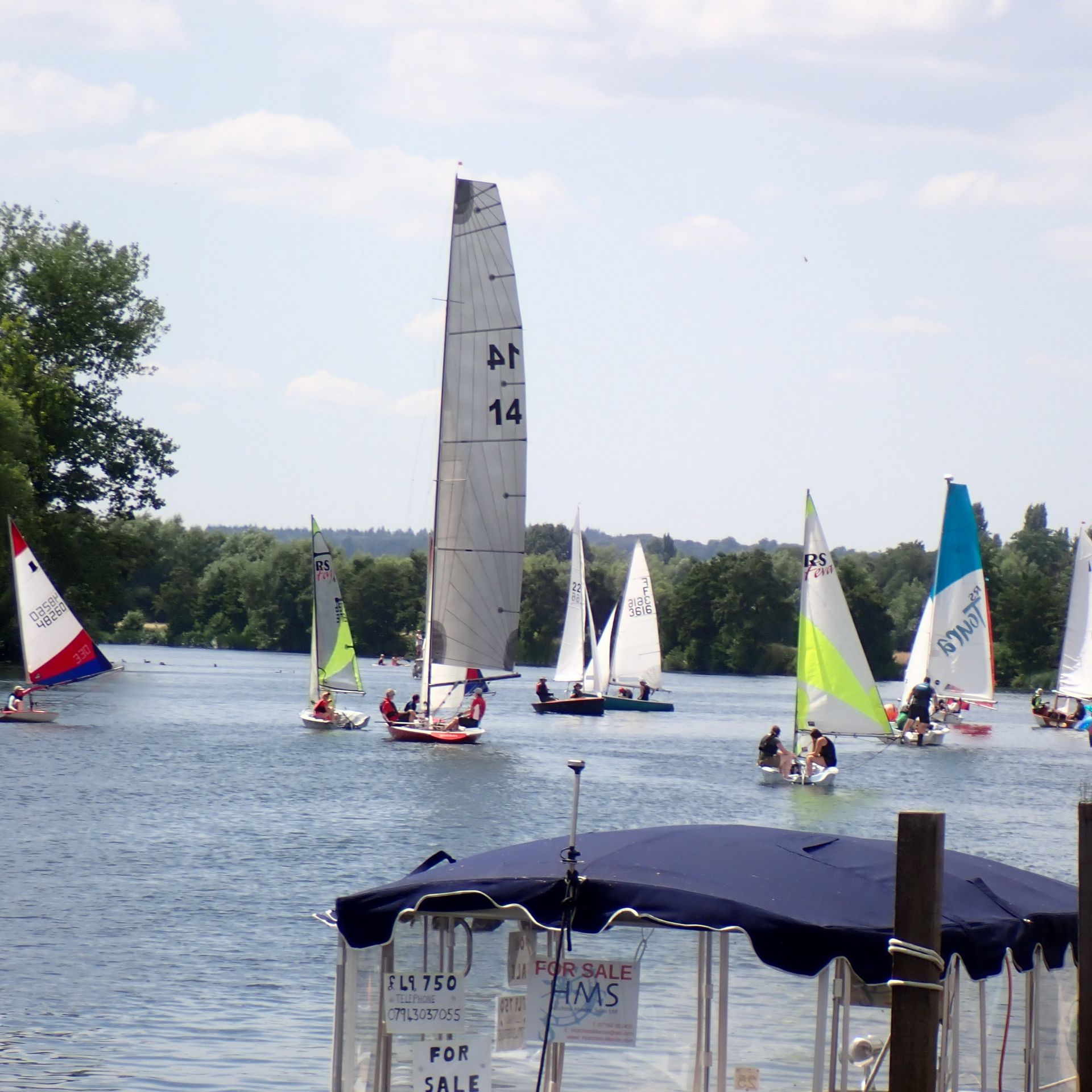
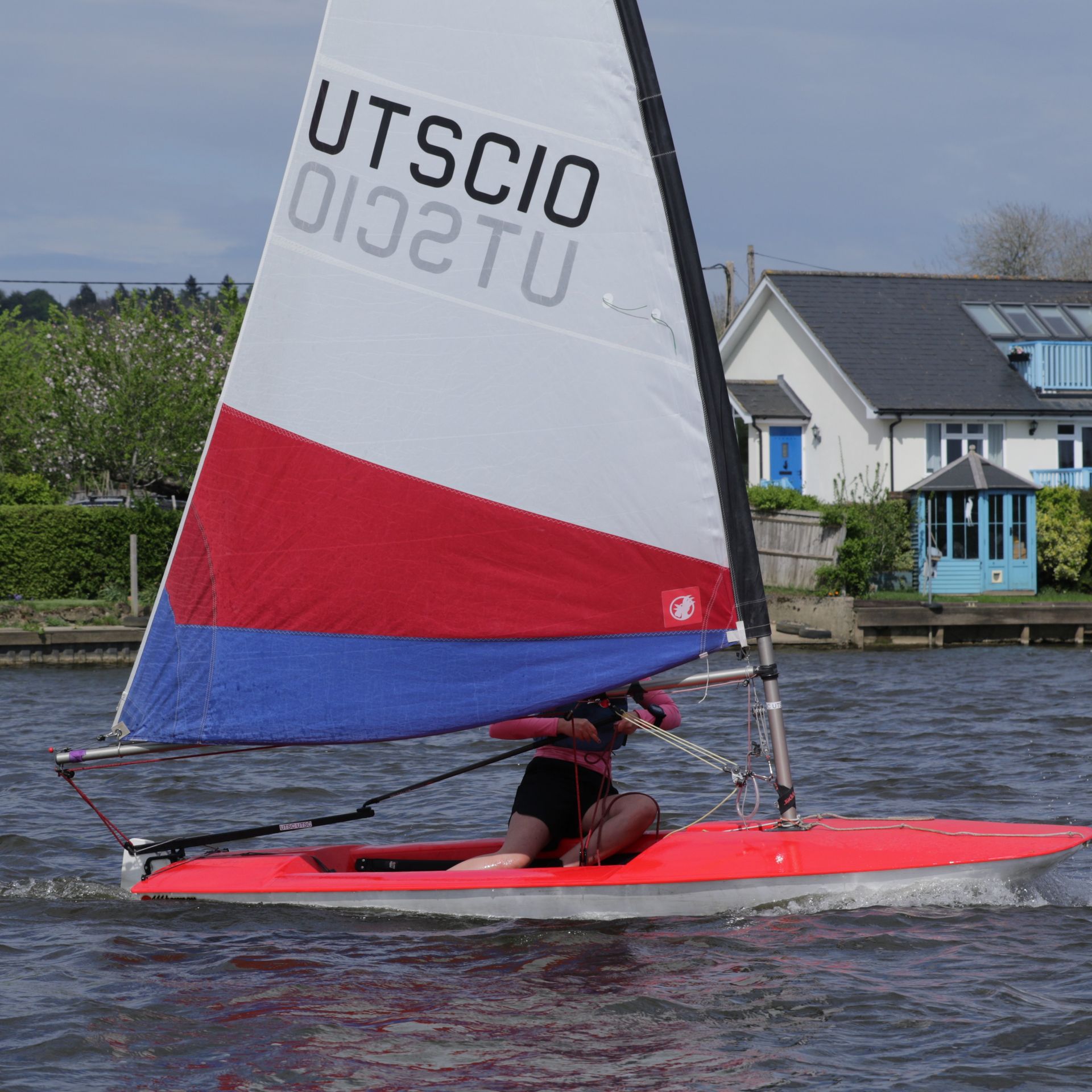
For others, it might be a youth training boat, a Wayfarer, a Toura, a Laser, a Topper, a Merlin Rocket, a National 12, or, one day, the magnificent and slightly terrifying sight of a Thames A-Rater with a huge rig towering over the river.
But the important question is this:
How do we help people move from that first uncertain sail to becoming confident club sailors, racers, crews, helms and custodians of historic classes?
Because if we do not create a route, many people never make the journey.
They learn the basics, sail a few times, perhaps race once, get confused, feel they are in the way, and quietly disappear. That is a great loss to them, to the club, and to the traditions that clubs like Upper Thames Sailing Club and Thames Sailing Club work so hard to preserve.
One of the mistakes we sometimes make is talking about sailing as if it is one thing.“Can you sail?”That sounds like a simple yes or no question. In reality, it is much more like asking, “Can you drive?”
Can you drive around a car park?
Can you reverse into a tight space?
Can you drive on a motorway in heavy rain?
Can you drive a lorry?
Can you drive a racing car?
Can you drive while someone shouts confusing instructions from the passenger seat?
Sailing is much the same.
There is a world of difference between sailing gently across the river in light winds, racing around marks in a mixed handicap fleet, handling a spinnaker, sailing a high-performance dinghy, foiling above the water, or crewing a Thames A-Rater in a gust with trees, moorings, stream and other boats all adding to the entertainment.
That does not mean the journey is impossible. It means it needs structure.
The first progression in sailing is not speed.
It is not racing.
It is not even elegance.
It is confidence.
At the beginning, a new sailor needs to understand the basics:
Where to sit
How to steer
How the mainsail works
How the jib works
How to tack
How to gybe
How to stop
How to come ashore
How not to panic when the boat heels
How to recover from mistakes
This is where the RYA training system is so useful. RYA Level 1 Start Sailing gives beginners a controlled introduction to sailing a dinghy. RYA Level 2 Basic Skills then builds the confidence and decision-making needed to sail in good conditions. For young sailors, the Youth Sailing Scheme provides a similar staged route through Stages 1 to 4.
That structure matters.
It gives new sailors a vocabulary, a safety framework and a sense that they are making progress. It also gives clubs a common starting point. Someone who has completed Level 2 should have a reasonable foundation, but that does not mean they are automatically ready for everything a club can throw at them.
Especially not on a river.
Sailing on the Thames is not quite the same as sailing on a large open reservoir or coastal training area.The River Thames has its own personality.There are trees that steal the wind.
There are gusts that arrive like surprise exam questions.
There is stream.
There are moored boats.
There are shallows.
There are marks tucked into awkward corners.
There are wind shadows that make a perfectly good tack look like an act of optimism.
A beginner might complete a course and still need to learn the local water.
At Upper Thames Sailing Club, for example, there are skills that belong specifically to that stretch of river: short tacking, reading the wind on the water, approaching marks in light airs, sailing in traffic, and understanding how much room is really needed to turn.
This is where a club progression scheme could be extremely valuable.
The RYA courses give the foundation. The club then adds the local knowledge.
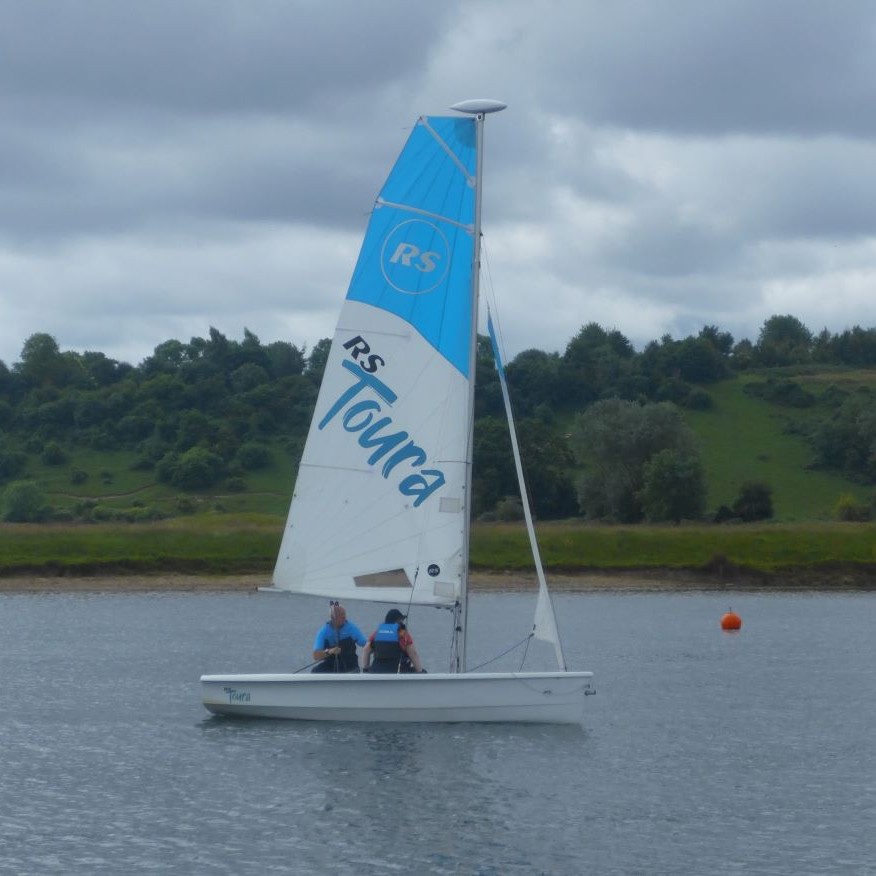
A boat like the RS Toura is very useful in a club progression system.
It is stable enough to teach confidence, large enough for an instructor or experienced sailor to join in, and capable enough to introduce proper sailing skills. It can be used for first helming, crewing practice, race training, spinnaker preparation and family sailing.For a club, this type of boat is not just a club boat. It is a bridge.
It can take someone from “I have done a course” to “I am ready to join in.
”That bridge is often the missing part of sailing development.
A person may have completed a course, but still not feel ready to race. They may not own a boat. They may not know who to ask. They may feel that everyone else knows what they are doing.
A progression scheme gives them a route.
The next stage is club racing.
This is where sailing suddenly becomes much more interesting and, at times, much more confusing.
A new racer has to learn:
Starting sequences
Course boards
Marks
Port and starboard
Windward boat and leeward boat
Room at the mark
How to keep clear
How to avoid getting trapped at the start
How to finish without accidentally sailing another lap
Racing can be intimidating, but it is also one of the best ways to improve.A sailor who cruises around for an hour may repeat the same few habits. A sailor who races has to tack, gybe, round marks, avoid other boats, read the wind, make decisions and deal with pressure.That is why clubs should make racing easier to enter.
Not easier to win.
Easier to enter.
There is a big difference.
A club progression programme could include supported first races, buddy crews, race briefing sessions, simplified course explanations, and post-race chats where someone explains what happened without making the new sailor feel like they have just failed a driving test on water.
Sooner or later, someone says the word “spinnaker”.
This is usually followed by either excitement or fear.
A spinnaker is a wonderful sail. It is also a large, colourful way of discovering whether the crew, helm and wind are still on speaking terms.
Learning to use a spinnaker is a natural progression for sailors who are comfortable in a double-hander. It teaches downwind sailing, apparent wind, communication, timing, boat handling and the importance of preparation.
A club could run spinnaker evenings using suitable boats in light winds. The aim would not be to turn everyone into an expert instantly. It would be to remove the mystery.
The first session might simply cover:
What the sail is for
How it is rigged
What the pole does
How to hoist
How to drop
What can go wrong
How to recover when it does
That last part is important. People are often less afraid of trying something when they know how to untangle the mess afterwards.
Once sailors are comfortable in training boats and club racing, some will want a more responsive boat.
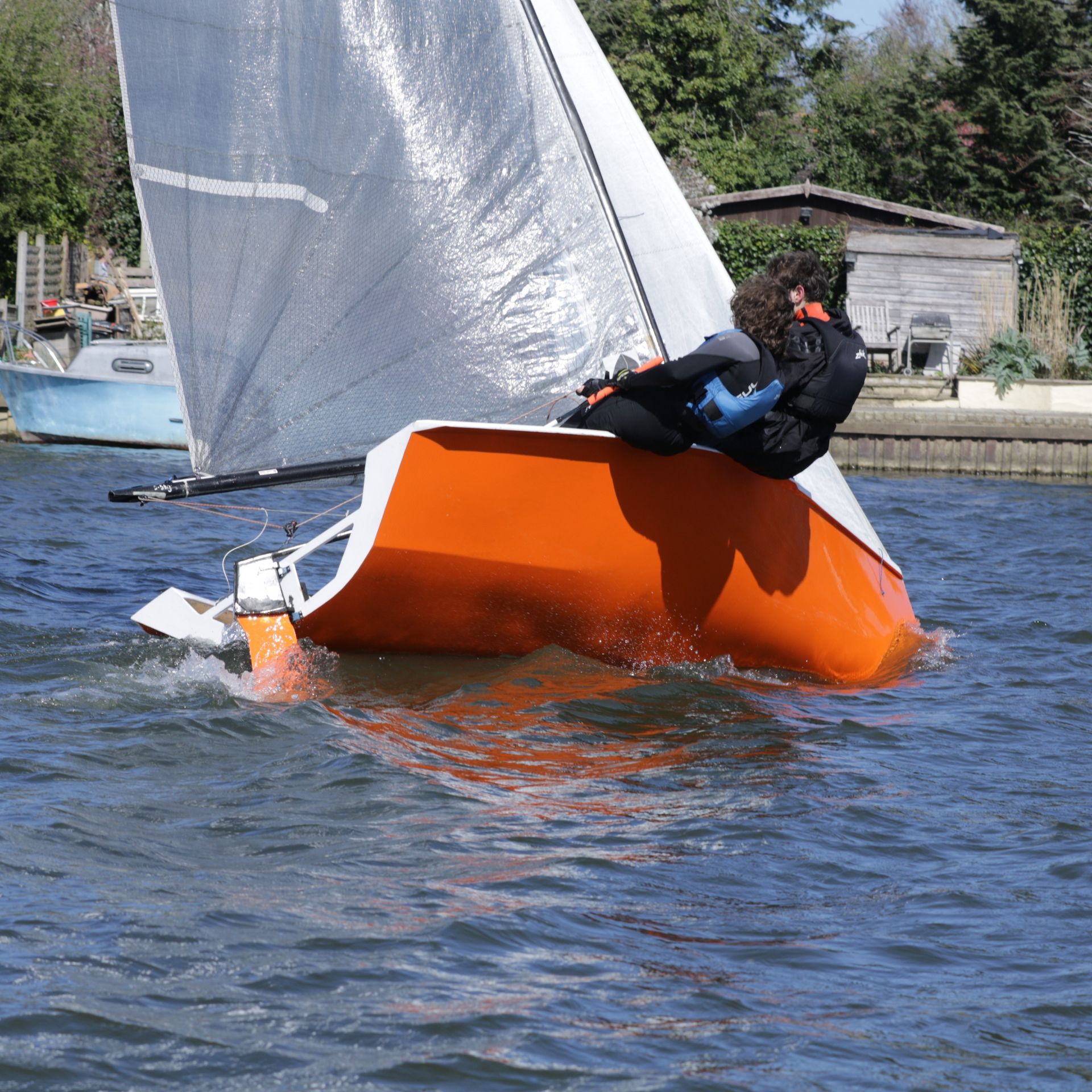
This is where classes such as the National 12, Merlin Rocket or other performance dinghies can become part of the journey.A National 12 is not simply a faster version of a beginner boat. It is more sensitive, more responsive and less forgiving. It rewards balance, communication and accurate sail trim. It also teaches sailors to feel the boat.
That is a major progression.
At this level, sailors begin to understand that small changes matter:
A few centimetres of body position
A slightly better tack
A smoother gybe
Better acceleration after the start
Keeping the boat flat
Holding speed through disturbed wind
This is where coaching becomes valuable. Not formal classroom teaching necessarily, but short, focused sessions with experienced sailors.A club might run “try a class” evenings, where new sailors can crew in different boats and discover what they enjoy.
Some will love single-handers.
Some will love double-handed racing.
Some will love the teamwork.
Some will love the technical details.
Some will simply love going faster.
That variety is one of the strengths of sailing.
Foiling is another possible progression, although perhaps not the most obvious one for every river club.
It represents a very modern branch of sailing: speed, balance, control and flight. For sailors who want a new challenge, foiling can be an exciting development beyond conventional dinghy sailing.
But it should be seen as one branch of the progression tree, not the only “advanced” route.
A sailor might progress towards foiling.
Another might progress towards team racing.
Another might become an excellent safety boat helm.
Another might become a race officer.
Another might become an A-Rater crew.
Progression does not have to mean everyone going in the same direction.
It means every sailor can see a next step.