Painter: A Short Rope Used for Securing or Handling a Boat
Definition:
A painter is a short length of rope attached to the bow (front) of a small boat. It is used for securing the boat to a pontoon, buoy, bank, or another vessel, and for controlling or handling the boat when launching, landing, or towing.
Understanding the Painter
The painter is one of the simplest but most frequently used ropes on a small boat. Typically fixed to a strong point at the bow—such as a bow eye or stem fitting—it provides a convenient way to hold, pull, or tie up the boat when it is not under sail or power.
On dinghies and tenders, the painter is often the first line ashore and the last line released, making it an essential tool for safe boat handling, especially in wind or current.
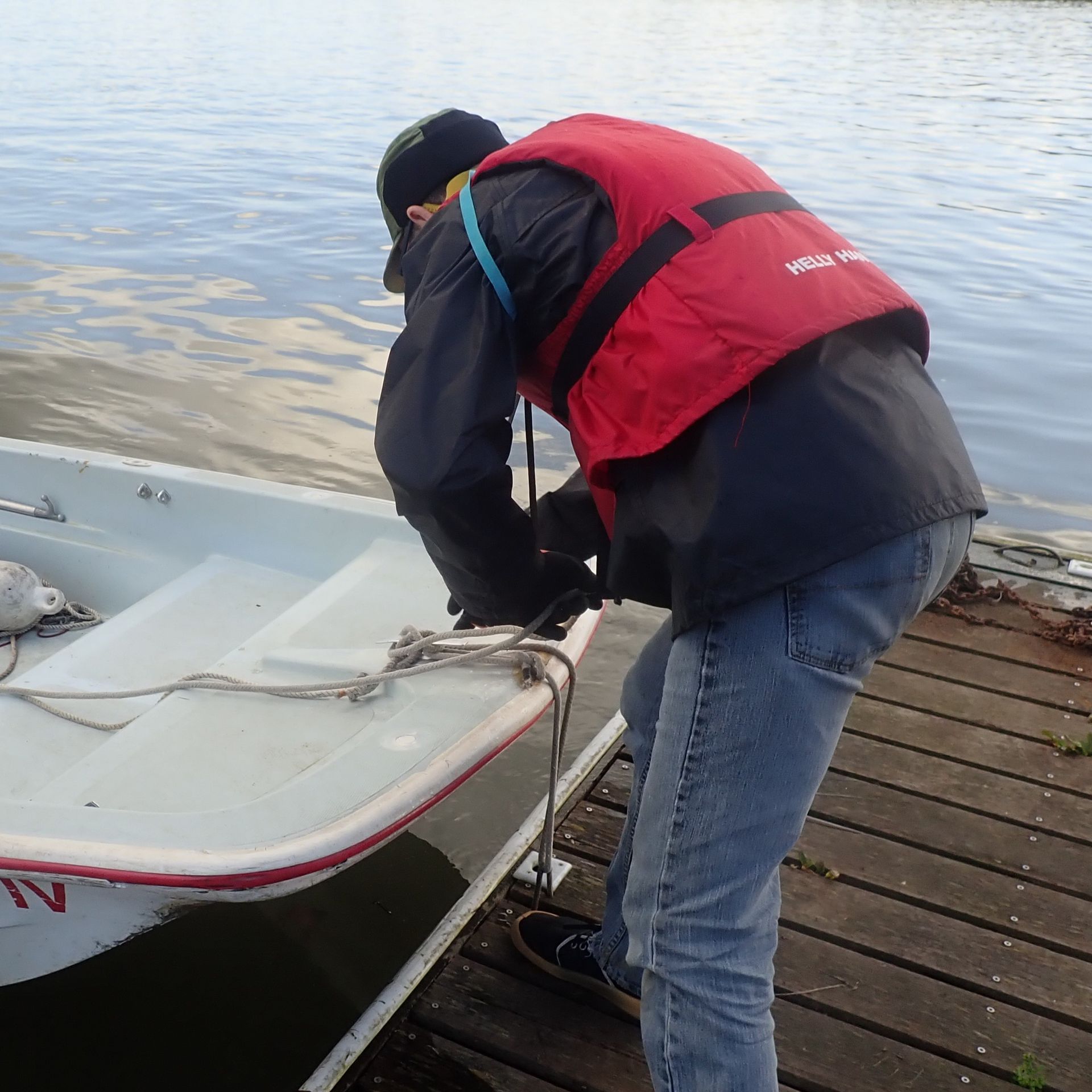
The painter is used to tie the boat to a pontoon, jetty, buoy, or riverbank when coming ashore or leaving the boat unattended.
Launching and Recovery:
When launching from a slipway or beach, the painter allows the crew to control the boat from shore without stepping aboard too early.
Towing:
A painter can be used as a temporary towing line when pulling a dinghy or tender short distances at low speed.
Boat Handling:
Holding the painter helps prevent the bow from drifting away in wind or stream while crew embark or disembark.
Examples of Usage
"Hold the painter while I step aboard so the bow doesn’t drift out."
"Tie the painter to the pontoon before unloading the gear."
"The dinghy was towed gently using its painter."
Visual Representation
Image Description:
Diagram of a small dinghy viewed from the side, showing a short rope attached at the bow and trailing forward. The rope is labelled “Painter” and shown tied to a pontoon cleat in one illustration and held by a person standing ashore in another..
Importance in Sailing
The painter is crucial for safe and controlled boat handling, particularly with small craft. It:
Prevents uncontrolled drifting during launching or landing.
Provides a simple, reliable way to secure the boat.
Improves safety when boarding or leaving the boat.
Reduces the risk of damage to the hull, pontoon, or nearby boats.
Without a painter, managing a dinghy in wind or current becomes awkward and potentially hazardous.
Related Terms
Bow: The front of the boat, where the painter is attached.
Stern Line: A rope attached at the back of the boat for securing the stern.
Mooring Line: A general term for ropes used to secure a boat.
Tow Line: A rope used specifically for towing another boat.
Cleat: A fitting used for securing ropes on boats or pontoons.
Conclusion
The painter may be short and simple, but it is one of the most important ropes on a small boat. From launching and landing to tying up and towing, it plays a vital role in everyday seamanship. A well-chosen, well-attached painter makes boat handling safer, calmer, and far more controlled — proof that even the smallest line can have a big job to do.