admin 30 Sept 2026 Sailing Previous Lesson Comments (0)
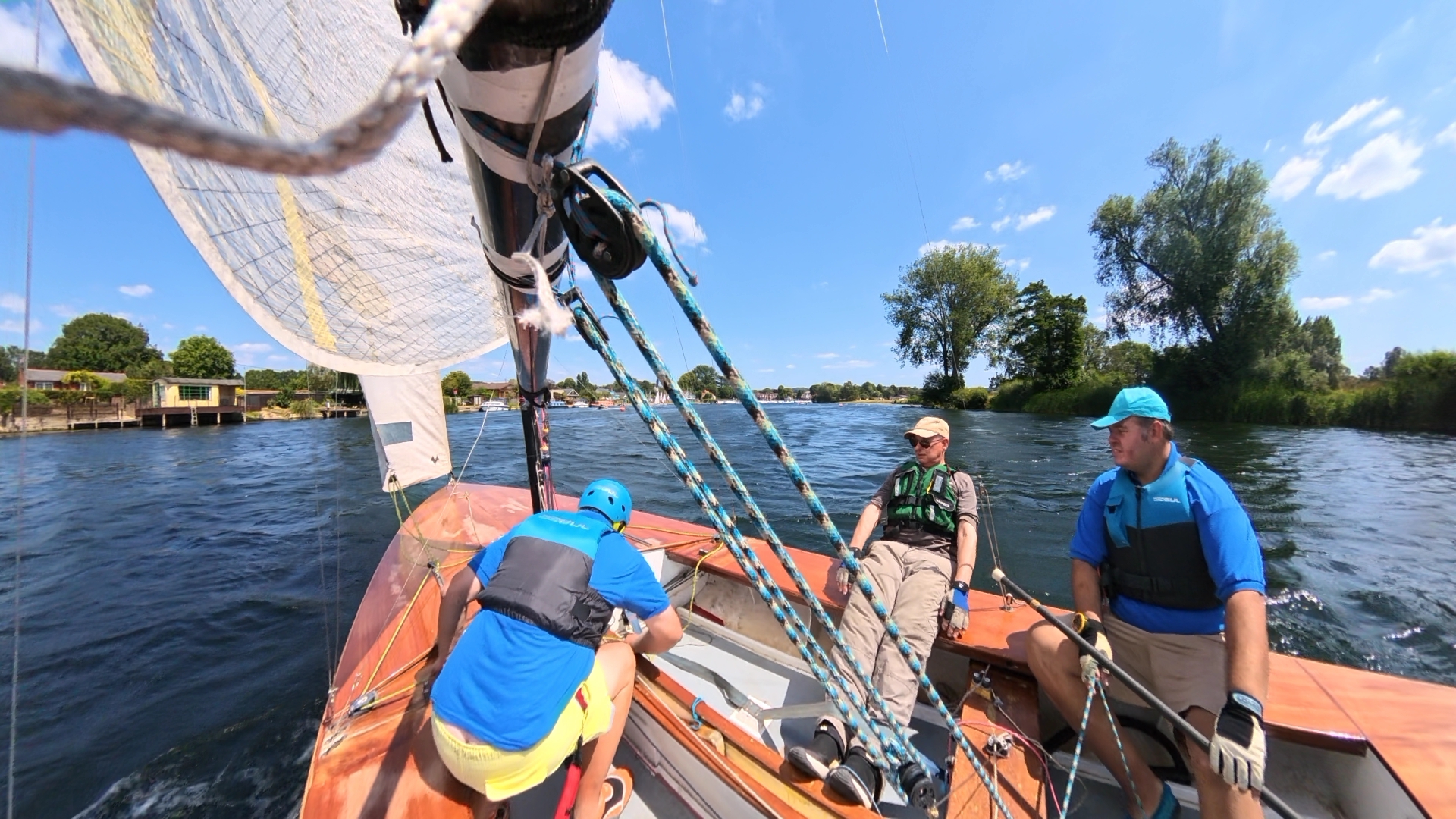
“There are lots of things you can adjust on a sailing boat, but today we are going to concentrate on five things that make a huge difference to how well it sails.”
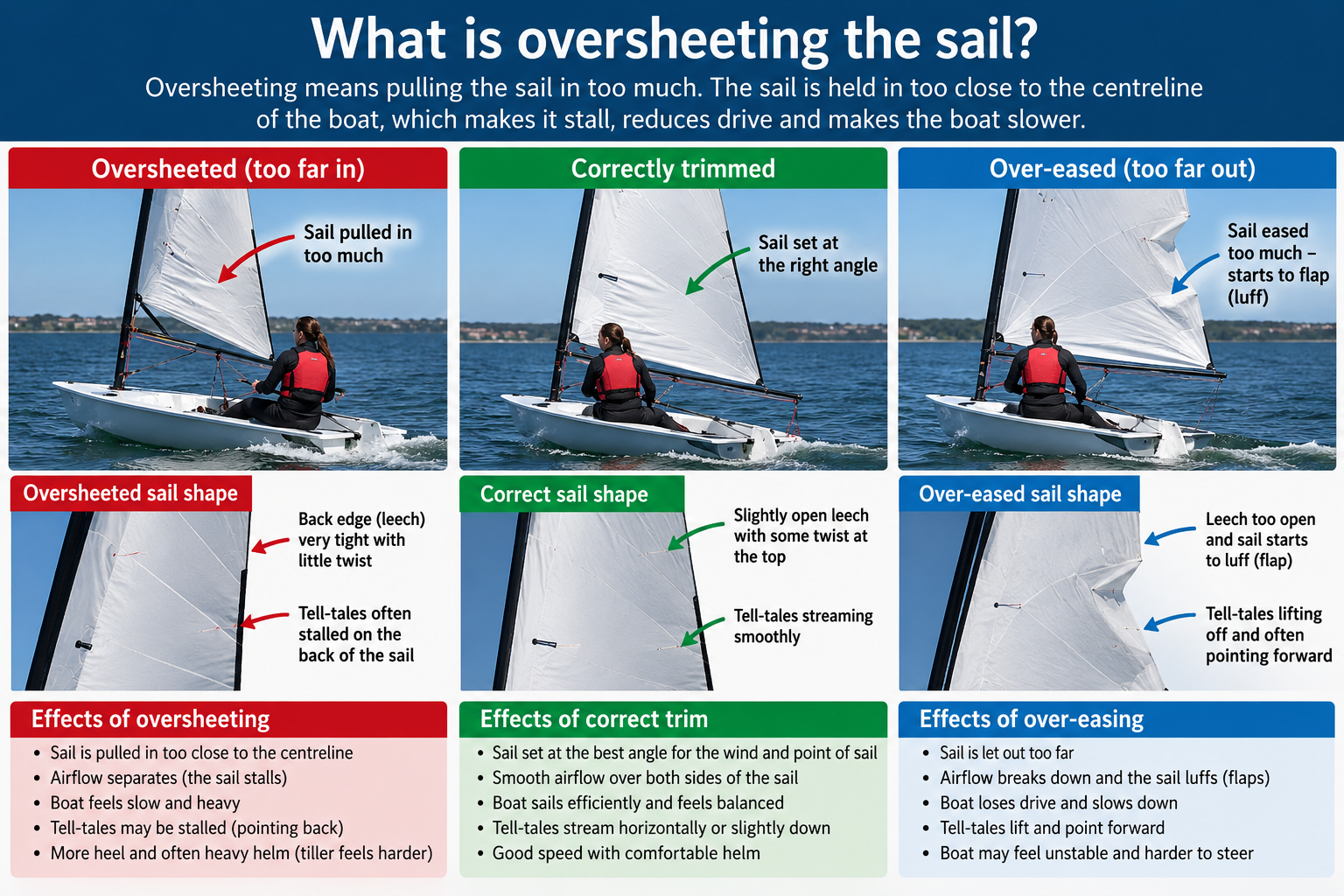
Ease the sail until the front of it just begins to flap, then pull it in just enough to stop the flapping.
Then turn the boat to represent different points of sail.
Close-hauled → sail well in.
Beam reach → sail further out.
Broad reach → sail further out again.
Ask the learner each time:
“Does the sail need to come in or go out?”
Once afloat, let them deliberately ease until the sail luffs and then trim it again.
That gives them a repeatable technique rather than asking them to recognise some mysterious “correct” sail shape.A useful beginner phrase is:“Ease until it flaps; pull in until it stops.”
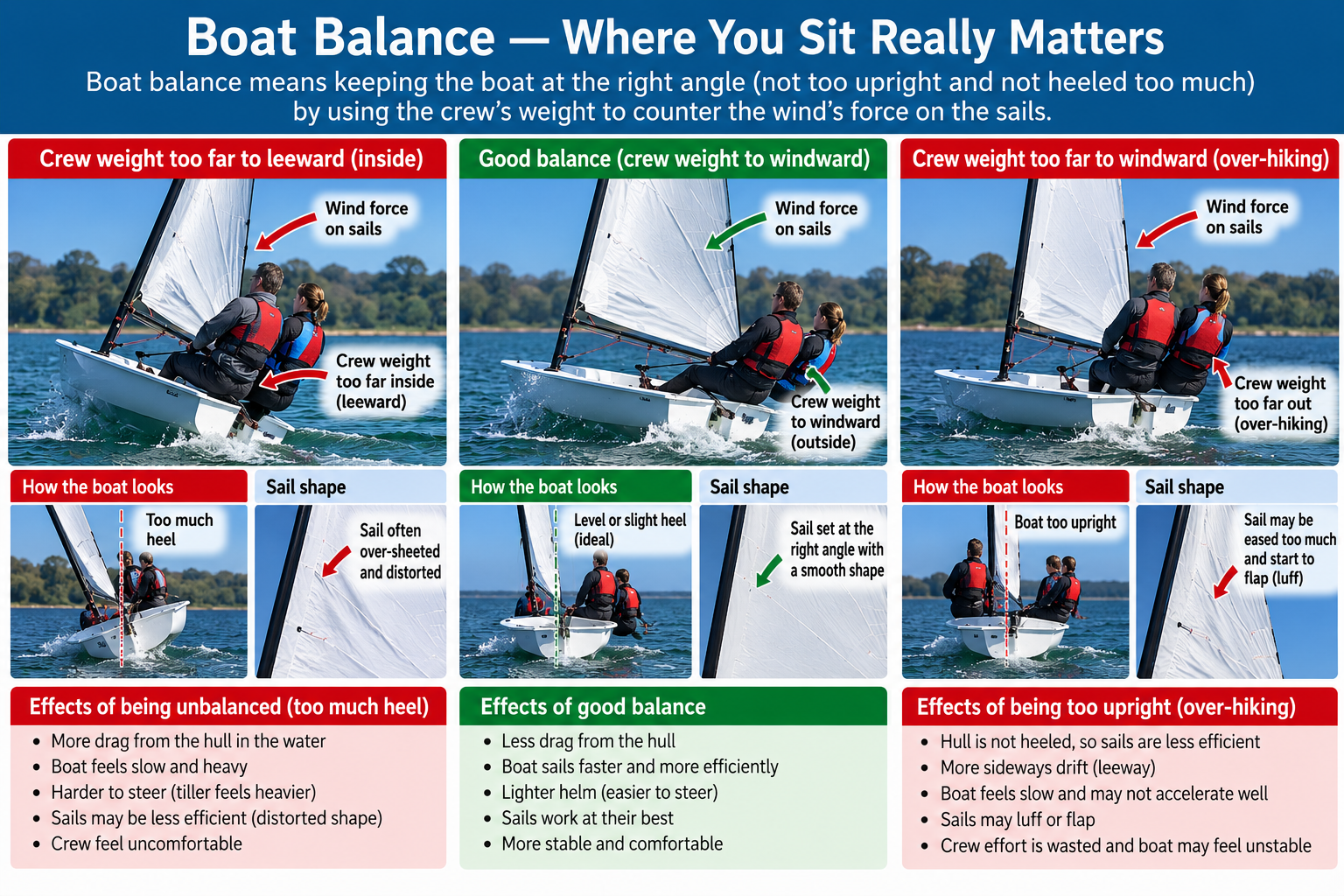
With the boat secured alongside or in very light conditions, move your weight from one side to the other.
Ask:
“What happened to the boat?”
Then let the learner move.
They immediately discover that their body is one of the controls.
When sailing, deliberately allow the boat to heel slightly and ask:
“How could we make the boat flatter without touching the tiller or mainsheet?”
They move their weight.
Now introduce the simple rule:
Wind gets stronger → move out.
Wind gets lighter → move in.
This can become a game.
The instructor calls:
“Gust!”
Everyone moves appropriately.
Then:
“Wind gone!”
They move back in.
Balance = side to side.
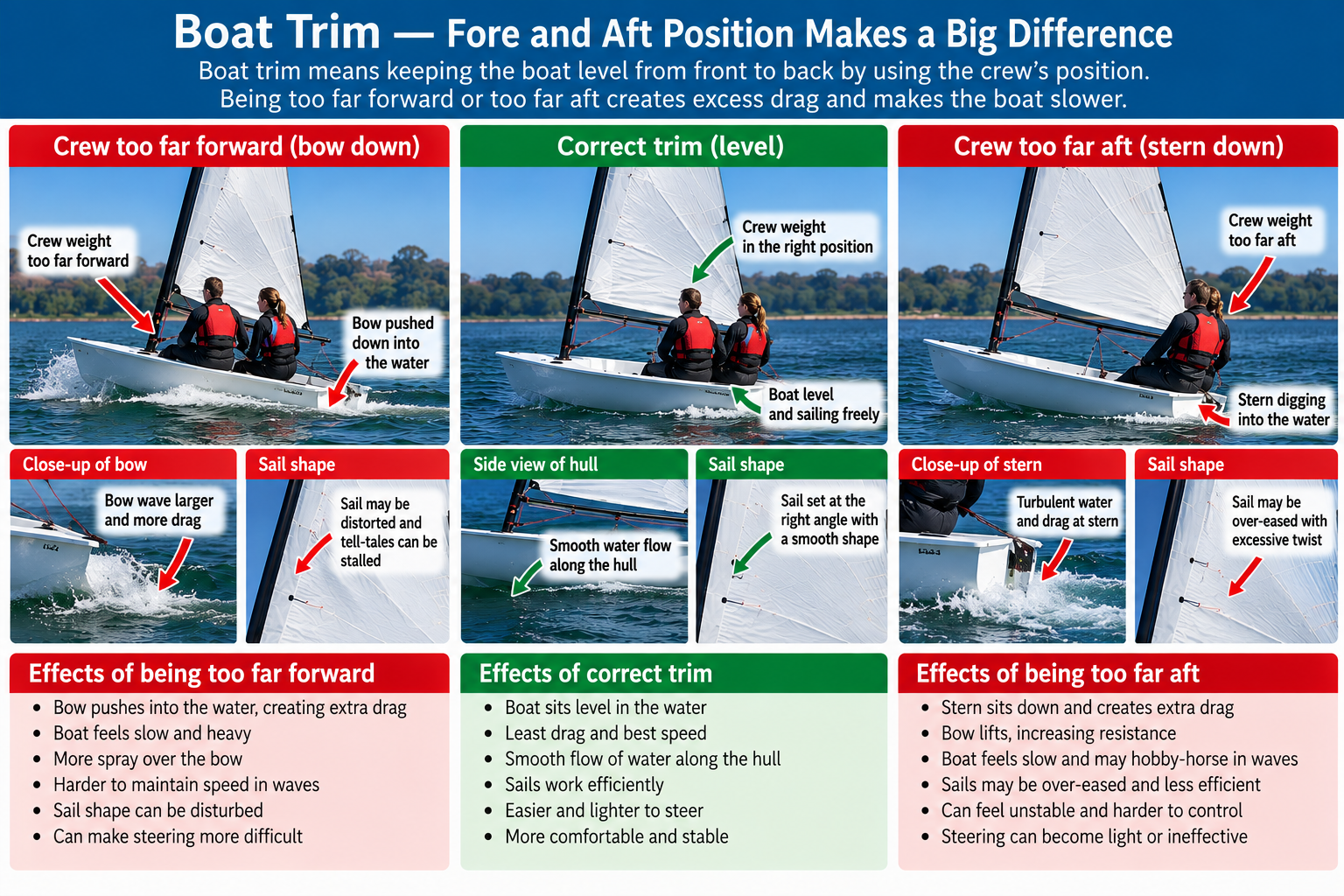
Trim = front to back.
Move everyone forwards.
Ask:
“What happened to the bow?”
Then move everyone aft.
“What happened now?”
If conditions and boat type allow, exaggerate it enough for them to see and feel the effect.
A simple memory aid:
BALANCE = across the boat.
TRIM = along the boat.
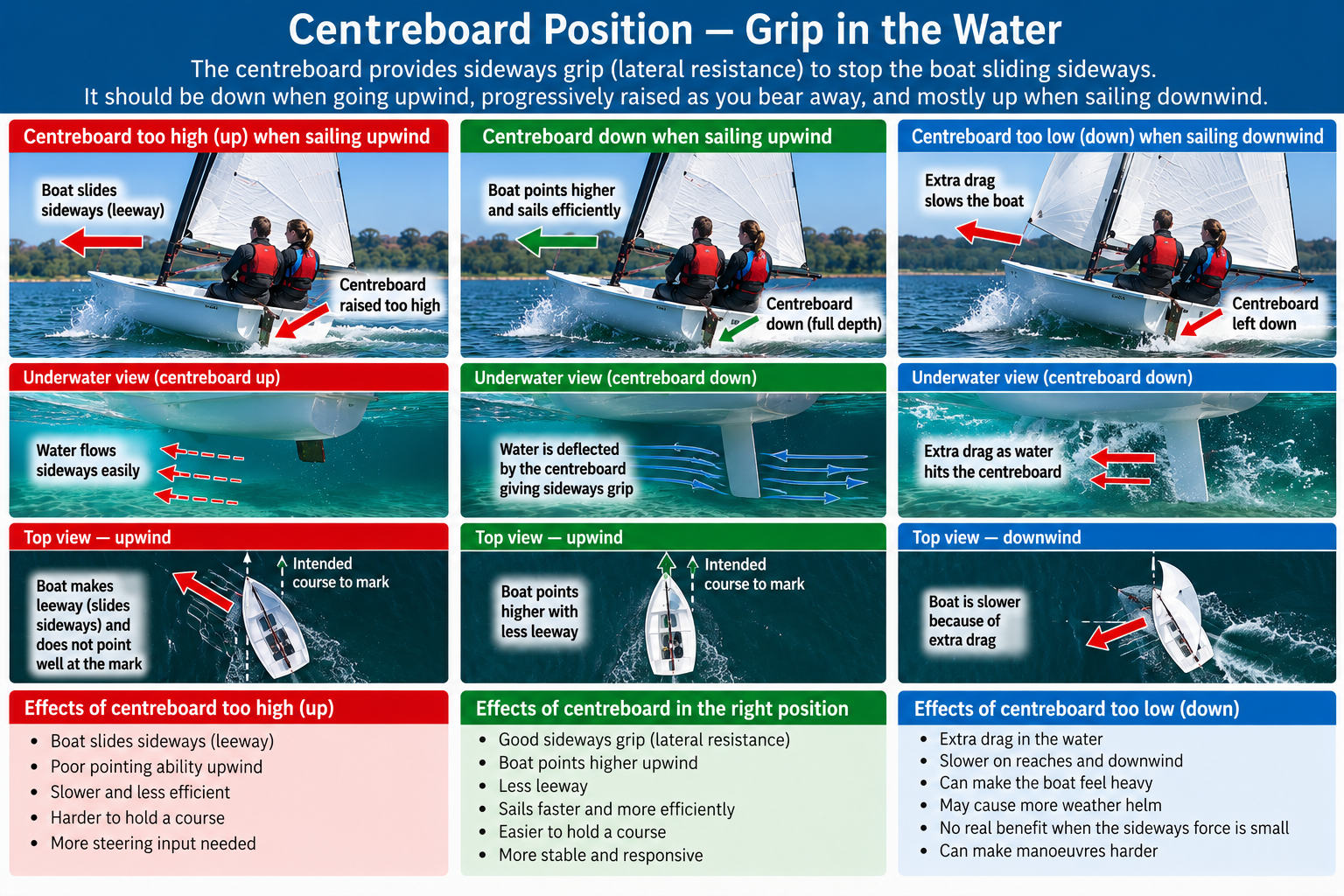
“What stops the boat simply sliding sideways?
”Show them the centreboard.
Then use an analogy:
“Think of the centreboard as the boat's grip in the water.”
Going upwind, we need lots of that grip, so:
Centreboard DOWN.
As we turn downwind, the sideways force reduces, so:
Centreboard can progressively come UP.
A very simple demonstration ashore can work brilliantly. Use a model boat, toy boat or even your hand as the hull and another flat object as the centreboard.
Push it sideways through water with and without the “centreboard”.
The difference becomes obvious.
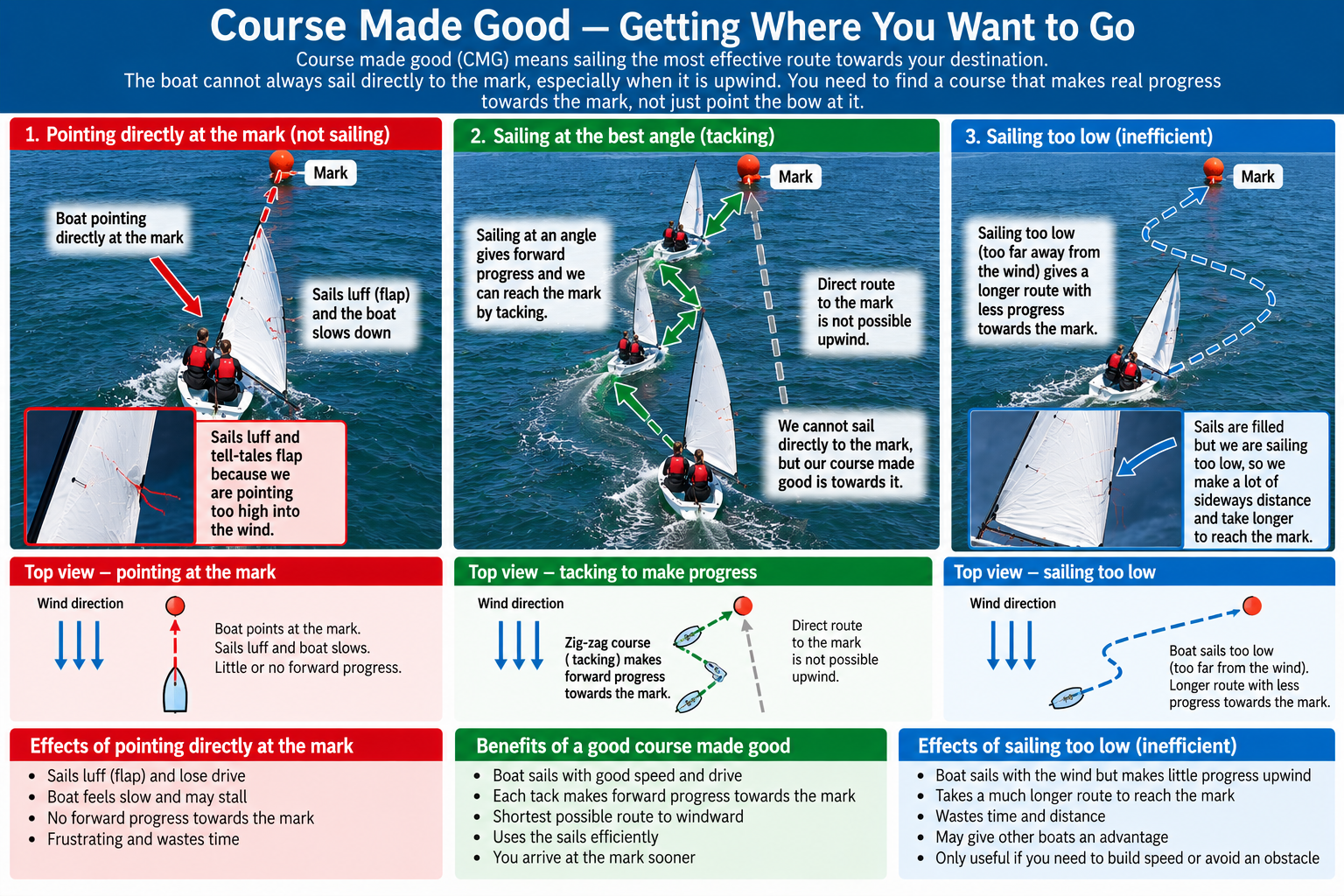
Pick a visible destination:
“We want to get to that buoy.”
Don't initially tell them exactly where to steer.
Ask:
“Can we sail straight there?”
If yes, do it.
If the destination is upwind:
“Can we point directly at it now?”
Try it briefly. The sails flap and the boat slows.
Now ask:
“So how are we going to get there?"
They discover that sailing the shortest-looking route isn't necessarily possible.
Introduce tacking and the idea that we are interested in progress towards the destination, not simply pointing the bow towards it.
That is course made good in a form a beginner can understand.